Pre-Align Then Design
Past President of the BACD shows how the combination of pre- alignment with simple orthodontic techniques and ceramic technology have created a paradigm shift in the way cosmetic dentistry can be carried out.
If the nineties were the decade of the Ultra White Hollywood Smile the noughties seem to have ushered in an era of more refined tastes in smile design. While there is still demand for whiter teeth many patients are now asking for a more natural look rather than the over-bright identikit smile designs of the last decade.
In keeping with this more conservative mood patients are also becoming more aware of the good sense of preserving as much of their own tooth structure as possible and are questioning how their restorations will affect the health of their teeth. Can combination therapy with orthodontics and minimal thickness veneers satisfy patients demands for minimum intervention, natural aesthetics and a rapid result?
Smile makeovers with ceramic veneers can certainly achieve patients desire for an instant cosmetic result, for patients with mild misalignment good aesthetic outcomes can be achieved with minimal enamel loss. However for patients with moderate to severe misalignment deep preparation into dentine and possible de-vitalisation may be the result of trying to align by tooth preparation alone.
Frequently adult misaligned patients have explored and rejected orthodontic options as too slow a route to their aesthetic goal and are willing to risk their pulp to have the perfect smile for their wedding, holiday or new partner. Many of these patients can now be offered a safer way to the ideal smile. The risk of restoring these patients has been reduced by two recent developments, rapid adult orthodontics and emax high strength pressed ceramics. Appliances such as the Inman Aligner have speeded up the alignment
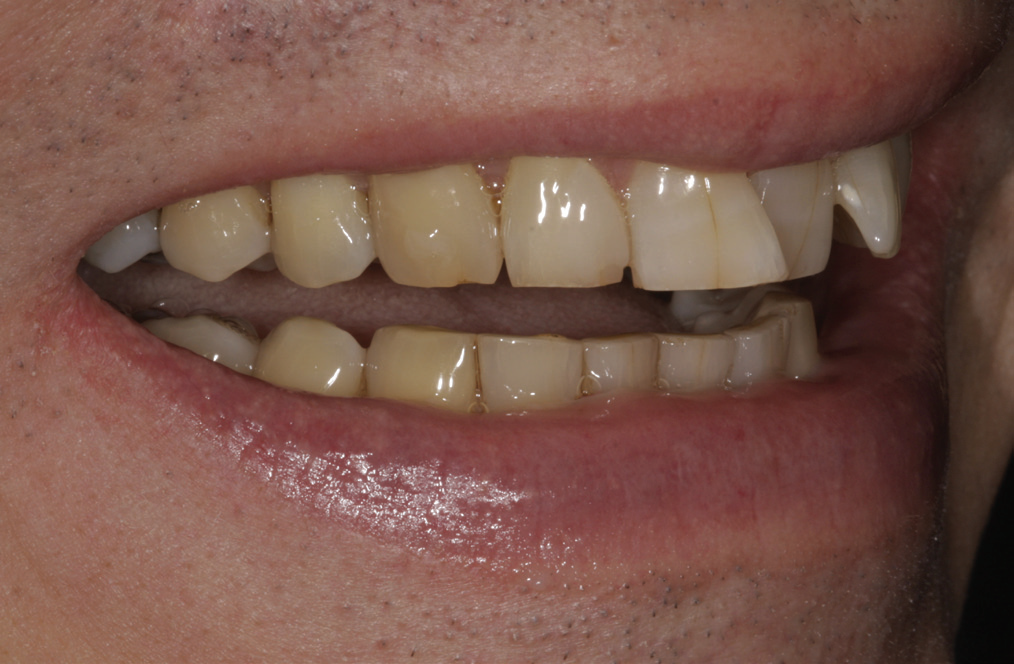
Fig 1: Lateral view

Fig 2: Spacewize capture showing 3.3mm crowding
For older patients misalignment is often associated with occlusal abnormalities and enamel wear which paradoxically may become more visible after aligning. Misaligned anterior teeth often show irregular incisal edge wear which after aligning becomes more apparent due to the differing lengths of the teeth. While the arch alignment may have been perfected the crooked incisal line now becomes more apparent. Starkly outlined against the darkness of the oral cavity the differing incisal outlines of the incisors require further treatment before the ideal smile can be achieved.
Lengthening the incisal edges with composite tips may provide a medium term solution particularly on the lower anteriors where the occlusal forces are mostly compressive and less likely to debond the composite from the tooth. |n the upper arch however incisal tips are subject to more shear stress during function and guidance and in this situation process to as little as four weeks for moderate misalignment to 8 weeks for severely misaligned cases. While emax has enabled thinner stronger veneers to produced with a natural appearance.
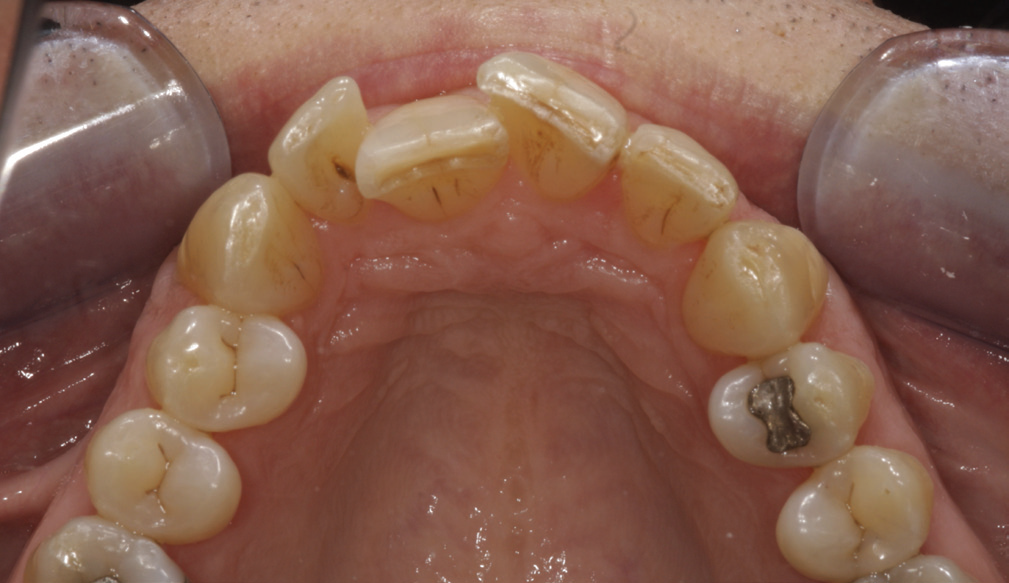
Fig 3: occlusal pre op
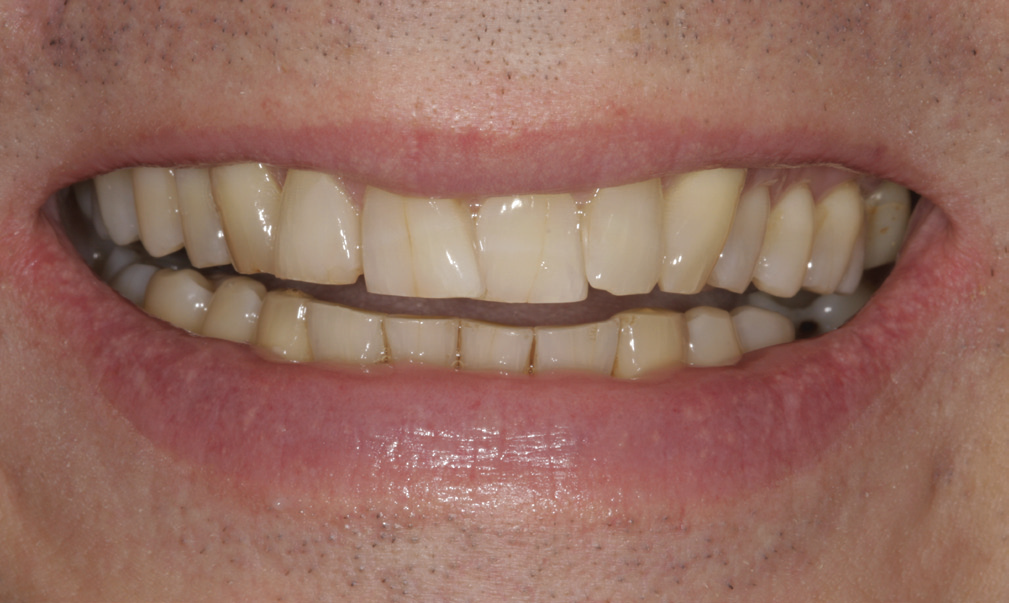
Fig 4: Pre op smile view
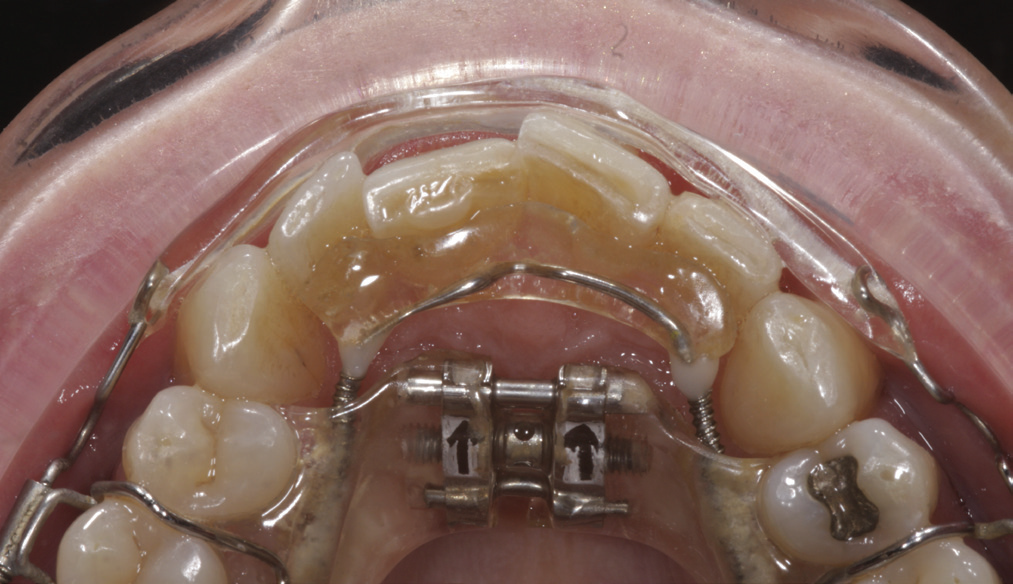
Fig 5: Inman with expander
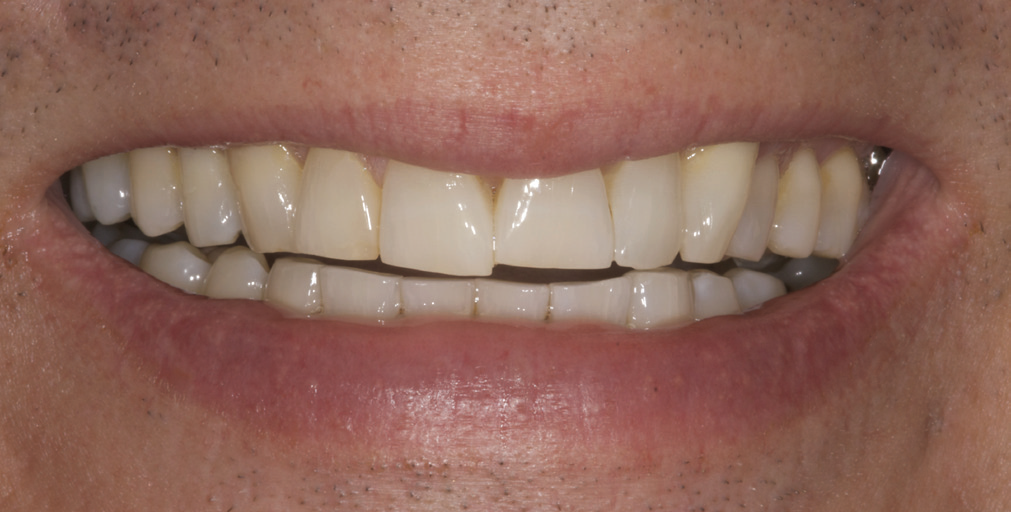
Fig 6: 12 weeks of aligning whitening

Fig 7: Final Alignment

Fig 8: Occlusal after with fixed retainer
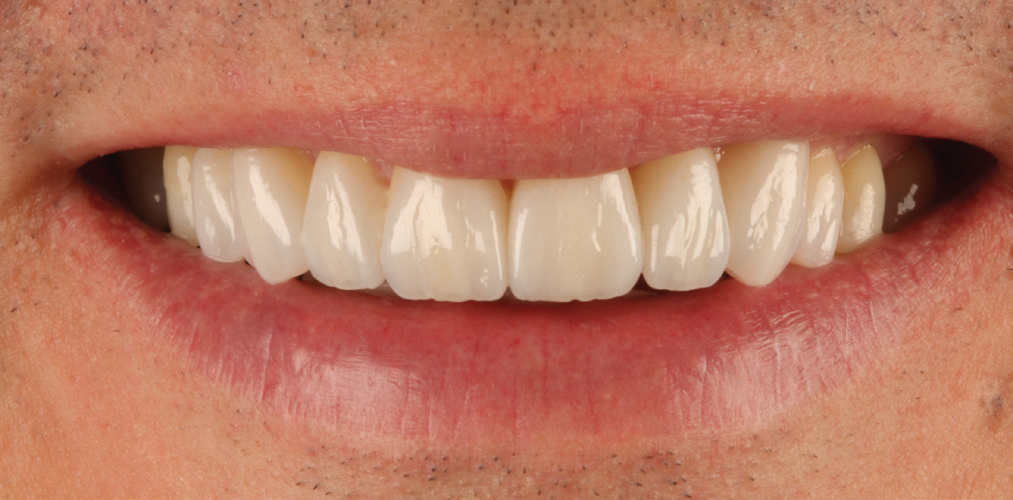
Fig 9: IPS Emax veneers
THE INMAN ALIGNER
This patient presented complaining that he hated his smile. He felt they were dark, short and crooked.
On examination several key problems existed. Firstly his anterior teeth were badly misaligned. They were also dark having had years of staining and this had been compounded by occlusal trauma that had worn the edges of his teeth badly allowing of absorption of stain through the tips.
The misalignment and occlusal wear also meant that his teeth were actually quite different lengths.
He wanted a great smile and he wanted it quickly.
Several options were available and outlined
- Fixed orthodontics.- The patient did not want fixed brackets placed in his mouth even with short term ortho being presented as a compromised alternative to a referral for ideal specialist orthodontics.
- Invisible clear aligner braces.- The patient refused this because of the time quoted for treatment, but was keen on the removability. The cost was also an issue because the patient would still need further aesthetic/restorative treatment afterwards.
- Veneers placed instantly were requested by the patient, but due to the massively destructive preparations, were discouraged immediately. An occlusal view showing the amount of tooth destruction needed was enough to convince the patient that it was a poor choice.
- Inman Aligner- the patient accepted this because of the short-expected treatment time and because he wanted removability.
Our plan was then to perform anterior alignment of the teeth with simultaneous whitening and then to re-assess the smile design and occlusal function afterwards- to re- align, then design.
TREATMENT
A full examination with x-rays and occlusal analysis was carried out. Full BACD style photos were taken. Analysis of the occlusal photo showed that there was 3.3mm crowding. We chose to use an Inman Aligner with combined expander.The Aligner was used over 12 weeks by the patient and only worn 16-18 hours a day. The patient turned the midline expander once a week and some progressive, anatomically respectful IPR was carried out.
At week 9 of alignment, bleaching trays were constructed and short acting Day- white whitening gel was used to whiten over the same period. Because the Inman Aligner can be removed and because it only needs to be worn a maximum of 20 hours a day, it is very easy for the patient to whiten at the same time. This is excellent for motivation. By week 12 the patient’s teeth were whiter and straighter. The patient was then held in retention on a temporary essix retainer.
However at this point we needed to reassess including the patient’s perception of the aesthetics. The patient’s posterior occlusion was balanced but he had no anterior or canine guidance. After alignment we offered the patient the option to simply use edge bonding on the upper teeth as we commonly do but he expressed a wish to still have veneers to give a fulller look. Upper edge bonding was simulated by adding composite in a mock up fashion.He viewed the result but still felt his teeth looked flat and wanted them to appear fuller.
So at this point a purely additive wax-up was made and a direct preview was placed in the mouth from a silicone stent taken from the wax up.
The patient was happy with the new tooth length and dimensions. At the next appointment, Edge bonding was placed from lower premolar to premolar to open the bite and enhance guidance. The Dahl principle was used and no more than 2mm of composite was added anteriorly with most loading on the canines and a long centric on the incisors. (-Within 2 months the posteriors were in full contact again) One week later the upper teeth were prepared. Minimal preparations could be used because the teeth were in the right position so the preparations could be truly in enamel.
Temporaries were placed immediately based on the silicone stent of the wax up.At this point no retainer was needed because the temporaries were locked together except of course at the gingival embrasures where small interdental brushes could be used to ensure adequate hygiene.
Aesthetics, function and phonetics were checked, rechecked and modified over a 4 week period. Guidance corrections were made in situ on the temporaries and the lower composite edge bondings.Once the patient was happy and fully comfortable, an accurate silicone rubber impression was given to the technician and he then had an exact copy to follow for the final veneers. The patient visited the lab for a shade match and discussion on tooth characterization. His input and requirements were noted by the technician.
In the lab once the veneers were made, an impression was taken of the veneers on a solid model and this was used to produce an immediate temporary retainer. Of course once the temps are removed the teeth will still need retaining so this could be used before a fixed retainer was fitted later .On the fitting appointment, the temporary veneers were removed and the finals tried in. The patient was happy and the veneers were then bonded. A new impression was taken to make a wire retainer. In the meantime the patient wore the temporary essix made on the veneer cast. One week later a wire retainer made by the orthodontic lab was bonded to the back of the upper 6 front teeth. Because the preps were minimal the veneers were only on the facial surface so bonding to the back of the teeth was easy. The patient was thrilled with his result not only because he achieved a natural more attractive smile, but also he did it with the minimal amount of invasion needed.
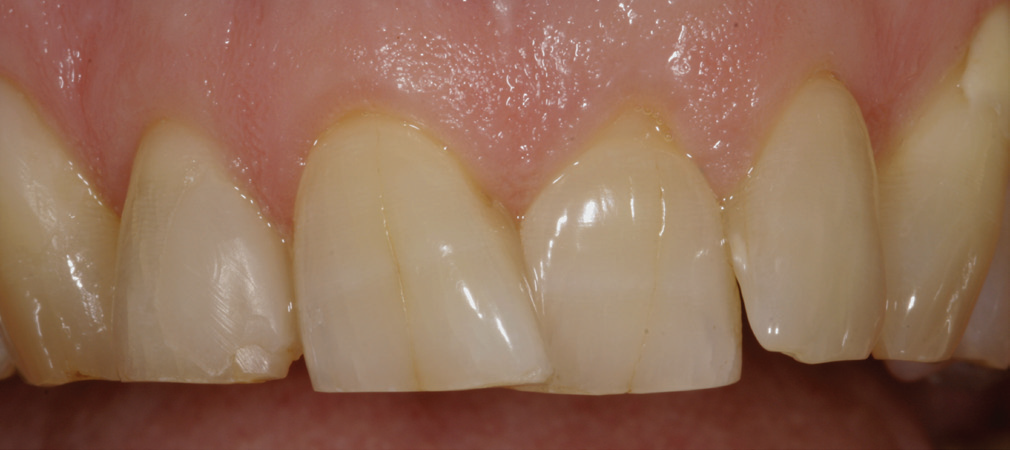
Fig 10: Close view before
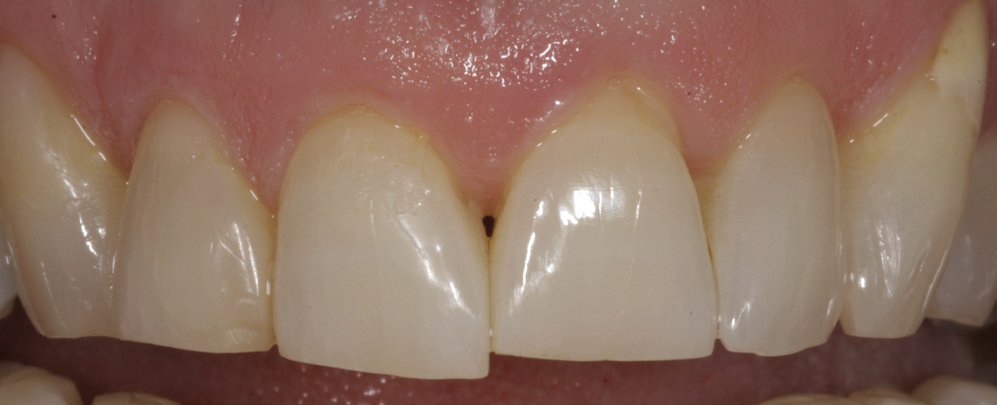
Fig 11: close view after alignment
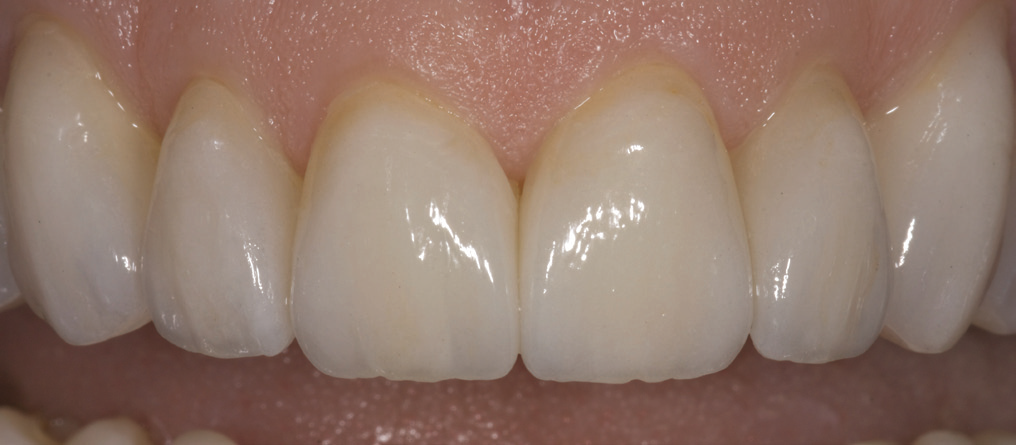
Fig 12: close view after veneers
Emax veneers (made by Tony Knight- Knight Dental Design)
Due to it high strength of 400-500mpa (compared to feldspatic ceramic 100mpa) emax ceramic veneers may be fabricated as thin as 0.2mm. The high strength and resistance to chipping when polishing fine edges make Emax veneers ideally suited to minimal prep techniques. With such a thin veneer the skilled ceramist has little space to create his magic with internal layering techniques. In order to create the illusion of depth in the ceramic very subtle washes of almost invisible colour must be applied layer on layer and fired after each colour to build up an almost three dimensional effect.
The other challenge technician with ultrathin veneers is to create a natural surface texture on such a fine sliver of ceramic. In order to create the microfine surface texture in such a delicate structure standard dental laboratory burs are often too course and bulky. Fine dental surgery burs in a low speed electronic contra-angle motor are ideal to reproduce the subtle surface detail of the natural tooth.
Glazing locks in the colour washes and protects the effect. The glaze is then hand polished using silicon rubbers, fine pumice and diamond polish. This is done to achieve the texture and feel of teeth polished for years by the tongue, cheeks and lips. The difference in feel and appearance of hand polished ceramic to glazed ceramic is noticeable and patients often comment on the natural feel of the restorations. The high strength and polish-ability of the Lithium Disilicate Emax ceramic allows hand finishing with a low risk of fracture during the process.
For the patient with more complex aesthetic or functional / occlusal issues or high aesthetic demands a combination therapy of realignment and minimally invasive ceramic restorations can be the solution that satisfies both the patients desire for great aesthetics and the clinicians desire to conserve enamel. An added advantage of this approach is that the pre-alignment of the teeth ensure much less dentine exposure during prep and a greater area for the stronger enamel bonding.
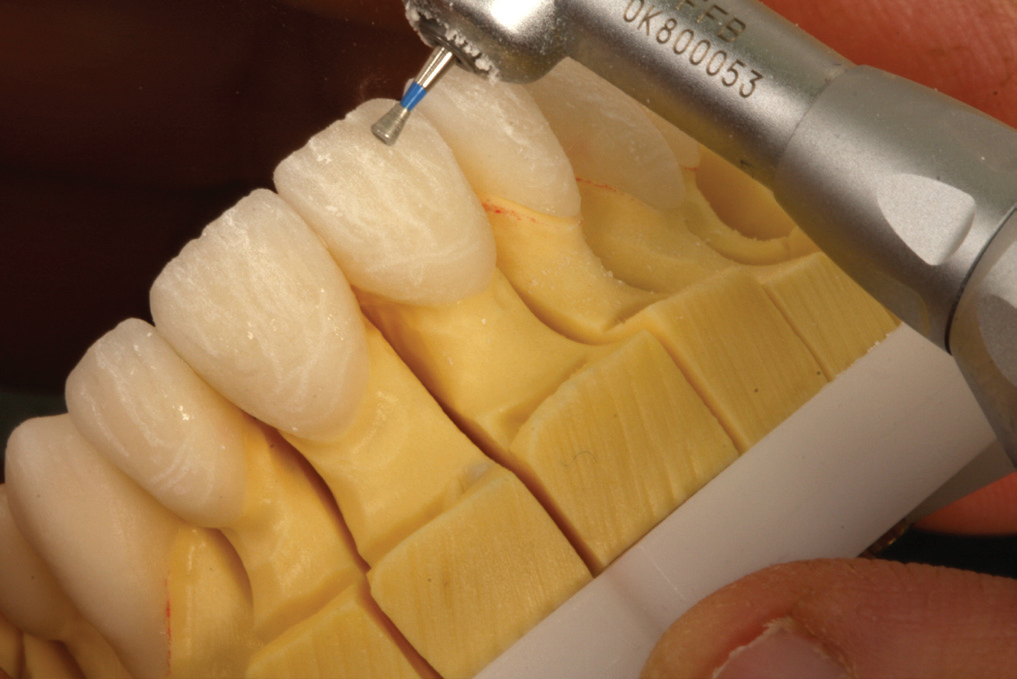
Fig 13: Fine anatomy carved with fine FG diamonds
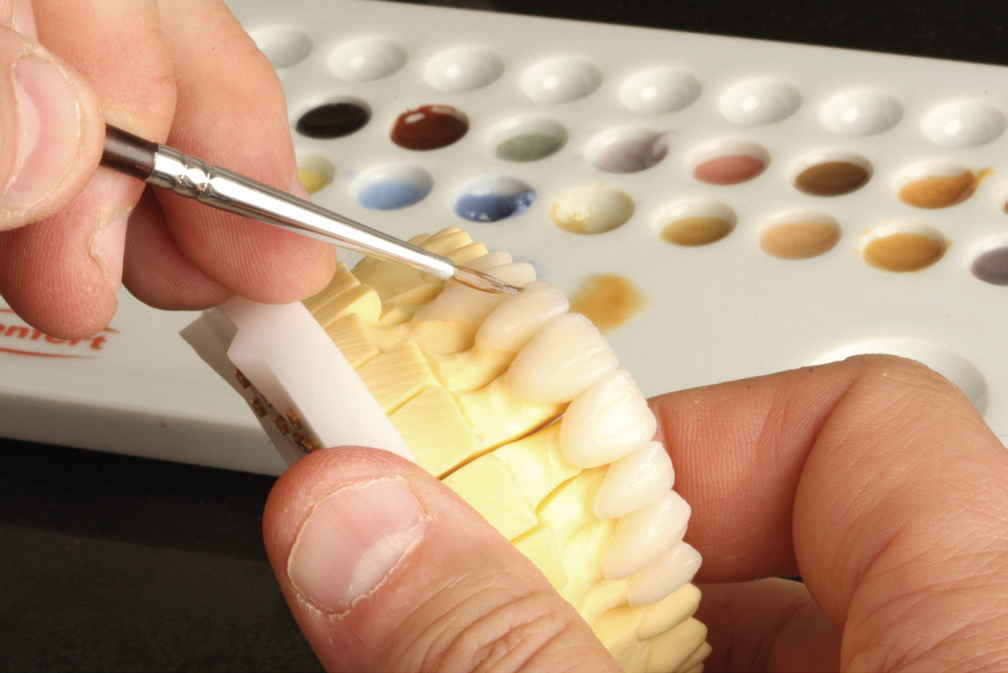
Fig 14: Enhancing colour with surface shades
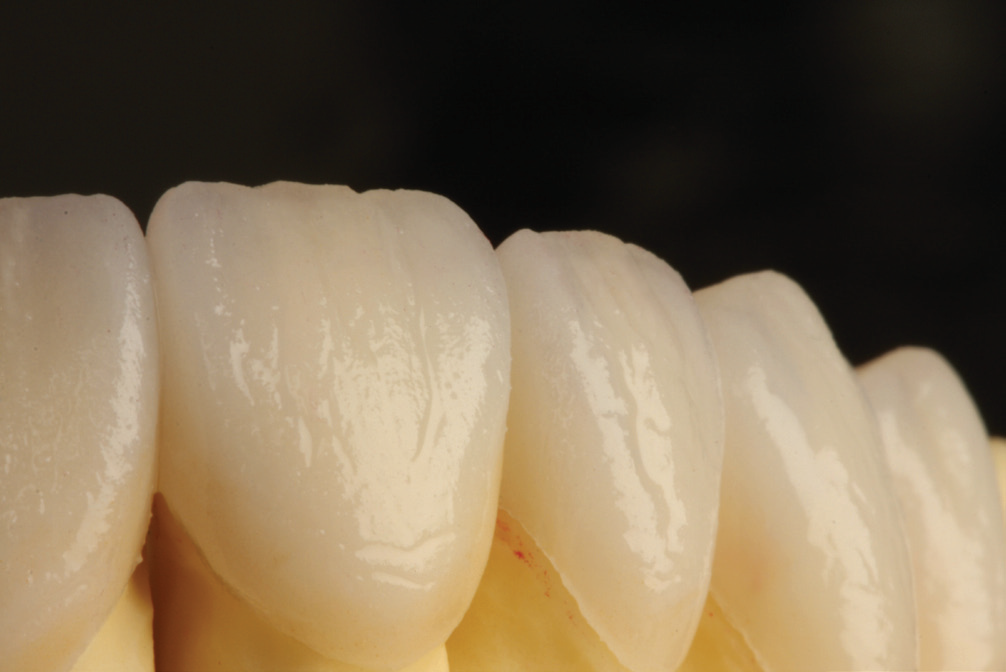
Fig 15: Natural surface morphology and subtle colouring before glazing and polishing.jpg

Fig 16: Final Knight IPS EMax veneers
CONCLUSION
This multidisciplinary case shows what is possible when orthodontics, whitening, and advanced ceramic techniques are combined and sequenced.
Everything is done to simplify the treatment and lower risk to make the results more predictable and importantly to involve the patient along the way with decision making.
The smile design is performed progressively not instantaneously. It allows the patient to see the improvements in their alignment and whitening before a final decision is made on ceramics is made by them. This is fundamentally different approach to what has gone before and thanks to the new techniques available such as simpler anterior orthodontics and Emax technology it is now making advanced cosmetic dentistry far simpler and safer for all.
Thanks to Tony knight of `Knight dental design” for their ceramic work
Inman aligner courses can be booked at www.inmanalignertraining.com
Disclaimer from Guident
The views and opinions expressed in articles published in Guident are solely those of the authors and do not necessarily reflect the views of the editors, the editorial board or the publisher, Ivory India. Guident does not endorse any product, technique or treatment described. Clinical content is intended for qualified dental and medical professionals and is not a substitute for individual clinical judgement. Guident, its editors and the publisher accept no liability for any consequence arising from the use of information published in the journal.
How to cite this article
Dr. Tif Qureshi. Pre-Align Then Design. Guident. 2014 Nov;7(12). Available from: https://guident.in/articles/aesthetic-dentistry/pre-align-then-design.html