A Comparative Evaluation of Different Polishing Aids After Scaling and Root Planing-a Split Mouth Clinical Trial
The Oxford Dental College, Bangalore, India
ABSTRACT
Aim-To evaluate andcomparethe efficacy of different polishing aids after scaling and root planing.
Objective-The primary objective of the study was to evaluate and comparethe efficacy of different polishing aids (rubber cup, bristle brush and air polisher) after scaling and root planing.
Materials and methods- A clinical split-mouth study was carried out with a total sample size of 100 individuals within the age range of 18–65 years, having all teeth except third molars and a probing depth of not more than 5 mm, and suffering from chronic marginal/papillary gingivitis with localized periodontitis. Each quadrant was assigned randomly with a polishing aid except the last quadrant after the scaling and root planing .Three clinical parameters were assessed-plaque index, gingival bleeding index and extrinsic stain index at baseline ,7 and 21 days.
Results-As per mean score change from baseline, air polisher showed better improvement than other quadrants in plaque score. All Quadrants showed early and progressive improvement in Lobene’s stain index and gingival bleeding index at day 7 and day 21 over baseline.The noted improvement was statistically insignificant at day 7 and day 21 in comparison to baseline.
Conclusion-All the quadrants showed improvement in all the clinical parameters but air polisher showed significant improvement in all the parameters compared to other quadrants.
Key words-Plaque, calculus ,stains, polishing aids, scaling and root planing
INTRODUCTION
Periodontal disease is a multifactorial disease in which plaque being one of the major contributor factor in the progression of a disease. It is defined clinically as a structured resilient yellowish grayish substance that adheres tenaciously to the intraoral hard surface including removable and fixed restorations1.Dental biofilm and plaque calcifies and forms calculus. Therefore, it is important to control the accumulation of biofilm and plaque.
Many physical and chemical agents are capable of producing discoloration of the dentition. There are two types of stains-Extrinsic and Intrinsic stains. Extrinsic stains result from the deposition of a film, pigment or calculus on the surface of enamel, exposed dentin or cementum2.Intrinsic discoloration occurs following a change to the structural composition or thickness of the dental hard tissues. The normal colour of teeth is determined by the blue, green and pink tints of the enamel and is reinforced by the yellow to brown shades of dentine beneath. A number of metabolic diseases and systemic factors are known to affect the developing dentition and cause discoloration as a consequence3
In a periodontal disease or a routine cleaning of the oral cavity, itconsists of full mouth scaling either by manual or ultrasonic scalers as primary treatment. Tooth polishing is a procedure carried out as a part of oral prophylaxis in most dental practices. It is an act ofsmoothening the tooth surfaces to make it glossy and lustrous. Although the term polishing has been used to describe the professional removal of soft deposits and stains from the tooth surfaces, in reality, this includes both cleaning and polishing4.During polishing, plaque, biofilm, stains and acquired pellicle are removed.
It is important to understand the patient’s expectations when considering tooth polishing. They simply like the look and feel of polished teeth. An important factor is that patients respond positively to the smooth and clean feel that polishing produces. Over the years many polishing aids have been used. There are many studies showing the efficacy of rubber cups and bristle brush but very few studies have been done on air polisher. It is an excellent aid to remove plaque, calculus and extrinsic stains but very less in vivo studies have been done. So the present study aims to evaluate the efficacy of different polishing aids that is the rubber cup, bristle brush and air polisher (APP) after scaling and root planing.
AIM
To evaluate and compare the efficacy of different polishing aids after scaling and root planing.
OBJECTIVE
Over the years many polishing aids have been used. There are many studies showing the efficacy of rubber cups and bristle brush but very few studies have been done on air polisher. It is an excellent aid to remove plaque, calculus and extrinsic stains but very less in vivo studies have been done. So the present study aims to evaluate the efficacy of different polishing aids that is the rubber cup, bristle brush and air polisher (APP) after Scaling and root planing.
MATERIALS AND METHOD
A split-mouth randomized clinical study was carried out at the Department of Periodontics in The Oxford Dental College and Hospital,Bangalore,Karnataka to evaluate the comparative effectiveness of air polisher, rubber-cup and bristle brush with abrasive paste after scaling and root planing.
The study population consisted of a total of 100 individuals (69 males and 31 females) within the age range of 18–65 years, having > 20 teeth except third molars and a probing depth <5 mm, smokers as well as non smokers with the presence of plaque or calculus and suffering from chronic marginal/papillary gingivitis with localized periodontitis were included in the study. Individuals with history or signs of periodontitis, systemic disorder, or contagious disease, pregnant/lactating women, chronic illness/condition (hypertension, diabetes, respiratory diseases, etc.) and those who had undergone radiotherapy or chemotherapy, patients undergoing orthodontic treatment, fixed prosthesis or faulty restorations, immunosuppressant and xerostomia patients were excluded .Among which14 patients dropped out during the study.This study was explained to each patient and informed consent was recorded. Those who met the selection criteria were enrolled in the study.
The relevant data pertaining to fulfilling all the requisites the case history was recorded in a special performa. Before commencement of the study, all subjects underwent scaling for removal of deposits, immediately following which each quadrant of the patient's mouth was randomly assigned and polished as test side and the other quadrants as control side by coin toss method. In the present study, split-mouth design was used. Plaqueindex,Gingival bleeding index and Extrinsic stains index were the three parameters that were recorded.
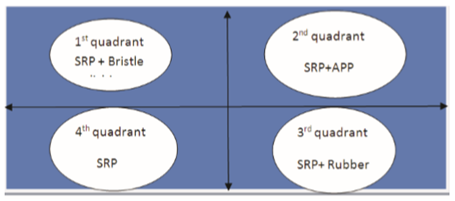
Figure 1- Distribution of quadrants and random use of different polishing aids in each quadrant
STUDY DESIGN
In the test group, APP system (Air Prophy unit ®; Compass international, Guangdong, China) with sodium bicarbonate powder (cleaning powder for Prophy unit; Greeloy, Shanghai, China) was used (particle size standardized up to 250 µm). The technique used for APP involved positioning the nozzle 5–6 mm away from the tooth surface 5 with the spray directed toward the middle third of the crowns of two to three teeth at one time, cleansed with a constant circular motion.6,7 Since the APP device generates aerosol, a mask and protective eyewear were used8.In the control group, the bristle brush followed by rubber-cup with prophylaxis paste was used in circular motion for polishing. Time employed for both procedures was held constant at 5 min for each technique.9
Two-tone plaque disclosing agent (AlphaPlac ®; Dental Products of India, Mumbai, India) was used on the facial and lingual surfaces of all teeth . To assess the Plaque Score, Quigley Hein Index (1962), Extrinsic Stain score by Lobene’s Stain index and Gingival Bleeding score by Modified Sulcular Bleeding Index by Mombelli (1987), were used respectively. The measurements were assessed thrice for each subject, i.e. at baseline, after 7 and 21 days postoperatively. All individuals were demonstrated the oral hygiene instructions.
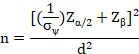
All the steps in this descriptive statistical study were carried out by a single operator. The power of the study was calculated by considering 95% confidence interval. The entire data obtained from the study population at all the three time intervals were put to statistical analysis(SPSS software package 16),and the mean, standard deviation, standard error and paired t-test were calculated to derive an evidence based scientific interpretation.

Figure 2- Participation of patients in the study
RESULT
PLAQUE INDEX
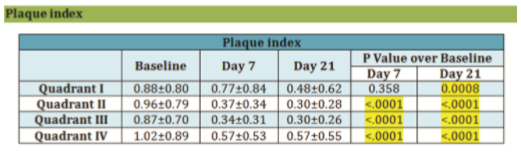
Table 1-Comparison of plaque index at baseline,7 and 21st day
At baseline plaque index(PI), bleeding index (SBI) and extrinsic stain index were same in all the groups. But at 21st follow up quadrant I showed statistically significant improvement in plaque index comparison to baseline. However, Quadrants II, III and IV showed statistically significant improvement in plaque index at day 7 and at day 21 in comparison to baseline with a P value of 0.0008.
- As per mean score change from baseline, Quadrant II showed better improvement than Quadrant I, III, and IV.
After 21 days ,the observed improvement noted in descending order as per the %mean change over baseline was ,
Quadrant II -> Quadrant III -> Quadrant IV -> Quadrant I
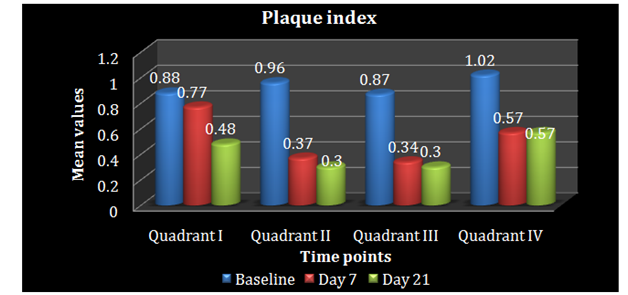
Figure 3-Comparison of plaque index at baseline,7 and 21st day among the quadrants
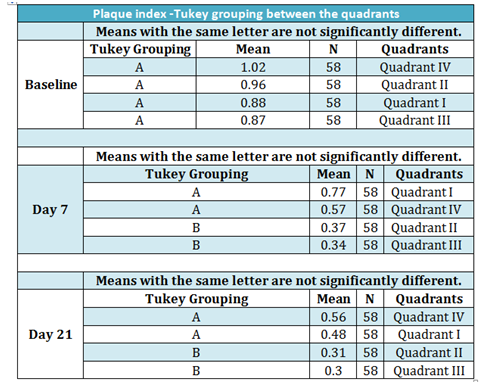
Table 2 - Turkey grouping among the quadrants at baseline,7th and 21st day
- At baseline, no significant difference was observed between the quadrants with tukey test.
- At day 7, Quadrant I and IV are significantly different from quadrant III and II.The same perception was maintained till day 21.
LOBENE’S STAIN INDEX
All Quadrants showed early and progressive improvement in Lobene stain index at day 7 and day 21 over baseline. The noted improvement was statistically insignificant at day 7 and day 21 in comparison to baseline.
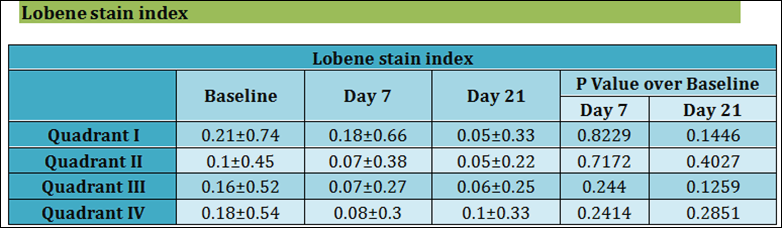
Table 3 - Shows the comparison of extrinsic stain index at baseline,7th and 21st day

Figure 4- Pictorial presentation of comparison of extrinsic stains index among quadrants at different recall appointments

>Table 4-Shows the comparison of gingival bleeding index at baseline,7th and 21st day
All Quadrants showed improvement in gingival bleeding index at day 7 and day 21 over baseline. The noted improvement was statistically insignificant at day 7 and day 21 in comparison to baseline.
GINGIVAL BLEEDING INDEX
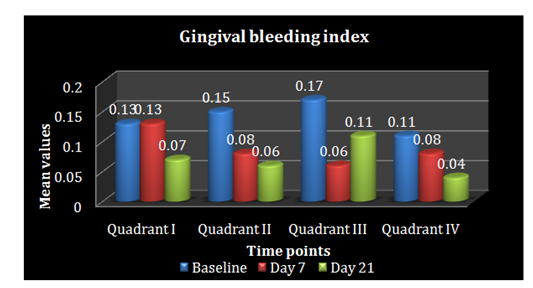
Figure 4- Pictorial presentation of comparison of gingival bleeding index among quadrants at different recall appointments
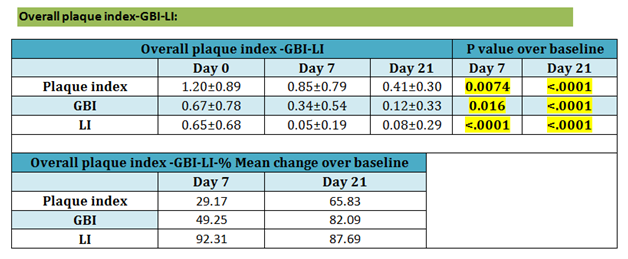
Figure 5-Comparison of all the indices at baseline,7th and 21st day
Plaque index: There was early statistically significant improvement was observed in plaque index at day 7 over baseline. The improvement was further progressed and showed highly statistically significant improvement at day 21 over baseline. As per the mean score change, after 21 days of treatment, 65.83% of the population improved in plaque index over baseline.
GBI: Gingivalbleeding index showed statistically significant improvement at day 7 and day 21 over baseline. The improvement was progressive with time. As per the mean score change, after 21 days of treatment, 82.09% of the population improved in gingival bleeding indexover baseline.
LI: Lobene’s index alsoshowed statistically significant improvement at day 7 and day 21 over baseline. The improvement was progressive with time. As per the mean score change, after 21 days of treatment, 87.69% of the population improved in lobene’s index over baseline.
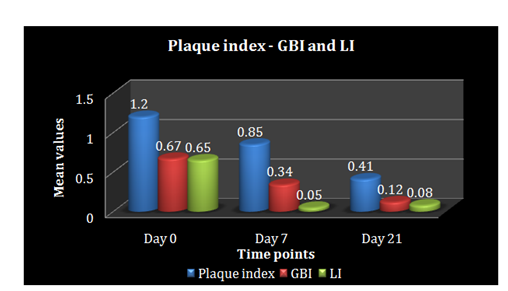
Figure 6-Pictorial presentation of comparison of all the indices at baseline,7th and 21st day
DISCUSSION
The primary objective of the study was to evaluate and compare the efficacy of different polishing aids (rubber cup, bristle brush and air polisher) after scaling and root planing.
The present study compared the clinical efficiency of air polisher and rubber cup and bristle brush in removing plaque and calculus, and also aimed to study their effects on gingival status in a split-mouth design. Also, all the treatment modalities showed a significant change in plaque accumulation and gingival status from baseline to 7 and 21 days post-op.
The design of the APP system uses a mixture of air, water, and sodium bicarbonate powder to deliver a controlled stream of sodium bicarbonate particles onto the tooth surface. This slurry of powder and water polishes the surface by removing deposits attached to it or smoothing its texture. The APP powder used in this study was the sodium bicarbonate powder, which is readily available, biocompatible, and is relatively soft and only mildly abrasive by De Spain.10
In many study, it was shown that air-polishing devices became time-saving and effective in the application on normal enamel surface11,16.However, it does not generally lead to surface modification and loss of materials to be able to be detected clinically16,1. In contrast, spray may occur a significant amount of loss of material, if applied directly on root surface or dentin. As a rule, it is known that it should be certainly avoided to use these devices on dentin and cement17. Tissue loss caused by the technique is depends on application time, powder and water application as much as the probe distance and the application surface17,18. While we used air powder instrument in our study, the application was done by the same researcher from 1-1.5 cm by approaching at a right angle to the tooth surface. Likewise, the polishing application that was done by using rotary rubber cup was performed by the same researcher only by the weight of rotary instrument without extra pressure.
The one of the most commonly used polishing method is prophylaxis paste used with rotary rubber cup/brush. The abrasive properties of paste vary by content and size of paste. However, fine-grained paste can be more abrasive than a thickgrained paste, because there is no standard in abrasiveness of paste among manufacturers.
In this study, it was studied that prophylaxis paste and air-flow powder were provided to be completely the same properties in order to be able to eliminate the effects of abrasive powder used in air-polishing techniques on the amount of abrasion. Therefore, the same paste and powder products having the same contents and produced by the same manufacturer were used for testing. In this way, it was evaluated if the application of the products having the same abrasive properties with the rotary instruments and aerator devices affected on surface roughness. According to the statistical analysis of data, it was determined that reduction observed in roughness values of prophylaxis paste group has been significant.19
A study was done by Patil in 201520 in which they compared the clinical efficiency of APP and RCP in removing supragingival plaque, and also aimed to study their effects on gingival status in a split-mouth design. The results indicated that when comparing the effectiveness of polishing treatments, there was no statistically significant difference in plaque removal or gingival status within the established time interval. Also, both the treatment modalities showed a significant change in plaque accumulation and gingival status from baseline, immediate post-opto 15 days post-op.
There was a significant reduction in plaque scores from baseline to immediate post-op in both the treatments (APP and RCP), but there was a considerable increase in GI and SBI scores from baseline to immediate post-op period. This finding could be attributed to the increase in gingival bleeding in the immediate post-op period as compared to the baseline scores, due to the therapy performed. At 15 days of follow-up, there was a substantial increase in plaque as compared to the immediate post-op findings, but there was a remarkable reduction in gingival and bleeding scores. This observation could not be attributed to either of the treatment modalities (APP or RCP), as this could entirely be credited to supra- and subgingival scaling alone. But the improvement in the gingival status from immediate post-op period to 15 days postoperatively indicated that although both the polishing methods were traumatic, their effects on the soft tissues were temporary.Therfore this present study was not in accordance with the study done by Patil et al in 2015.
Almost all the patients in this clinical trial were comfortable with all the treatment modalities and no patient suffered from any adverse effect of any sort. There was no complaint of any discomfort/sensitivity from any patient after APP or bristle brush or rubber cup at 7 and 21 days post-treatment. Overall, APP has proven to be causing less operator fatigue, compared to rubber cup and bristle brush.
CONCLUSION
Hence, it can be concluded that air polisher(APP) device has shown better result compared to bristle brush and rubber cup.Further studies still need to be carried out to test its efficacy.
Conflicts of interest
There are no conflicts of interest
REFERENCES
- Nature of plaque. Bowen W.H. Oral Sci Rev. 1976;9:3-21.
- Intrinsic and extrinsic discoloration of the dentition. (A literature review)R. I. Vogel.Periodontology and Implant DentistryJournal of Oral Medicine.1975, 4,99-104.
- Tooth discoloration and staining Tooth discoloration and staining: a review of the literature. A Watts, Addy.British dental journal .2001,190(6):309-316.
- Francis B, Barnes CM. Cosmetic and therapeutic polishing. Daniel SJ, Harfst SA, Wilder R, editors. Mosby's Dental Hygiene: Concepts, Cases and Competencies. Missouri: Elsevier; 2008. 599–622.
- Rethman J. Polishing angles, cups and pastes. Pract Hyg. 1997; 1:32
- Madan C, Bains R, Bains VK. Tooth polishing: Relevance in present day periodontal practice. Madan C, Bains R, Bains VK.. J Indian Soc Periodontol 2009;13:58-9.
- Petersilka GJ, Ehmke B, Flemmig TF. Antimicrobial effects of mechanical debridement. Periodontol 2000. 2002;28:56–71
- Boyde A. Air polishing effects on enamel, dentine, cement and bone. Br Dent J. 1984; 156:287–91
- Trade news – New toothpaste. Br Dent J. 2003; 195:112.
- De Spain B, Nobis R. Comparison of rubber cup polishing and air polishing on stain, plaque, calculus and gingival. Dent Hyg. 1988; 62-55.
- Weaks LM, Lescher NB, Barnes CM, Holroyd SV (1984).Clinical evaluation of the Prophy-Jet as an instrument for routine removal of tooth stain and plaque. J Periodontol55: 486-488
- Berkstein S, Reiff RL, McKinney JF, Killoy WJ (1987) Supragingival root surface removal during maintenance procedures utilizing an air-powder abrasive system or hand scaling. J Periodontol58: 327-329.
- Horning GM, Cobb CM, Killoy WJ (1987).Effect of an air-powder abrasive system on root surfaces in periodontal surgery. J ClinPeriodontol14: 213-220.
- Barnes CM, Russel CM, Gerbo LR, Wells BR, Barnes DW (1990) Effects of an air-powder polishing system on orthodontically bracketed and banded teeth. Am J of OrthodDento-facial Orthop97: 74-81.
- Kontturi-Närki V,Markkanen S, MarkkanenH (1990) Effects of air polishing on dental plaque removal and hard tissue as evaluated by scanning electron microscopy. J Periodontol61: 334-338.
- Mahledorff M (1989).Evaluation of the relationships between abrasion and surface alterations after professional cleaning.Mahledorff M.1989, 44: 203-204.
- Petersilka GJ, Bell M, Häberlein I, Ehl A, Hickel R, et al. (2003) In vitro evaluation of novel low abrasive air polishing powders. J ClinPeriodontol30: 9-13.
- Jost-Brinkmann PG (1998)The influence of air polishers on tooth enamel. An in vitro study. J Orofacial Orthopedics59: 1-16.
- A Comperative Evaluation of 3 Different Polishing Methods on Tooth Surface Roughness Fatma Karacaoglu*, Neyran Y?lmaz Tuzcel and Murat Akkaya J Biomedical Sci. 2016, 6:1. doi:10.4172/2254-609X.100046.
- A comparative evaluation of plaque-removing efficacy of air polishing and rubbercup, bristle brush with paste polishing on oral hygiene status: A clinicalstudy. Saurabh S Patil, Purshottam S Rakhewar, Priyanka S Limaye, Niraj P Chaudhari. Prevent Communit Dent 2015;5:457-62
Disclaimer from Guident
The views and opinions expressed in articles published in Guident are solely those of the authors and do not necessarily reflect the views of the editors, the editorial board or the publisher, Ivory India. Guident does not endorse any product, technique or treatment described. Clinical content is intended for qualified dental and medical professionals and is not a substitute for individual clinical judgement. Guident, its editors and the publisher accept no liability for any consequence arising from the use of information published in the journal.
How to cite this article
Dr. Trisha Sircar Dr.Koel Debnath Dr.Anirban Chatterjee Department of Periodontology. A Comparative Evaluation of Different Polishing Aids After Scaling and Root Planing-a Split Mouth Clinical Trial. Guident. 2018 Jan;11(2). Available from: https://guident.in/articles/research/a-comparative-evaluation-of-different-polishing-aids-after-scaling-and-root-planing-a-split-mouth-clinical.html