Prosthetic Management of Prominent Premaxilla with Flangeless Complete Denture: A Case Report
Department of Prosthodontics, Post Graduate Institute of Dental Sciences, Rohtak, Har., India
ABSTRACT
If treatment can restore the patient's function while maximizing aesthetics, prosthodontic rehabilitation of edentulous patients may be the most satisfying. A prosthesis may change a person's appearance by enhancing or detracting from their natural features. Patients with various ridge morphologies are encountered frequently in dental practice. Due to the requirement for surgical correction, the fabrication of conventional complete dentures in patients with labially inclined premaxilla and maxillary labial undercuts is challenging. Complete dentures made without surgical intervention have compromised aesthetics, which may have long-term unfavourable psychological effects on patients who are edentulous. In order to achieve comprehensive rehabilitation with the greatest consideration for aesthetics, this article describes nonsurgical treatment modalities for proclined premaxilla in completely edentulous patients.
Keywords: Prosthodontic rehabilitation, proclined premaxilla, nonsurgical
INTRODUCTION
One's social acceptance is determined by their face. The loss of teeth frequently causes a patient to experience severe psychological trauma and has an impact on their face appearance. There are some fundamental objectives to be accomplished for restoring facial attractiveness.1 In a person with no teeth at all the form and shape of residual alveolar ridges can vary, ranging from heavily resorbed to widely massive ridges. When both soft and hard tissues are not taken into optimum biological consideration, making a complete denture might be difficult.2 A labially proclined maxilla with the presence of an associated undercut is the problem most frequently compromising the aesthetics and construction of a complete denture. Extremely pronounced alveolar ridges with labial undercuts are more frequently found in the maxilla than the mandible as a result of differential resorption patterns of the remnant alveolar ridge.
One such condition is a proclined maxilla with an associated undercut. Surgery is required to reduce tissue undercuts that range in severity from mild to severe. Pre-prosthetic procedures, such as removing severe undercuts with the least amount of bone removal and preventing the loss of the bony cortical plate, are thought to be crucial in preparing the mouth for denture construction.3,4,5 Due to patients' lack of motivation, it is not always possible to use reconstructive surgical treatment. The surgical rehabilitation is hampered by systemic disorders such as uncontrolled diabetes mellitus, hypertension, and cardiac conditions.6
This article aims to give case studies demonstrating a minimally invasive method of creating flangeless dentures for patients with a proclined anterior maxillary ridge and associated undercut.
CASE REPORT
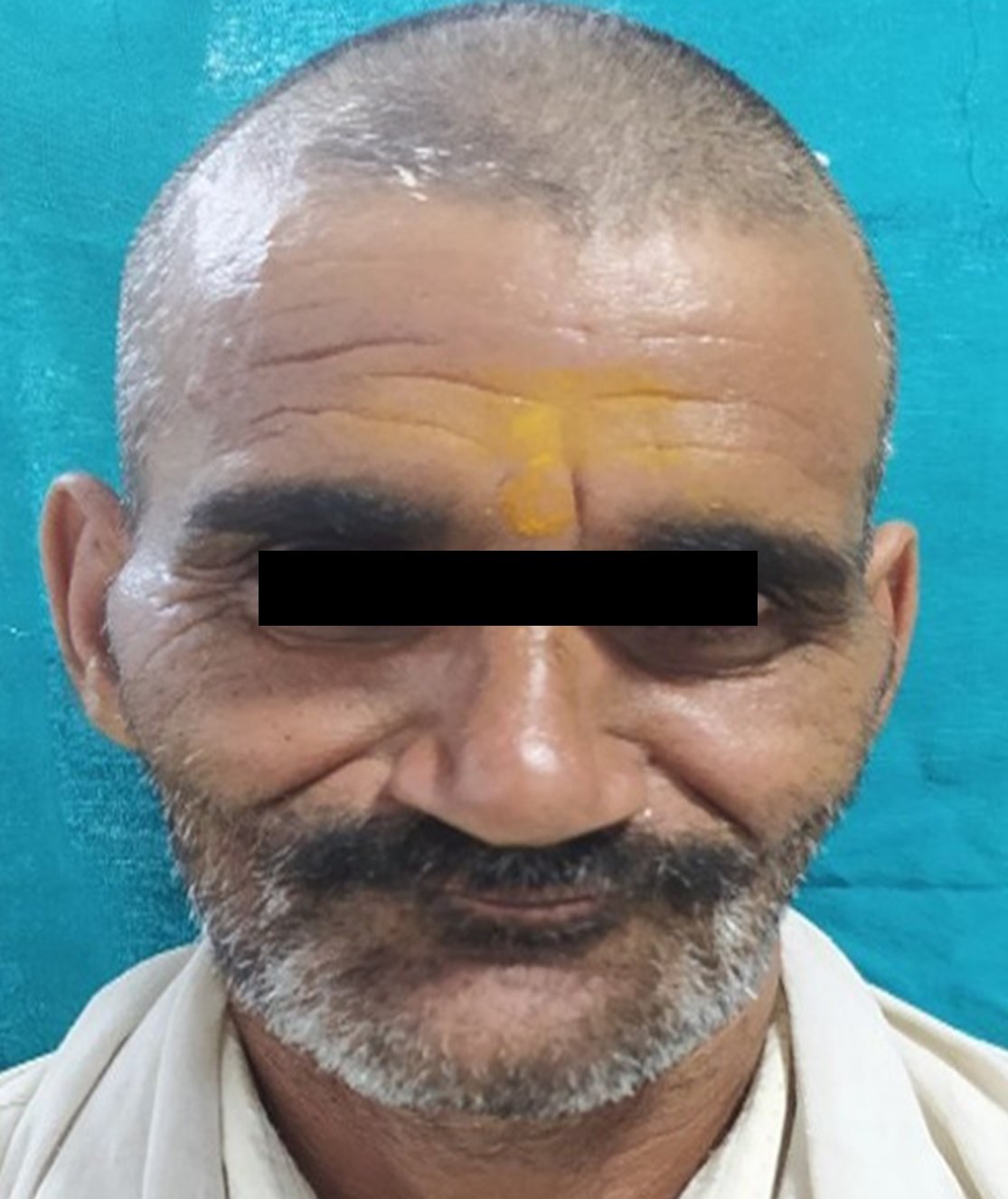
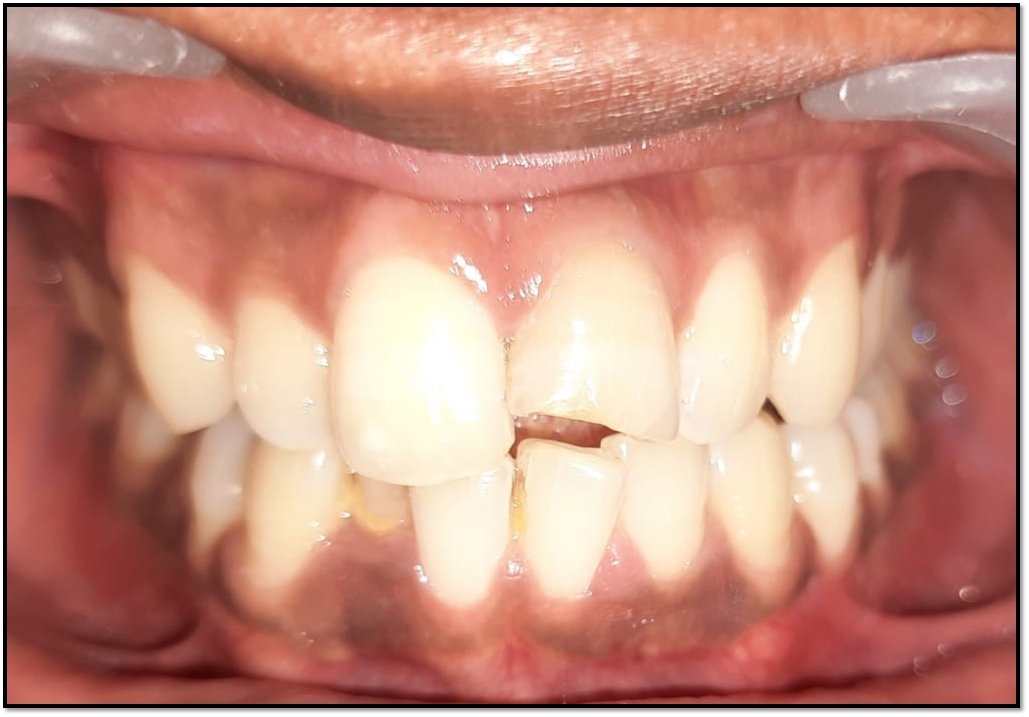
The main complaint of a 62-year-old male patient who visited the prosthodontics department was that he had difficulty speaking and eating because of teeth that were missing and that he wanted to replace them. Extra oral examination revealed that the patient had a convex profile, an oval face with a tapering chin, and sufficient support and fullness in the maxillary lips (Fig. 1). The patient had a proclined anterior maxillary ridge, along with a severe labial undercut, according to an intraoral examination. (Fig 2).

Figure 1. Pre-operative extra oral frontal view

Figure 2. (a) Intra oral maxillary view (b) Intra oral mandibular view (c) Maxillary arch with severe labial undercut.
TECHNIQUE
The primary impression of the maxillary and mandibular arches were made using impression compound. The primary cast (Dental Plaster Class II) was used to fabricate custom trays using DPI RR cold cure. Greenstick compound (DPI Pinnacle tracing sticks) was used for border molding, and light body polyvinyl siloxane was used for the final wash impression. Jaw relation was completed once the master cast (type III dental stone) was ready (Fig 3). The trimming of denture base in the labial prominence area result in direct contact between the lips and the ridge, which ultimately reduced the labial fullness.

Figure 3. Jaw relation
Articulation was done and teeth setting were completed and try-in was done (Fig 4). Heat-cure acrylic resin was packed and curing done according to conventional procedures.
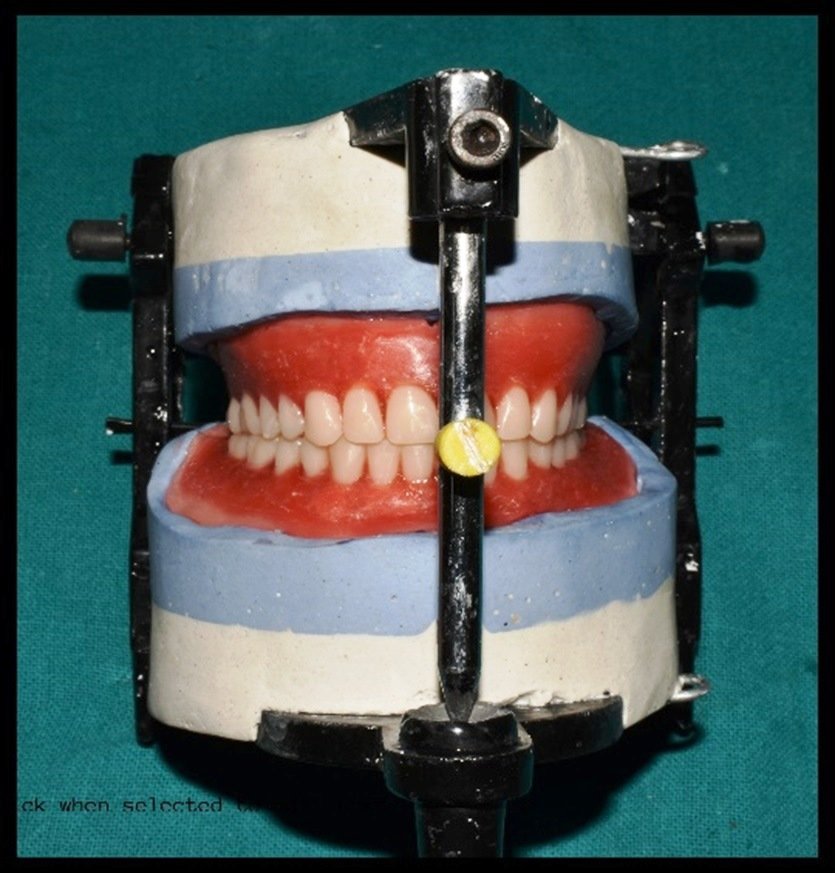
Figure 4. Try-in
When the final flangeless denture was polished and tried in the patient's mouth for evaluation, occlusal corrections were made, the denture was delivered, and the patient was evaluated 24 hours, a week, and one month later for post-insertion visits. The patient was satisfied and had no significant complaints (Fig 5).

Figure 5. Denture insertion
DISCUSSION
A thorough diagnosis is a crucial component of the ideal treatment strategy. A fantastic prosthesis can be achieved with the right course of treatment. Living up to patient expectations by giving consideration to their wishes is one of the clearest indicators of improvement. The anatomy of the residual ridge differs from patient to patient.7 Patients with excessively thick ridges frequently have poor facial aesthetics. The labial fullness is further harmed by the thickness of the labial flange, which leads to an unsightly maxillary denture. The preservation of face aesthetics is just as important as replacing lost teeth with prosthetics.
The replacement of a prosthetic is heavily influenced by facial and dental aesthetics. Any prosthesis must also have functional integrity in addition to aesthetic appeal. Soft liners are one of the more conservative ways to use undercuts without having to sacrifice them to surgical intervention.8,9 The liners flexibility allows them to be quickly removed and inserted in severely undercut areas without causing tissue trauma, in addition to evenly distributing the functional load and preventing local stress concentrations. In the near future, surgical undercut removal will be less popular due to advancements in soft liners because they can last long.10
Hard tissue undercuts, which are obtained buccolingually and are the most prevalent mechanical means of retention in completely edentulous patients, have a detrimental effect on the retention of the prosthesis. One of the conventional non-surgical methods for preserving the ridge is a flangeless denture.
This has also been referred to as "ridge grip aesthetic prosthesis" and "gum fit dentures" by many authors.11 This is referred to as a "wing denture" by some authors, where the labial flange is segmented in the labial frenum region and two wings appear from either side, leaving enough room for the labial frenum.12,13
CONCLUSION
This clinical report outlines the creation of a flangeless denture using an affordable, quick, and simple method for the rehabilitation of a proclined maxillary ridge with labial undercut. Thus, nonsurgical techniques can be used to create the prostheses because they are noninvasive, offer better patient acceptance, and result in greater patient satisfaction. Regarding insertion, removal, and functionality, the patient found the flangeless denture to be convenient.
REFERENCES
- Jain AR. Ridge grip esthetic prosthesis: an alternative conventional removable partial denture- a case report. Am J Oral Med Radiol. 2015;2(1):44- 6.
- Chaturvedi S, Shah M, Ghodpage SL, Kulkarni M, Gill S. Unconventional prong dentures - a case report.Int. J. Dent. Clinics. 2013;5(1): 49-50.
- Lawson WA. Objectives of pre prosthetic surgery. Br J Oral Surg. 1972; 10:175- 88.
- Obwegeser H. Surgical preparation of the maxilla for prosthesis. J Oral Surg. 1964; 22:12734.
- Terry BC, Zarb GH. Report on 4th international congress on preprosthetic surgery. Int J Oral Maxillofacial Surg. 1991; 20:3146.
- Hillerup S. Preprosthetic surgery in the elderly. J Prosthet Dent. 1994; 72:551 8.
- Glossary of prosthodontic terms. Journal of Prosthetic Dentistry 94:1:10-92.
- Wright PS. The success and failure of denture soft-lining materials in clinical use. J Dent 1984;12(4):319-27.
- Bell DH Jr. Clinical evaluation of a resilient denture liner. J Prosthet Dent 1970;23(4):394-406.
- Kawano F, Koran A, Asaoka K, Matsumoto N. Effect of soft denture liner on stress distribution in supporting structures under a denture. Int J Prosthodont1993;6(1):43-9.
- Ogle RE. Preprosthetic surgery. Dental Clinics of North America. 1997;21(2):219-36.
- Krall E, Hayes C, Garcia R. How dentition status and masticatory function affect nutrient intake. J Am Dent Assoc. 1998;129(9):1261-9.
- Lawson WA. Objectives of preprosthetic surgery. Br J Oral Surg. 1972;10(2):175-85.
Disclaimer from Guident
The views and opinions expressed in articles published in Guident are solely those of the authors and do not necessarily reflect the views of the editors, the editorial board or the publisher, Ivory India. Guident does not endorse any product, technique or treatment described. Clinical content is intended for qualified dental and medical professionals and is not a substitute for individual clinical judgement. Guident, its editors and the publisher accept no liability for any consequence arising from the use of information published in the journal.
How to cite this article
Dr. Manu Rathee, Dr. Pankaj Ghalautt, Dr. D. Prabhavathi. Prosthetic Management of Prominent Premaxilla with Flangeless Complete Denture: A Case Report. Guident. 2023 Oct;16(11). Available from: https://guident.in/articles/prosthodontics/prosthetic-management-of-prominent-premaxilla-with-flangeless-complete-denture-a-case-report.html