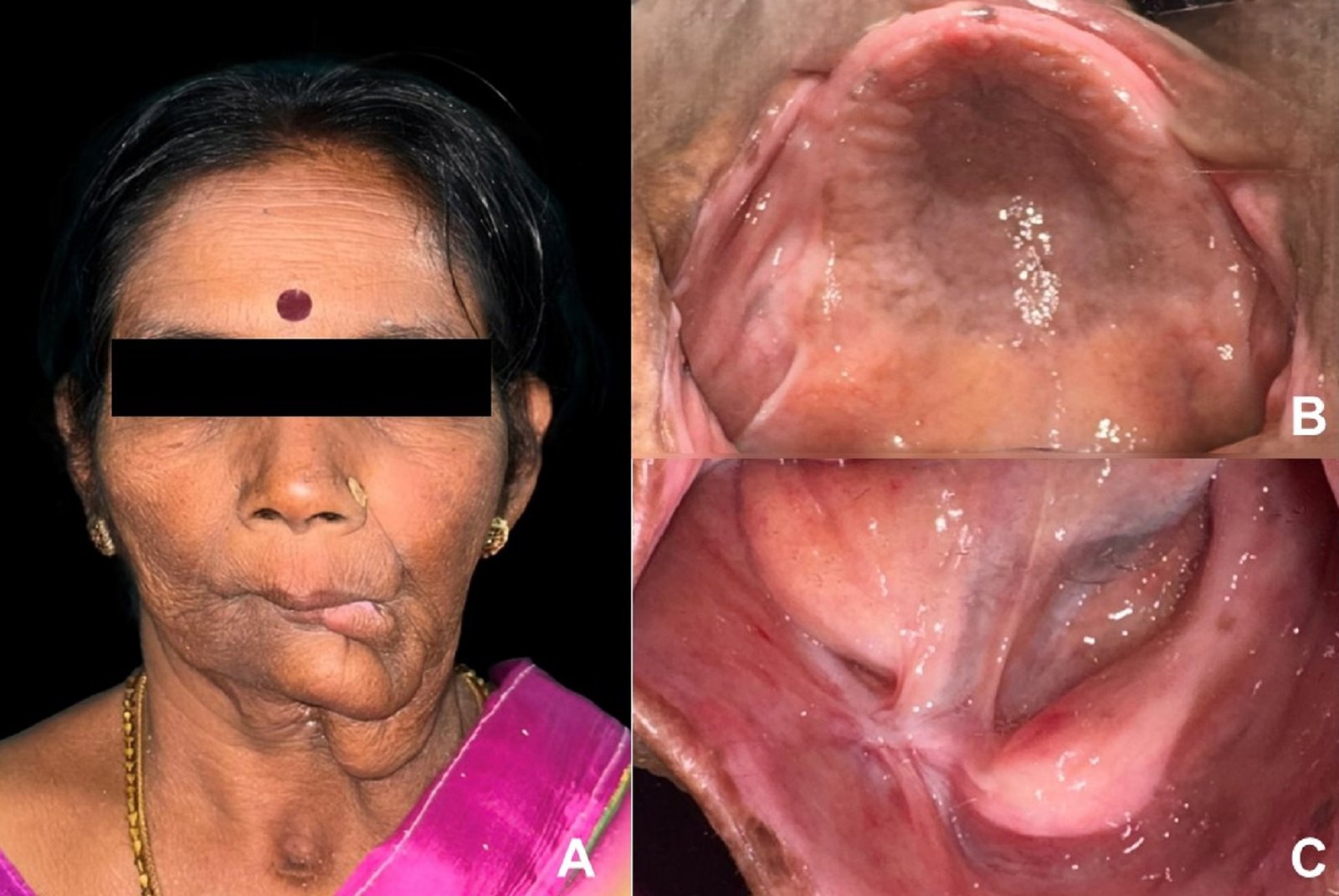
Esthetic Rehabilitation of Severely Mutilated Maxillary Anterior Teeth with Fiber Posts , Core Build-Up Prior and Zirconia Fixed Prosthesis: A Clinical Case Report
Department of Prosthodontics and Crown & Bridge, K.D. Dental College & Hospital, Mathura, UP, India
ABSTRACT
Restoration of endodontically treated anterior teeth with extensive coronal destruction presents a significant restorative challenge owing to compromised tooth structure, reduced retention, and increased susceptibility to fracture. The use of fiber-reinforced posts in conjunction with adhesive resin cement and composite core build-up has emerged as a conservative and predictable approach for reinforcing weakened teeth while preserving esthetics. This case report describes the rehabilitation of a patient with a failed porcelain-fused-to-metal (PFM) fixed dental prosthesis extending from the maxillary right canine to the maxillary left canine (13–23). Following removal of the existing prosthesis, all six abutment teeth were found to be endodontically treated with severe loss of coronal tooth structure, rendering them unsuitable for direct crown preparation. Glass fiber posts were placed in all six teeth after post-space preparation and adhesive cementation using dual-cure resin cement, followed by composite core build-up to re-establish adequate coronal tooth structure. The teeth were then prepared for a definitive fixed prosthesis, and a final impression was made using polyvinyl siloxane impression material. A digital workflow incorporating intraoral scanning was used for fabrication of the definitive zirconia prosthesis.
The final restoration demonstrated satisfactory esthetics, function, and patient satisfaction. This report highlights fiber post-supported restorations as a reliable treatment modality for rehabilitating severely compromised anterior teeth requiring fixed prosthodontic treatment.
Keywords: Fiber post; Composite core build-up; Endodontically treated teeth; Anterior esthetics; Zirconia prosthesis
INTRODUCTION
The maxillary anterior teeth are essential for esthetics, phonetics, and function. Extensive loss of coronal tooth structure following endodontic treatment often compromises the strength and longevity of these teeth, making their restoration a clinical challenge. In such cases, post-and-core restorations are required to provide adequate retention and support for definitive prostheses.
Glass fiber posts have become the preferred choice because their modulus of elasticity closely resembles that of dentin, resulting in favorable stress distribution and reduced risk of root fracture. Their esthetic appearance, adhesive bonding capability, and conservative canal preparation make them particularly suitable for anterior teeth. When combined with composite core build-up and adhesive resin cement, they provide a reliable foundation for fixed prosthodontic rehabilitation. 1-4,11,12
Advances in adhesive dentistry and digital workflows have further improved the predictability of restoring severely compromised teeth. The present case report describes the esthetic rehabilitation of six endodontically treated maxillary anterior teeth using glass fiber posts, composite core build-up, and a digitally fabricated zirconia fixed dental prosthesis following removal of a failed porcelain-fused-to-metal prosthesis.8,14,15
CASE PRESENTATION
A male patient, reported to the Department of Prosthodontics with the chief complaint of an unaesthetic and loose upper front fixed bridge associated with occasional discomfort and food lodgement. The patient expressed dissatisfaction with the appearance of the existing prosthesis and requested a durable esthetic replacement.
The patient's medical history was non-contributory, with no history of systemic illness or drug allergy. Dental history revealed that root canal treatment had previously been performed on the maxillary anterior teeth, following which a porcelain-fused-to-metal fixed dental prosthesis extending from tooth 13 to 23 had been fabricated.
Clinical examination revealed generalized plaque and calculus deposits with compromised oral hygiene. The existing prosthesis exhibited marginal discrepancies, discoloration, and evidence of secondary infection around the abutment teeth. On removal of the prosthesis, all six maxillary anterior teeth demonstrated extensive coronal destruction with inadequate remaining tooth structure for conventional crown preparation. Although the endodontic treatment appeared clinically satisfactory, the severe loss of coronal dentin significantly compromised the retention and resistance form required for definitive fixed prosthodontic rehabilitation.
Considering the amount of remaining radicular tooth structure and the favorable periodontal condition of the abutments, preservation of all six teeth was planned. The treatment objective was to reinforce the weakened teeth using glass fiber posts and composite core build-up, followed by fabrication of a definitive zirconia fixed dental prosthesis to restore esthetics, function, and patient confidence.
CLINICAL PROCEDURE
After obtaining informed consent, the existing porcelain-fused-to-metal fixed partial denture extending from tooth 13 to 23 was carefully removed using crown-removing instruments, ensuring minimal trauma to the remaining tooth structure.

Following removal of the prosthesis, clinical examination revealed that all six maxillary anterior teeth (13, 12, 11, 21, 22, and 23) had previously undergone successful endodontic treatment.
However, extensive loss of coronal tooth structure was evident, making conventional crown preparation impossible without additional reinforcement.

Considering the amount of remaining radicular tooth structure, rehabilitation using glass fiber posts and composite core build-up was planned for all six teeth.

Initially, the coronal gutta-percha was removed to create an adequate post space while preserving approximately 4–5 mm of apical gutta-percha to maintain an effective apical seal.4,5 Post-space preparation was carried out using the manufacturer-supplied precision drill provided with the AAA High-Intensity Quartz Fiber Resin Post System4 (Transparent, 65% fiber content). The calibrated drill was selected according to the diameter of the corresponding fiber post to ensure accurate adaptation within the canal while preserving maximum radicular dentin. Canal preparation was performed under copious irrigation with care to maintain the original canal anatomy and avoid excessive enlargement of the root canal, thereby minimizing the risk of root weakening.
Following preparation, the canals were irrigated with saline, dried using absorbent paper points, and the fiber posts were tried in to verify passive fit, appropriate length, and complete seating before adhesive cementation.
The canal walls and remaining coronal tooth structure were etched with 37% phosphoric acid (Neoetch Gel, Orikam Healthcare, India) for 15 seconds, rinsed thoroughly, and gently dried to maintain moist dentin. 3M™ Single Bond Universal Adhesive (3M ESPE, St. Paul, MN, USA) was then applied according to the manufacturer's instructions and light-cured for 10 seconds.8
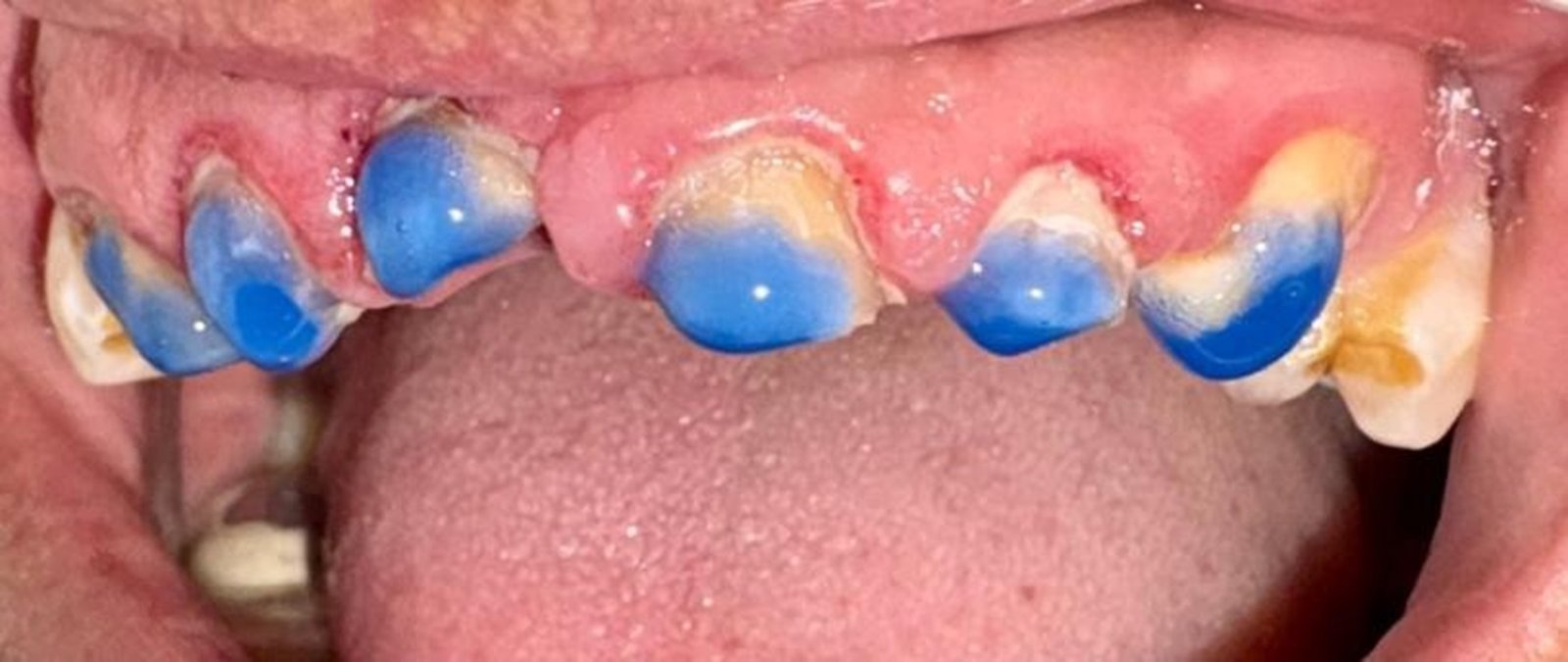
Dual-cure self-adhesive resin cement was then introduced into the prepared canals. The glass fiber posts were coated with the same resin cement and slowly inserted into their respective canals with gentle finger pressure. Excess cement was removed before complete polymerization, and each post was light-cured from multiple directions to ensure optimal polymerization.8,11,12

Following cementation of the fiber posts, core build-up was performed on all six anterior teeth using Rebilda® DC Dual-Cure Core Build-Up Composite (VOCO GmbH, Cuxhaven, Germany). The material was light-cured according to the manufacturer's instructions, followed by finishing and contouring of the cores using rotary finishing burs to obtain adequate form for tooth preparation.4,5

Once satisfactory core morphology had been achieved, full-coverage tooth preparation was performed on teeth 13, 12, 11, 21, 22, and 23. Uniform tooth reduction was carried out while maintaining rounded internal line angles and a circumferential shoulder finish line to facilitate fabrication of an esthetic zirconia prosthesis. Care was taken to preserve as much sound tooth structure as possible and maintain a ferrule effect wherever clinically feasible.

After completion of tooth preparation, gingival retraction was performed to expose the finish lines. A final impression was made using addition silicone impression material employing the putty-wash technique to accurately record the prepared abutments and surrounding tissues.

Subsequently, an intraoral scanner was used to obtain a digital impression for CAD/CAM fabrication of the definitive zirconia prosthesis. The digital workflow enabled accurate design of the prosthesis with proper marginal adaptation, emergence profile, and occlusal morphology.
The fabricated zirconia fixed dental prosthesis was clinically evaluated for marginal integrity, passive fit, proximal contacts, occlusion, phonetics, and esthetics. After satisfactory verification, the prosthesis was permanently cemented using G-CEM ONE™ Paste Pak self-adhesive resin cement (GC Corporation, Tokyo, Japan). Post-cementation occlusal adjustments were performed where necessary, and the patient was provided with oral hygiene instructions and advised regarding periodic recall visits.

RESULT
The rehabilitation successfully restored both the esthetic and functional requirements of the patient. The glass fiber posts provided adequate reinforcement for all six endodontically treated anterior teeth, while the composite core build-up recreated sufficient coronal tooth structure for retention of the definitive prosthesis.
The zirconia fixed dental prosthesis demonstrated excellent marginal adaptation, satisfactory occlusal relationships, and harmonious integration with the patient's facial appearance. The final restoration exhibited natural tooth morphology, appropriate shade matching, and pleasing smile esthetics.
The patient reported complete satisfaction with the treatment outcome, including improved appearance, enhanced masticatory efficiency, and increased confidence during speech and smiling. Clinical evaluation immediately after cementation revealed stable retention of the prosthesis, healthy surrounding soft tissues, and satisfactory functional occlusion without any postoperative discomfort.
DISCUSSION
Restoration of severely compromised endodontically treated anterior teeth requires a balance between function, esthetics, and preservation of remaining tooth structure. Fiber posts are preferred over metal posts because their modulus of elasticity is similar to dentin, allowing favorable stress distribution and reducing the risk of root fracture. Their translucency also provides superior esthetic outcomes.1,3,6,11,12
In the present case, placement of fiber posts and composite core build-up in all six maxillary anterior teeth provided adequate support for the definitive zirconia prosthesis. The use of adhesive cementation and a digital workflow further enhanced the accuracy and predictability of treatment. The successful clinical outcome highlights fiber post-supported restorations as a reliable and conservative option for anterior esthetic rehabilitation.8,11,14,15
CONCLUSION
Successful rehabilitation of severely mutilated endodontically treated anterior teeth requires a multidisciplinary approach combining endodontic, restorative, and prosthodontic principles. Glass fiber posts, when used in conjunction with adhesive resin cement and composite core build-up, provide an effective method of restoring teeth with extensive coronal destruction while preserving remaining tooth structure.3,4,8
The present case demonstrates that even severely compromised maxillary anterior teeth can be successfully rehabilitated without extraction when adequate radicular support is present. The combination of fiber post reinforcement, adhesive core reconstruction, and digitally fabricated zirconia prosthesis resulted in satisfactory esthetic, functional, and biological outcomes.12,14,15
Comprehensive treatment planning, meticulous adhesive procedures, preservation of the ferrule effect, and careful prosthetic execution remain essential factors influencing long-term clinical success.
CLINICAL SIGNIFICANCE
Severely mutilated endodontically treated anterior teeth often present a restorative challenge because of inadequate coronal tooth structure. Glass fiber posts combined with adhesive composite core build-up provide a conservative, esthetic, and biomechanically favorable solution for reinforcing such teeth before definitive prosthodontic rehabilitation. When integrated with digital impression techniques and zirconia restorations, this treatment approach offers predictable esthetic and functional outcomes while preserving the remaining natural dentition.1,3,8,14
REFERENCES
- Ferrari M, Vichi A, García-Godoy F. Clinical evaluation of fiber-reinforced epoxy resin posts and cast post and cores. Am J Dent. 2000;13(Spec No):15B-18B.
- Ferrari M, Vichi A, Mannocci F, Mason PN. Retrospective study of the clinical performance of fiber posts. Am J Dent. 2000;13(Spec No):9B-13B.
- Akkayan B, Gülmez T. Resistance to fracture of endodontically treated teeth restored with different post systems. J Prosthet Dent. 2002;87(4):431-7.
- Schwartz RS, Robbins JW. Post placement and restoration of endodontically treated teeth: A literature review. J Endod. 2004;30(5):289-301.
- Morgano SM, Brackett SE. Foundation restorations in fixed prosthodontics: Current knowledge and future needs. J Prosthet Dent. 1999;82(6):643-57.
- Fokkinga WA, Kreulen CM, Vallittu PK, Creugers NH. A structured analysis of in vitro failure loads and failure modes of fiber, metal, and ceramic post-and-core systems. Int J Prosthodont. 2004;17(4):476-82.
- Mannocci F, Bertelli E, Sherriff M, Watson TF, Ford TRP. Three-year clinical comparison of survival of endodontically treated teeth restored with either full cast coverage or with direct composite restoration. J Prosthet Dent. 2002;88(3):297-301.
- Naumann M, Sterzenbach G, Rosentritt M, Beuer F, Frankenberger R. Is adhesive cementation of endodontic posts necessary? J Endod. 2008;34(8):1006-10.
- Dietschi D, Duc O, Krejci I, Sadan A. Biomechanical considerations for the restoration of endodontically treated teeth: A systematic review of the literature. Part I. Composition and micro- and macrostructure alterations. Quintessence Int. 2007;38(9):733-43.
- Dietschi D, Duc O, Krejci I, Sadan A. Biomechanical considerations for the restoration of endodontically treated teeth: A systematic review of the literature. Part II. Evaluation of fatigue behavior, interfaces, and in vivo studies. Quintessence Int. 2008;39(2):117-29.
- Bitter K, Kielbassa AM. Post-endodontic restorations with adhesively luted fiber-reinforced composite post systems: A review. Am J Dent. 2007;20(6):353-60.
- Goracci C, Ferrari M. Current perspectives on post systems: A literature review. Aust Dent J. 2011;56(Suppl 1):77-83.
- Fernandes AS, Dessai GS. Factors affecting the fracture resistance of post-core reconstructed teeth: A review. Int J Prosthodont. 2001;14(4):355-63.
- Zarone F, Di Mauro MI, Ausiello P, Ruggiero G, Sorrentino R. Current status on lithium disilicate and zirconia: A narrative review. BMC Oral Health. 2019;19(1):134.
- Edelhoff D, Özcan M. To what extent does the longevity of fixed dental prostheses depend on the function of the restorative material? J Adhes Dent. 2007;9(Suppl 1):95-109.
Disclaimer from Guident
The views and opinions expressed in articles published in Guident are solely those of the authors and do not necessarily reflect the views of the editors, the editorial board or the publisher, Ivory India. Guident does not endorse any product, technique or treatment described. Clinical content is intended for qualified dental and medical professionals and is not a substitute for individual clinical judgement. Guident, its editors and the publisher accept no liability for any consequence arising from the use of information published in the journal.
How to cite this article
Dr. Pragati Goyal, Dr. Mohammad Mutiur Rahman, Dr. Siddharth Sisodiya. Esthetic Rehabilitation of Severely Mutilated Maxillary Anterior Teeth with Fiber Posts , Core Build-Up Prior and Zirconia Fixed Prosthesis: A Clinical Case Report. Guident. 2026 Oct;19(11). Available from: https://guident.in/articles/prosthodontics/esthetic-rehabilitation-of-severely-mutilated-maxillary-anterior-teeth-with-fiber-posts-core-build-up-prior.html