Precision in Pediatric Orthodontics: Digital Clear Aligner Treatment of a Mixed-Dentition Case: A Case Report
Wisdom Dental Clinics ®, Jaipur, India, SAACHI Children Hospital, Surat, Guj. India
ABSTRACT
Dental malalignment during mixed dentition can affect tooth position and occlusion. This case report describes the use of clear aligner in a 10-year-old child with irregular tooth alignment. Clinical and radiographic assessment was followed by digital treatment planning and sequential clear aligner therapy. The treatment produced improved dental alignment while accommodating the developing permanent dentition. This case highlights the potential use of clear aligners for selected orthodontic corrections in growing patients.
Keywords: clear aligners; mixed dentition; tooth alignment; pediatric orthodontics
INTRODUCTION
The mixed-dentition period represents an important stage in dental development during which primary and permanent teeth are present simultaneously. During this period, permanent teeth continue to erupt, the dental arches undergo dimensional changes, and occlusal relationships are established. Irregular tooth positioning, crowding, or arch discrepancies may become increasingly apparent as permanent teeth erupt. Early orthodontic evaluation can therefore be useful for identifying developing malocclusions and determining whether intervention is appropriate.1,2
Traditional orthodontic treatment in children has commonly involved removable appliances, functional appliances, or fixed orthodontic systems. More recently, digital orthodontic technologies have introduced clear aligners as an additional treatment option for selected pediatric patients. Clear aligners offer advantages such as removability, improved access for oral hygiene, and digital visualization of the proposed tooth movements.1,2
Clear aligners was developed for younger patients in the mixed-dentition stage and is designed to accommodate developing dentition. The system may be used for selected dental alignment problems and arch-development procedures. However, the biological response of growing patients and the eruption of permanent teeth introduce additional considerations compared with treatment in adults.3
Digital treatment planning allows the clinician to visualize the proposed sequence of tooth movement and assess the intended final alignment before treatment begins. Nevertheless, the predicted result is not necessarily identical to the achieved clinical outcome. Previous research has demonstrated differences between planned and actual tooth movement, particularly for certain types of expansion and posterior tooth movement.3-5
A retrospective study by Gonçalves et al. evaluated clear aligners in mixed dentition and demonstrated measurable transverse expansion of the maxillary and mandibular arches.3 Kim et al. similarly reported that the predictability of expansion varied according to the dental arch and individual tooth.4 These findings indicate that although digital aligner therapy can produce useful clinical changes, careful follow-up remains necessary throughout treatment.
The present case report describes the use of clear aligner for dental alignment in a 10-year-old child during the mixed-dentition period. The report focuses on the diagnostic evaluation, digital treatment planning, sequential aligner therapy, and clinical considerations associated with treating a developing dentition.
CASE REPORT
PATIENT INFORMATION
A 10-year-old child presented to the clinic with a chief complaint of irregularly aligned teeth. The patient was in the mixed-dentition stage, with both erupted permanent teeth and developing unerupted permanent teeth. The primary objective of treatment was to improve dental alignment while accommodating the ongoing development and eruption of the permanent dentition.
CLINICAL AND RADIOGRAPHIC ASSESSMENT
A comprehensive orthodontic examination was performed to assess tooth alignment, arch form, occlusal relationships, and available space. Clinical examination revealed insufficient space for the eruption and alignment/closure of the upper right canine. A panoramic radiograph was obtained to evaluate the developing permanent teeth and their eruption status. The radiographic findings were considered during treatment planning to ensure that the planned tooth movements were compatible with the patient's developing dentition.[Figure 1]

Figure 1: Post-operative OPG and photographs
TREATMENT PLANNING
Following the clinical and radiographic assessment, clear aligner therapy was selected for correction of the dental malalignment. Digital dental records were obtained and used to develop a three-dimensional orthodontic treatment plan. A two-year treatment plan was established to allow gradual correction of the tooth position while accommodating growth and eruption during the mixed-dentition period.
The treatment plan consisted of sequential clear aligners designed to progressively improve dental alignment. The planned movements were reviewed digitally before fabrication, and the treatment sequence was organized to permit regular clinical assessment and modifications when required.
DIGITAL SCANNING AND TREATMENT PLANNING
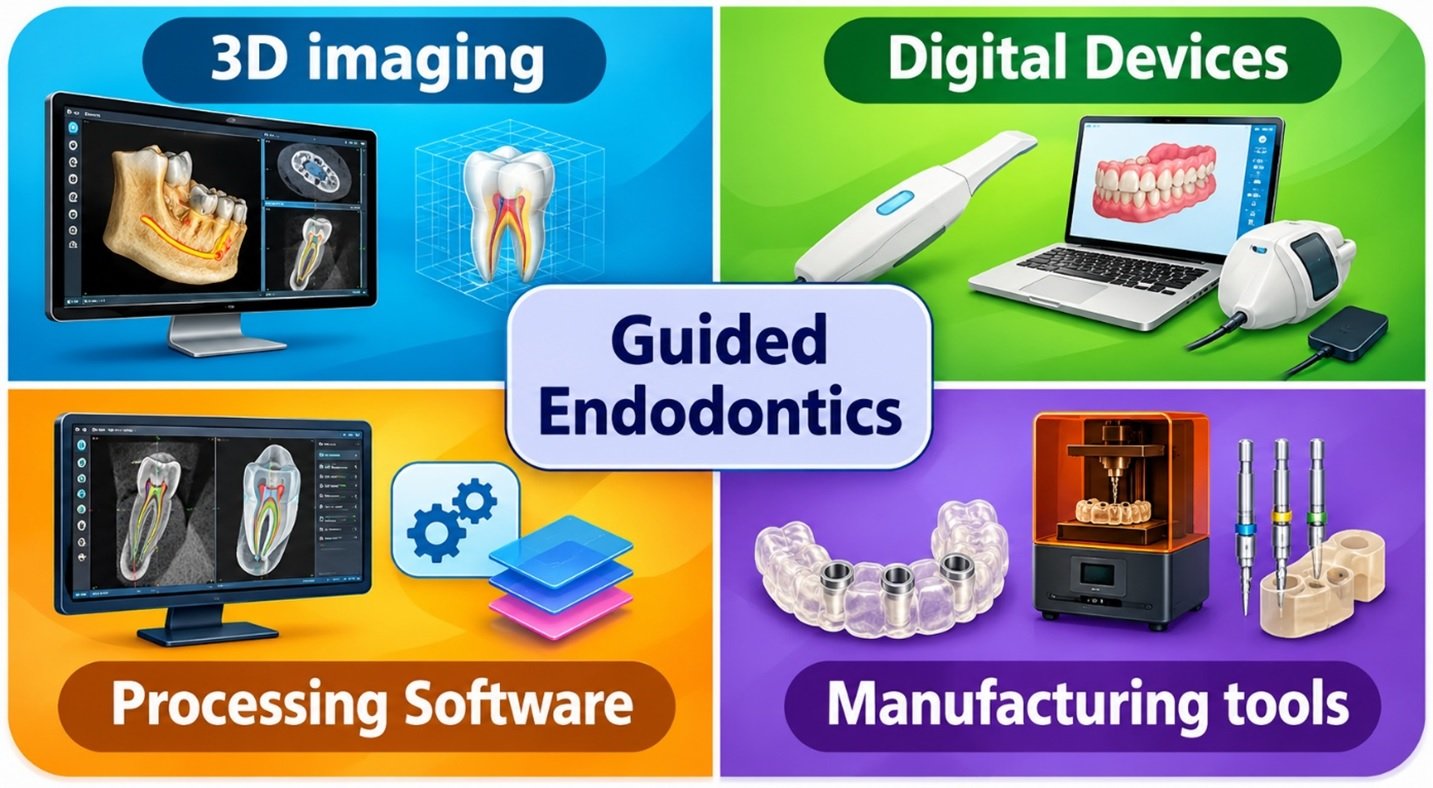
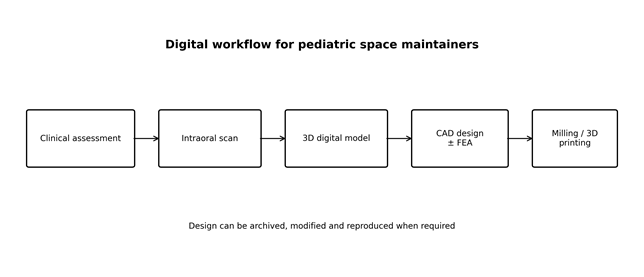
Following the clinical and radiographic examination, an intraoral digital scan was obtained to record the three-dimensional morphology of the dental arches and tooth positions. The digital scan provided accurate records of the existing alignment, arch form, and occlusal relationships and was used for virtual treatment planning.[Figure 2]

Figure 2: Pre-operative digital scan
TREATMENT PROCEDURE
The patient underwent a planned two-year (24-month) course of clear aligner therapy. An initial intraoral digital scan was obtained before treatment to record the three-dimensional morphology of the dentition and was used for digital treatment planning. A series of custom clear aligners was fabricated according to the approved treatment plan.
The patient and parent were instructed regarding aligner insertion and removal, prescribed wear, oral hygiene, and appliance care. Aligners were changed weekly under the guidance of Dr. Gaurav Gupta, with regular clinical examinations to evaluate aligner fit, tooth movement, oral hygiene, compliance, and the eruption of permanent teeth.
During the treatment period, two refinement scans were performed at appropriate stages. These scans provided updated three-dimensional records of the dentition and were used to assess treatment progress and identify any residual alignment discrepancies. Based on the refinement records, the treatment plan was modified where necessary and additional aligners were provided to achieve further correction.Because the patient was undergoing treatment during the mixed-dentition stage, the developing permanent dentition and eruption pattern were monitored throughout the treatment period. [Figure 3a,3b]
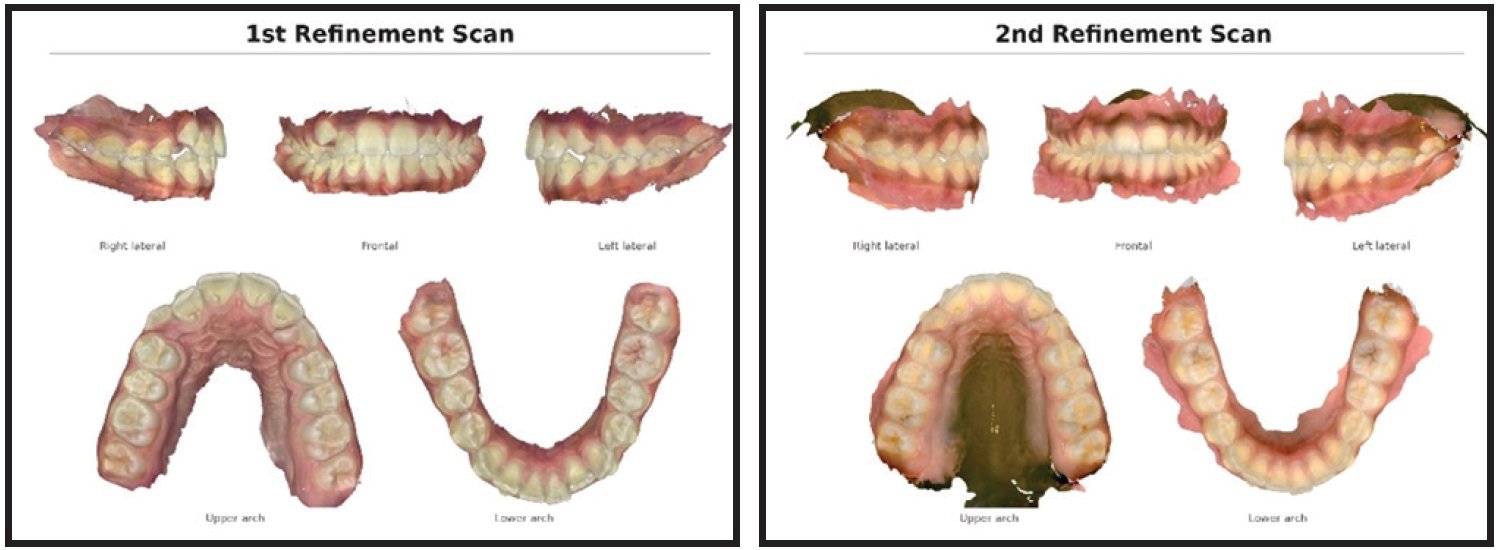
Figure 3a,3b :1st and 2nd refinement scan
TREATMENT OUTCOME
At the completion of the planned two-year treatment period, improvement in the alignment and positioning of the teeth was observed. The developing permanent dentition was monitored throughout treatment, and the final alignment was assessed clinically using the available orthodontic records.[Figure 4]

Figure 4:Final result
DISCUSSION
Clear aligner therapy is increasingly used in growing patients for selected orthodontic corrections during mixed dentition.1,2 Evidence indicates that clear aligners can produce changes in tooth position and arch dimensions, although the extent of achieved movement may differ from the digitally planned outcome.3,4
Gonçalves et al. reported measurable arch expansion with clear aligners, while Kim et al. observed differences in expansion predictability between dental arches and tooth positions.3,4 These findings support the need for clinical assessment during treatment rather than relying solely on the digital setup.
In mixed dentition, the eruption of permanent teeth and ongoing growth may influence treatment progress. Patient compliance is also important because clear aligners are removable, and inadequate wear may affect the planned tooth movement.2,5 Regular follow-up therefore helps assess aligner fit, tooth movement, and changes in the developing dentition.
In the present case, clear aligner therapy was used to improve dental alignment in a 10-year-old child while monitoring the developing permanent teeth. The case demonstrates the application of digital aligner therapy in a selected mixed-dentition patient; however, larger studies are required to establish its long-term effectiveness and predictability.
CONCLUSION
Clear aligners may be a useful option for selected dental alignment problems in children during mixed dentition. In this 10-year-old patient, digitally planned sequential aligners were used to improve tooth alignment while considering the continuing development and eruption of the permanent dentition. Successful treatment requires appropriate diagnosis, careful digital planning, good patient compliance, and regular clinical monitoring. Further clinical studies with standardized outcome measurements are required to evaluate the long-term effectiveness and predictability of clear aligner therapy in growing patients.
REFERENCES
- Inchingolo AD, Dipalma G, Ferrara I, Viapiano F, Netti A, Ciocia AM, et al. Clear aligners in the growing patient: a systematic review. Children (Basel). 2024;11(4):385. doi:10.3390/children11040385.
- Inchingolo AD, Dipalma G, Ferrara I, Viapiano F, Netti A, Ciocia AM, et al. Effects of clear aligners treatment in growing patients: a systematic review. Front Oral Health. 2024;5:1512838. doi:10.3389/froh.2024.1512838.
- Gonçalves A, Ayache S, Monteiro F, Silva FS, Pinho T. Efficiency of Invisalign First® to promote expansion movement in mixed dentition: a retrospective study and systematic review. Eur J Paediatr Dent. 2023;24(2):112-123. doi:10.23804/ejpd.2023.1754.
- Kim CH, Moon SJ, Kang CM, Song JS. The predictability of arch expansion with the Invisalign First system in children with mixed dentition: a retrospective study. J Clin Pediatr Dent. 2024;48(1):91-100. doi:10.22514/jocpd.2024.012.
- Loberto S, Pavoni C, Fanelli S, Lugli L, Cozza P, Lione R. Predictability of expansion movements performed by clear aligners in mixed dentition in both arches: a retrospective study on digital casts. BMC Oral Health. 2024;24:694. doi:10.1186/s12903-024-04435
Disclaimer from Guident
The views and opinions expressed in articles published in Guident are solely those of the authors and do not necessarily reflect the views of the editors, the editorial board or the publisher, Ivory India. Guident does not endorse any product, technique or treatment described. Clinical content is intended for qualified dental and medical professionals and is not a substitute for individual clinical judgement. Guident, its editors and the publisher accept no liability for any consequence arising from the use of information published in the journal.
How to cite this article
Dr. Gaurav Gupta, Dr. D.K. Gupta, Dr. Parth Shah. Precision in Pediatric Orthodontics: Digital Clear Aligner Treatment of a Mixed-Dentition Case: A Case Report. Guident. 2026 Oct;19(11). Available from: https://guident.in/articles/pedodontics/precision-in-pediatric-orthodontics-digital-clear-aligner-treatment-of-a-mixed-dentition-case-a-case-report.html