Biofunctional Prosthetic System in Prosthodontics
Department of Prosthodontics & Implantology, K.D. Dental College & Hospital, Mathura (U.P) India
ABSTRACT
Recent advances in removable prosthodontics include biofunctional prosthetic system (BPS), which closely replicates aesthetics, comfort, functional, and phonetic aspects of natural dentition. The BPS system is a standardized system for the fabrication of high quality removable / complete dentures. It outstandingly fulfills the functional and aesthetic demands of patients. BPS precision dentures are the result of a coordinated system of products, instruments, set-up techniques and training which are all available exclusively to certified BPS clinics.
The goal for BPS dentures is to provide what is best for patients using the instrumentation, training and materials necessary to create the highest quality denture available.
INTRODUCTION
The main aim of treating complete denture patients is to reinstate normal contour comfort form function and to preserve the residual ridge. Although conventional dentures satisfies maximum patients but few patients face discomfort during mastication and other problems including insufficient stability, retention, function and pain and sometimes the resulting pain increases to such an extent that it hinders in mastication and the confidence of the patient decreasesThe unattractive facial appearance, difficulties with speech and mastication creates psychological effects on the patients and the final outcome of the denture becomes unsatisfactory.
Nowadays, the most advanced method used is the biofunctional prosthetic system, which focus-es on bilateral balanced articulation.5 Biofunctional prosthetic system (BPS) is also called “biogenic” or “bio¬functional”, because of the ability to construct dentures, which truly resemble these natural elements they substitute as well as fulfilling aesthetics, and functional and phonetic demands of the patient.5
The BPS system is intended to negate the shortcomings of conventional complete denture techniques.
BPS SYSTEM
The system employs a combination of standardized impression making procedures, a unique method of recording maxillo-mandibular relationship, teeth arrangement, and denture fab-ricationwith minimal number of patient’s visits. The border molding and impression making was controlled by the patient’s functional composition, hence yielding denture bases that were extremely comfortable in use. This technique presents ideal form, function, and aesthetics in complete denture prosthesis, since it is based on multidisciplinary effort and methodical approach.9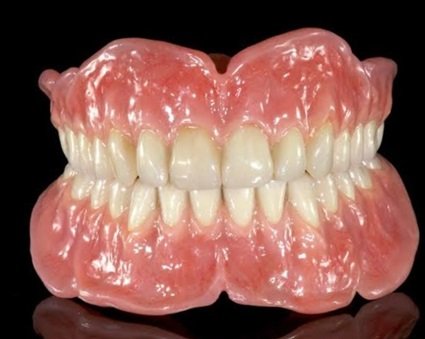
Ivocap Injection – can create a much denser and stronger denture as the acrylic under so much pressure packs the molecules much thicker together making the acrylic much harder. We notice this when trimming and polishing the dentures, makes it easier to clean and stain far less providing to follow the cleaning instructions.
PROCEDURE FOR MAKING A BPS DENTURE
Conventional methods of processing dentures result in shrinkage of the denture base. The denture wearer, this means a denture that doesn’t fit securely and gives sore spots. In the Biofunctional Prosthetic System, state-of-the-art equipment is used to form the denture base.After making the impression facebow transfer is done and in some cases gnathometer is used Stratos Articulator is used for transferring the facebow record, and unique 3D set up the jig to position teeth for superior balance and function The denture is processed using IVOCAP continuous injection into the molds which results in better tooth bond denser pink acrylic, better fit to the gums and absorbs fewer stains and bacteria. Injection moulding and polymerization are performed by the injector in an automated process. The chemical shrinkage of the material is fully compensated during the polymerization process due to the patented thermal management of the flask and the heating system. This allows the fabrication of high-precision denture bases offering unparalleled accuracy of fit.
The injection technology used in the IvoBase Injection system results in a denture that will provide you with the best fit possible and superior results in removable dental prosthetics.
Tooth Selection in this system is done to match the size and skin tone appropriate premium P E Ivoclar teeth with the composite layer with advanced layering technique is used to create alive natural-looking translucent teeth which does not wear. Premium SR Phonares II and SR Vivodent SPE denture teeth are used as part of the Biofunctional Prosthetic System, both of which mimic natural teeth.
SR Phonares II have been designed to match the age and characteristics of the individual patient. The tooth moulds are available with “soft” and “bold” characteristics. Each soft and bold category is further subdivided into the three age groups – youthful, universal and mature.
SR Phonares II is distinguished by a high-quality surface texture that endows the tooth moulds with a true-to-nature vitality. The proximal surfaces are designed to tightly fit together, enhancing the “white aesthetics” of the restoration. The teeth feature a well-balanced relationship of translucency, opalescence and fluorescence. Precision crafted with a nano-hybrid composite, these teeth are characterised by high toughness, resistance to wear, tolerance and durability.
Teeth are set and tried in the mouth, which can be adjusted to give that just perfect aesthetic appearance, personal character.
Gums are carved and copied to natural Gum Gingivae texture and contours with artificial rugae in the palate to help phonetics and characterization of the incisal edges is also done. It includes only two complementary adjustments.
BPS is a system of professional expertise and quality products and is considered to be the standard for aesthetics, comfort, fit and function when it comes to dentures
ADVANTAGES OF BPS DENTURES OVER CONVENTIONAL DENTURES
- BPS Dentures reproduce the functions of the natural teeth during mastication & speech to a very high extent.
- The patient will get a well fitting denture which is stable during functions like chewing, eating, & speaking because the processing of the denture is done by continuous injection moulding technique.
- Even harder foods can be consumed immediately after denture insertion. The usage of high quality teeth sets & the work in the articulator according to the BPS principles makes BPS dentures a masterpiece.
- BPS dentures have high fracture resistance and 25 years clinical approved material.
CONCLUSION
In this era where the patients aesthetic demands are sky high BPS system is a relief. The BPS system gives unmatched quality and comfort. But a good clinical and technical expertise is requiredTeeth radiate character attractiveness and liveliness and BPS provides patients with self confidence charisma and self assurance.REFERENCES
- Van Waas MA. The influence of psychologic factors on patient sat¬isfaction with complete dentures. J Prosthet Dent 1990; 63: 545-548.
- Boerrigter EM, Geertman ME, Van Oort RP, et al. Patient satis¬faction with implant-retained mandibular overdentures. A com¬parison with new complete dentures not retained by implants – a multicentre randomized clinical trial. Br J Oral Maxillofac Surg 1995; 33: 282-288.
- Tallgren A. The continuing reduction of the residual alveolar ridg¬es in complete denture wearers: a mixed-longitudinal study cover¬ing 25 years. J Prosthet Dent 1972; 27: 120-132.
- Berg E. Acceptance of full dentures. Int Dent J 1993; 43: 299-306.
- Xhajanka E, Bardhoshi M, Gjilo K, Meto A, Meto A, Collaku R. Biofunctional prosthetic system in Albania. J Med Dent Sci Res 2017; 3: 19-25.
- Liberati A, Altman DG, Tetzlaff J, et al. The PRISMA statement for reporting systematic reviews and meta-analyses of studies that evaluate healthcare interventions: explanation and elaboration. BMJ 2009; 339: b2700.
- Gagnier JJ, Kienle G, Altman DG, Moher D, Sox H, Riley D. The CARE guidelines: consensus-based clinical case reporting guideline development. Glob Adv Health Med 2013; 2: 38-43.
- Upadhyaya M, Bangera BS. Revolutionising the era of complete dentures using the biofunctional prosthetic system. Guident 2016; 9: 18-22.
- Nekora-Azak A, Evlioglu G, Ozdemir-KarataÅŸ M, Keskin H. Use of biofunctional prosthetic system following partial maxillary re¬section: a clinical report. J Oral Rehabil 2005; 32: 693-695.
- Jambhekar S, Kheur MG, Dandagi S, Matani JD, Sethi S, Kheur SM. Total mandibular reconstruction and rehabilitation: a case report. J Oral Implantol 2015; 41: 740-745.
- Lugo GM, Aguilera FC, Schleske CR. Generation fifty plus: restor¬ing a natural smile. Int Dent (Afr Edn) 2012; 2: 40-46.
- Nabeel S. Scientific Editorial - Biofunctional dentures – a new way to rehabilitate edentulous ridges. Dent Foll 2012; 6: 103-104.
Disclaimer from Guident
The views and opinions expressed in articles published in Guident are solely those of the authors and do not necessarily reflect the views of the editors, the editorial board or the publisher, Ivory India. Guident does not endorse any product, technique or treatment described. Clinical content is intended for qualified dental and medical professionals and is not a substitute for individual clinical judgement. Guident, its editors and the publisher accept no liability for any consequence arising from the use of information published in the journal.
How to cite this article
Dr. Shaivy Ambuj, Dr. Siddharth Sisodia. Biofunctional Prosthetic System in Prosthodontics. Guident. 2020 Nov;13(12). Available from: https://guident.in/articles/prosthodontics/biofunctional-prosthetic-system-in-prosthodontics.html