Orthodontics: Quality of Care and Quality of Life
Department of Orthodontics and Dentofacial Orthopedics, Akola Mah. India, Department of Orthodontics and Dentofacial Orthopedics, 2Rural Dental College Loni, PIMS Mah. India, Department of Orthodontics and Dentofacial Orthopedics, Akola Maharashtra
Introduction
Orthodontics, a specialized branch of dentistry, focuses on diagnosing, preventing, and correcting malpositioned teeth and jaws. While traditionally evaluated through clinical outcomes such as alignment and occlusion, modern orthodontic care increasingly emphasizes patient-centered outcomes, particularly quality of life (QoL) and quality of care (QoC).
Quality of Care in Orthodontics
Key Dimensions
Quality of care in orthodontics encompasses:
- Clinical effectiveness: Precision in diagnosis and treatment planning.
- Safety: Minimizing risks such as root resorption or periodontal damage.
- Patient experience: Comfort, communication, and satisfaction.
- Accessibility and equity: Timely and affordable care across populations.
Advances in Care
- Digital orthodontics (e.g., 3D imaging, aligners) has improved treatment accuracy and reduced chair time.
- Evidence-based protocols ensure standardized care and better outcomes.
- atient-reported outcome measures (PROMs) are now used to assess satisfaction and perceived benefits.
Quality of Life and Orthodontic Treatment
Oral Health-Related Quality of Life (OHRQoL)
OHRQoL refers to how oral health affects daily functioning, self-esteem, and social interactions. Orthodontic treatment can significantly impact this, both positively and negatively.
Positive Impacts
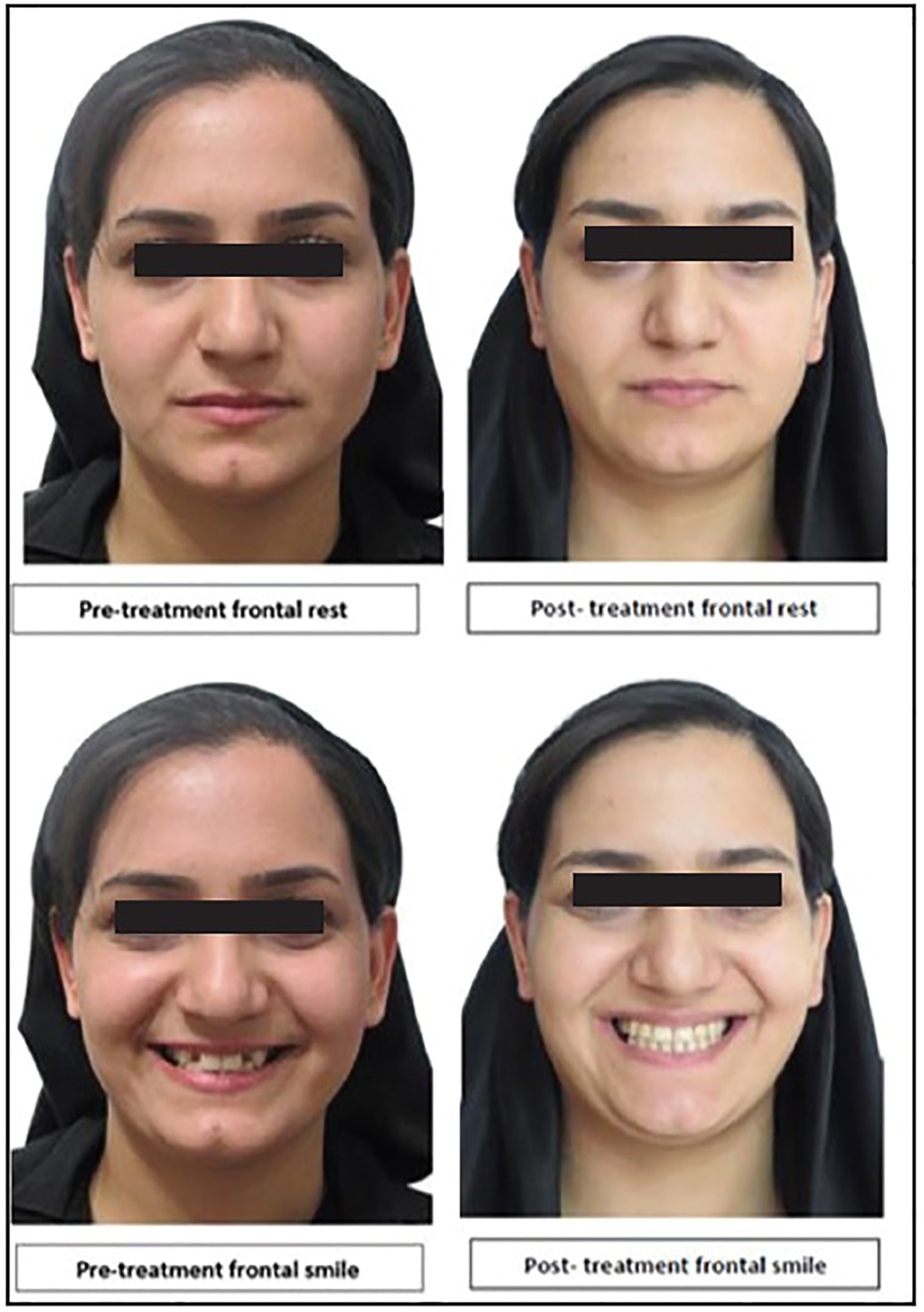
- Improved aesthetics and self-confidence
- Better social interactions and psychological well-being
- Enhanced functional abilities like chewing and speech
Challenges During Treatment
- Pain and discomfort from appliances
- Dietary restrictions
- Social embarrassment, especially in adolescents
Research Insights
- A systematic review by Zhou et al. found a modest but consistent association between orthodontic treatment and improved QoL, especially in adolescents.
- A 2025 study in PLOS ONE highlighted that factors like malocclusion severity, age, and socioeconomic status significantly influence QoL during aligner treatment.
- A longitudinal cohort study using the Malocclusion Impact Questionnaire (MIQ) showed significant improvements in QoL post-treatment, with strong correlations to clinical indices like PAR and IOTN scores.
Dentofacial Aesthetics and Quality of Life
Impression Forming and Psychosocial Impacts of Bodily Attractiveness General Physical Attractiveness Socio-psychological research on impression forming about physically attractive versus nonattractive persons suggests a halo effect, which was originally described as “what is beautiful is good.” It is assumed that attractive individuals are perceived as possessing desirable personality char acteristics and social success. The social cognition theory hypothesizes that individuals develop knowledge structures, the so-called stereotypes, to make sense of other people’s behav ior. Expectations about personality traits of members of a specific subgroup help to direct observer’s own behaviors.The beliefs about characteristics of group members are organized in implicit personality theories,6 which define personal attributes, covariations among them, and their links to a social subgroup, as attractive people may be perceived. Research on evaluative dimensions of personality has found seven principal components. These are social and intellectual competence, potency and adjustment, integrity and concern for others, and finally, physical attractiveness.
Hypothetically, the perception of attractiveness is differentially related to attributions along the remaining characteristics. Presumably, perceived beauty has stronger impacts on attributed social competence than on the other evaluative dimensions
A meta-analysis of 76 studies on physical attractiveness stereotyping tested this hypothesis, and found a strong overall effect of perceived attractiveness on impressions of social competence. Furthermore, good looks seem to induce weaker inferences about potency, adjust ment, and intelligence. Finally, they appear to have no effect on beliefs about integrity and concern for others. In contrast, a negative association was found in evaluations of modesty (as opposed to vanity) suggesting a “dark side” of the attractiveness stereotype.
It may be concluded that the generality of the beauty as a good stereotype is confined to specific contents. It seems to be particularly strong in social com petence impressions suggesting that attractive individuals might have advantages in social rela tionships. There are several sources for the develop ment of the physical attractiveness stereotype. First, visual perception of beauty might be pleas ing and thus elicit a positive affect, whereas ugly faces might provoke feelings of misery and sym pathy. Some supporting evidence has been pro duced by experimental studies that used photo graphs of attractive faces for inducing positive affects. Second, perceivers might observe that attractive persons receive positive reactions, and assume that these reactions are caused by other favorable personality traits. Third, cultural mes sages suggest in general a beauty-is-good association. Children learn from book illustrations that dumb villains have ugly faces and crooked teeth whereas good looking heroes have beautiful teeth. Television commercials suggest that good looks are associated with sociability, popularity, and interpersonal ease whereas ugly teeth and bad breath cause problems in sexual relationships. Teenage magazines show models with perfect teeth, which in adolescent readers might provoke dissatisfaction with their own dental appearance.Dental Aesthetics Several studies have addressed the relevance of the physical attractiveness stereotype in the field of orthodontics.
Conclusion
Orthodontic care is evolving beyond clinical success to embrace holistic patient well-being. While treatment can temporarily affect comfort and social ease, the long-term benefits to quality of life—especially in terms of self-image and oral function—are substantial. Future care models should integrate both clinical excellence and patient-centered outcomes to truly define quality in orthodontics.
References
- Zhou Y, Wang Y, Wang X, Volière G, Hu R. The impact of orthodontic treatment on the quality of life: a systematic review. BMC Oral Health
- Souza GLN et al. Determinants of oral health-related quality of life in orthodontic aligner wearers. PLOS ONE
- Peter E et al. Does orthodontic treatment improve the Oral Health-Related Quality of Life? European Journal of Orthodontics
Disclaimer from Guident
The views and opinions expressed in articles published in Guident are solely those of the authors and do not necessarily reflect the views of the editors, the editorial board or the publisher, Ivory India. Guident does not endorse any product, technique or treatment described. Clinical content is intended for qualified dental and medical professionals and is not a substitute for individual clinical judgement. Guident, its editors and the publisher accept no liability for any consequence arising from the use of information published in the journal.
How to cite this article
Dr. Yash Santosh Goenka, Dr. Rajesh Ramdasji Kambe Dental College Kanheri, Dr. N.G Toshniwa, Dr. Sameer Parhad, Dr. Rajesh Ramdasji Kambe Dental College Kanheri. Orthodontics: Quality of Care and Quality of Life. Guident. 2025 Nov;18(12). Available from: https://guident.in/articles/orthodontics/orthodontics-quality-of-care-and-quality-of-life.html