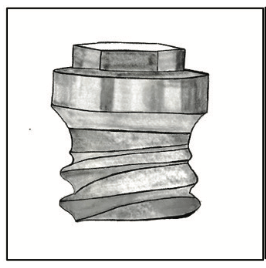
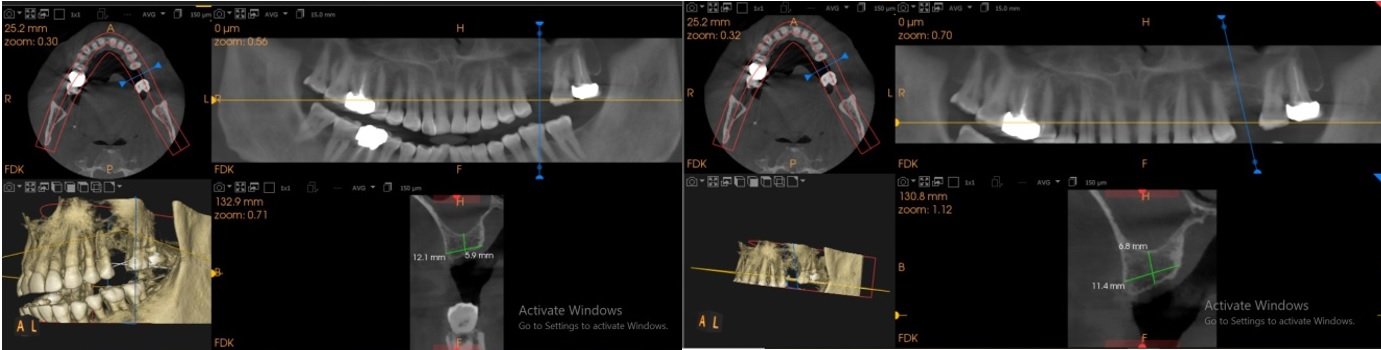
Management of Aesthetic Emergencies with Corticobasal Implants with Conventional Support: A Case Report
Dentonic Oral Surgery Implant Centre Rajbagh, Srinagar, J&K
Abstract
Background: Emergency dental situations such as fractured or avulsed anterior teeth demand immediate aesthetic and functional restoration. Corticobasal implants offer a rapid and biocompatible solution for single-tooth replacement under these conditions.
Objective: This case series demonstrates the clinical strategies employed to stabilize single corticobasal implants with immediate loading by incorporating conventional adjunctive support systems.
Methods: Five patients presented with aesthetic emergencies requiring immediate implant placement. Single corticobasal implants were restored on the same day using immediate loading protocols. Conventional prosthodontic supports—including metallic clips, connecting bars, adjacent teeth, and modified crowns—were employed to prevent destabilization and enhance functional predictability.
Results: All cases achieved immediate aesthetic satisfaction with stable implant placement. Adjunctive support mechanisms successfully reduced the risk of early destabilization and optimized load distribution in the aesthetic zone.
Conclusion: Immediate loading of single corticobasal implants in the anterior region can be successfully managed with conventional support modifications. This hybrid approach improves stability, aesthetics, and patient satisfaction. Further studies are recommended to standardize these supportive strategies.
Keywords: Corticobasal implants, Immediate loading, Aesthetic restoration, Single implant, Emergency dentistry, Conventional support
Introduction
The sudden loss of an anterior tooth due to trauma, fracture, or extraction is not only a functional concern but also an aesthetic emergency. Patients often demand immediate solutions that restore both appearance and confidence. Corticobasal implants have gained clinical acceptance as an effective modality for immediate loading in compromised or emergency cases due to their bicortical anchorage and biomechanical stability.
However, single implants in the anterior aesthetic zone remain vulnerable to destabilization from tongue thrust, occlusal forces, and parafunctional habits. To mitigate these risks, conventional prosthodontic techniques can be combined with corticobasal implantology. This case series presents five clinical scenarios illustrating different methods of adjunctive support for immediate loading of single corticobasal implants.
Case Series
Case 1:
Single Implant without Adjacent Support
A patient presented with a missing anterior tooth and no adjacent prosthetic support. A lateral metallic clip was incorporated lingually/palatally into the prosthesis to prevent destabilization and protect the implant during function.

(Figure 1: Prosthesis design with lingual metallic clip)
Case 2:
Two Single Implants in Separate Sites
Both lateral incisors required restoration. Two corticobasal implants were placed and connected via a metallic bar, distributing occlusal load and preventing independent destabilization.

(Figure 2: Metallic bar connection between two implants)
Case 3:
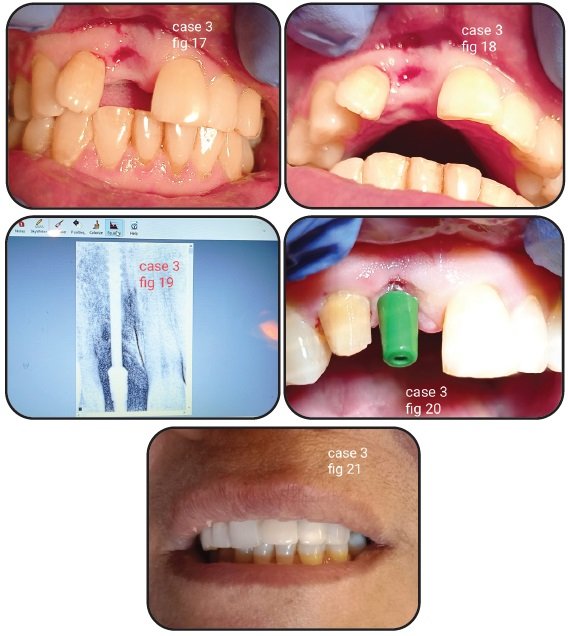
Utilizing an Unaesthetic Adjacent Tooth
An adjacent unaesthetic tooth was incorporated into the prosthesis to provide added support. This approach simultaneously improved aesthetics and enhanced implant stability.
Case 4:
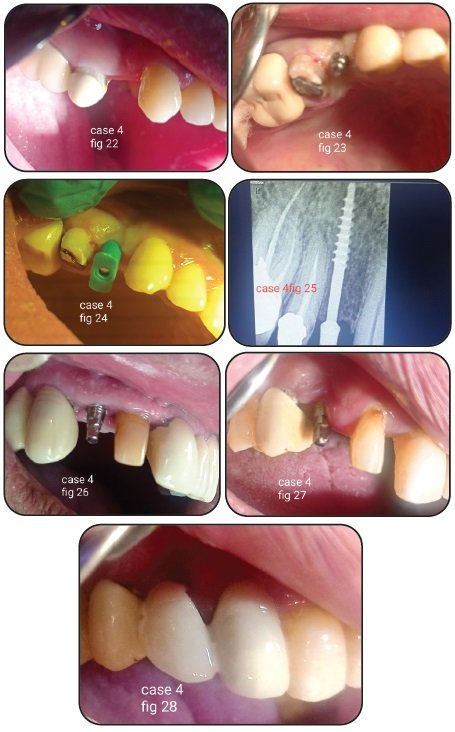
Use of an Existing Crown on Adjacent Tooth
An adjacent tooth with an existing crown was modified. The old crown was replaced and connected to the implant prosthesis, allowing occlusal load sharing between implant and natural tooth.
Case 5:
Periodontally Compromised Adjacent Tooth
A patient with a periodontally compromised anterior tooth underwent single corticobasal implant placement. The compromised adjacent tooth was conventionally utilized for stabilization, achieving both functional improvement and acceptable aesthetics.

Discussion
Immediate loading corticobasal implants are particularly useful in emergency aesthetic cases. However, single implants pose biomechanical challenges due to limited support and increased susceptibility to micro-movements. Conventional prosthodontic adjuncts—such as clips, connecting bars, or incorporation of adjacent teeth—act as stabilizing mechanisms, reducing the risk of early failure.
This hybrid approach bridges implantology and prosthodontics, enhancing outcomes in otherwise high-risk scenarios. Reported success rates of corticobasal implants are high when combined with proper occlusal management and immediate loading protocols. However, long-term evidence on single implant cases with such modifications remains limited.
Conclusion
Single corticobasal implants with immediate loading provide an efficient and aesthetic solution for emergency cases. When reinforced with conventional support systems, implant stability and patient satisfaction are significantly enhanced. Larger case studies with long-term follow-up are required to establish standardized guidelines for such hybrid approaches.
Disclaimer from Guident
The views and opinions expressed in articles published in Guident are solely those of the authors and do not necessarily reflect the views of the editors, the editorial board or the publisher, Ivory India. Guident does not endorse any product, technique or treatment described. Clinical content is intended for qualified dental and medical professionals and is not a substitute for individual clinical judgement. Guident, its editors and the publisher accept no liability for any consequence arising from the use of information published in the journal.
How to cite this article
Dr. Muhammad Shafie. Management of Aesthetic Emergencies with Corticobasal Implants with Conventional Support: A Case Report. Guident. 2025 Oct;18(11). Available from: https://guident.in/articles/implantology/management-of-aesthetic-emergencies-with-corticobasal-implants-with-conventional-support-a-case-report.html