
Isolation in Clinical Dentistry: Part-7
MIK Dental, Mumbai, India
SPLIT DAM
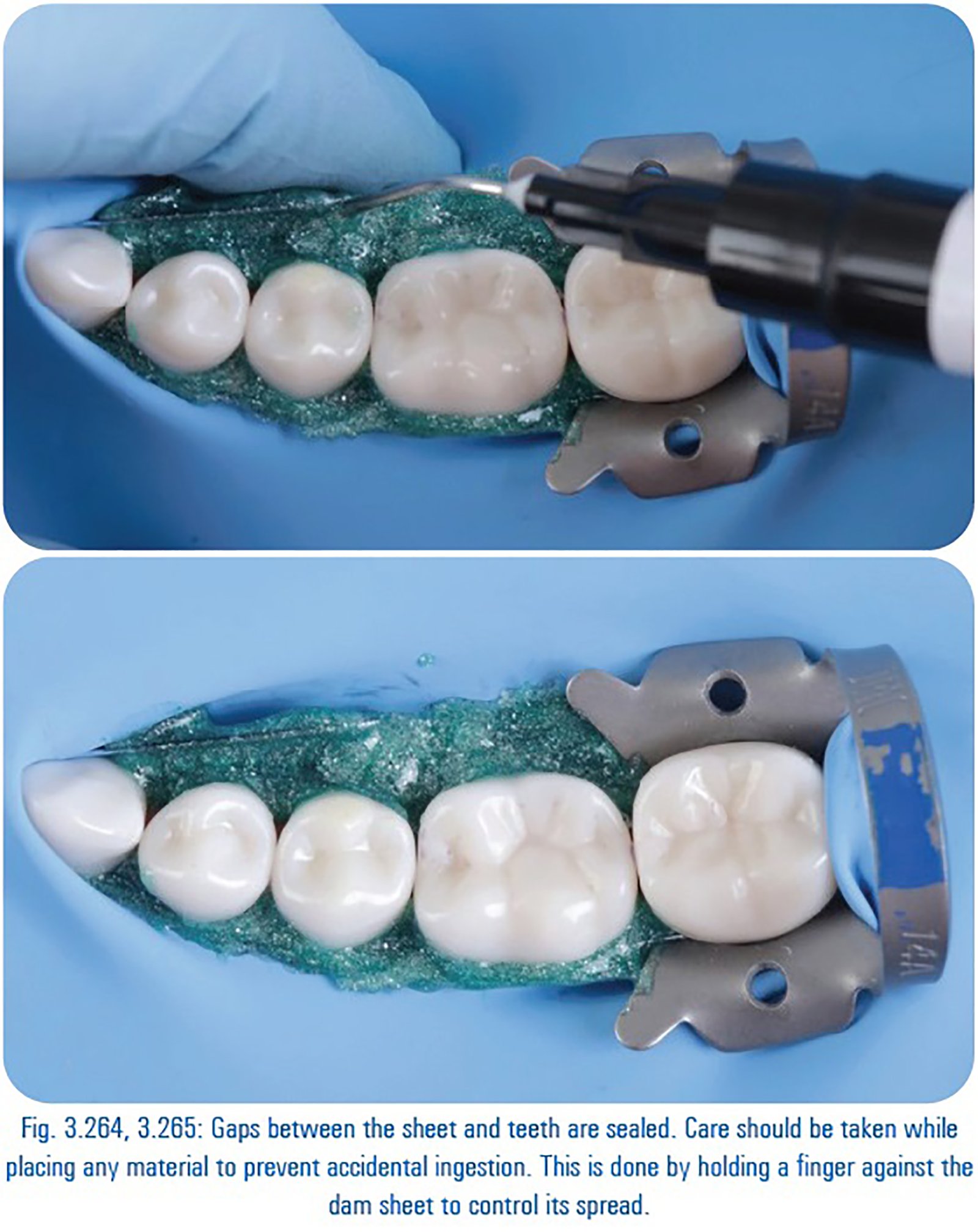
This is a technique where larger areas are isolated by cutting the dam sheet open, adapting it onto the target area and then (optionally) resealing it using varying materials.

Advantage
- This technique is relatively quick and easy to perform.
Disadvantage
- The technique however only provides for relative isolation and carries the fear of work-field contamination.
ANTERIOR SPLIT DAM TECHNIQUE
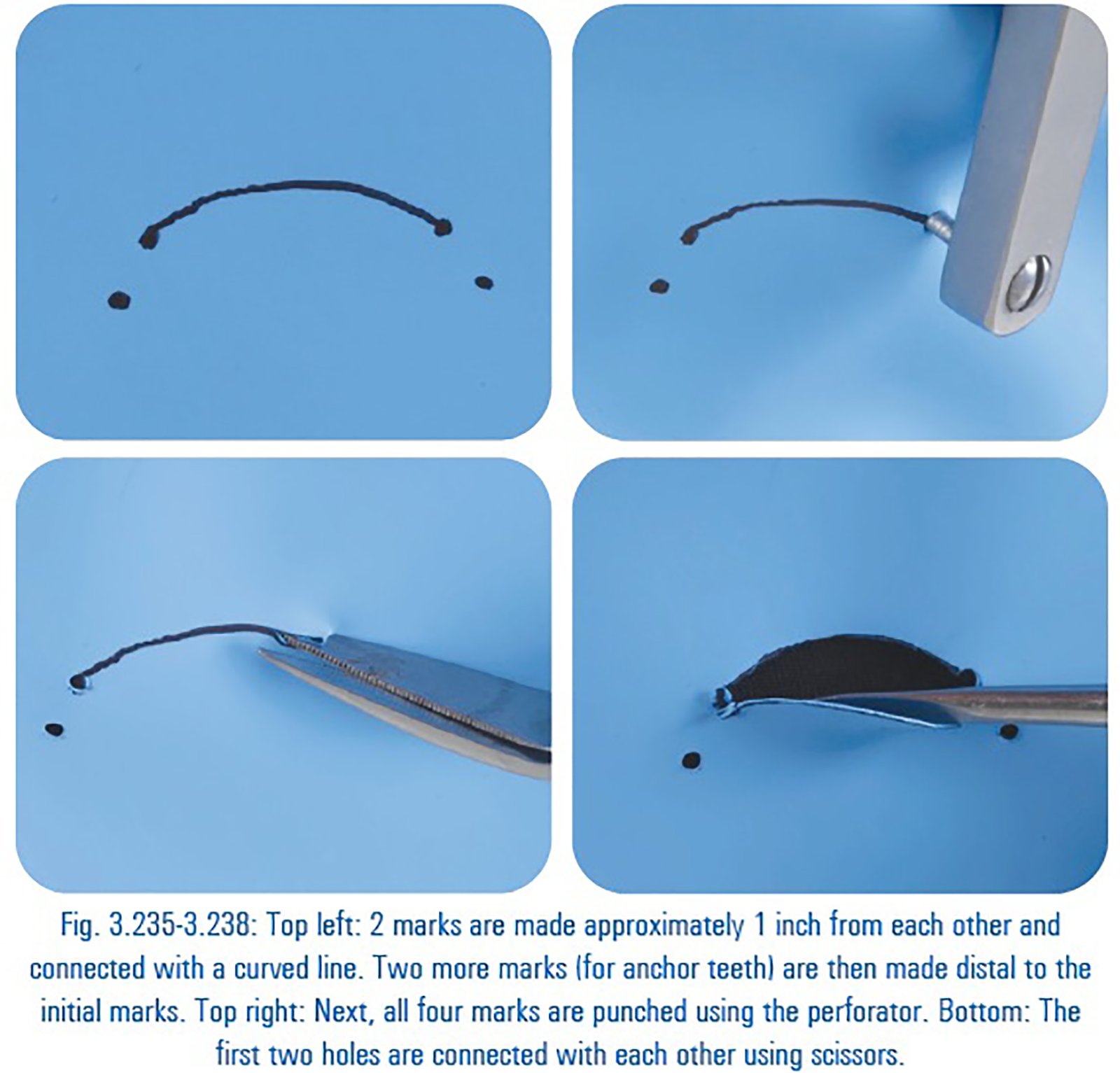


POSTERIOR SPLIT DAM TECHNIQUE
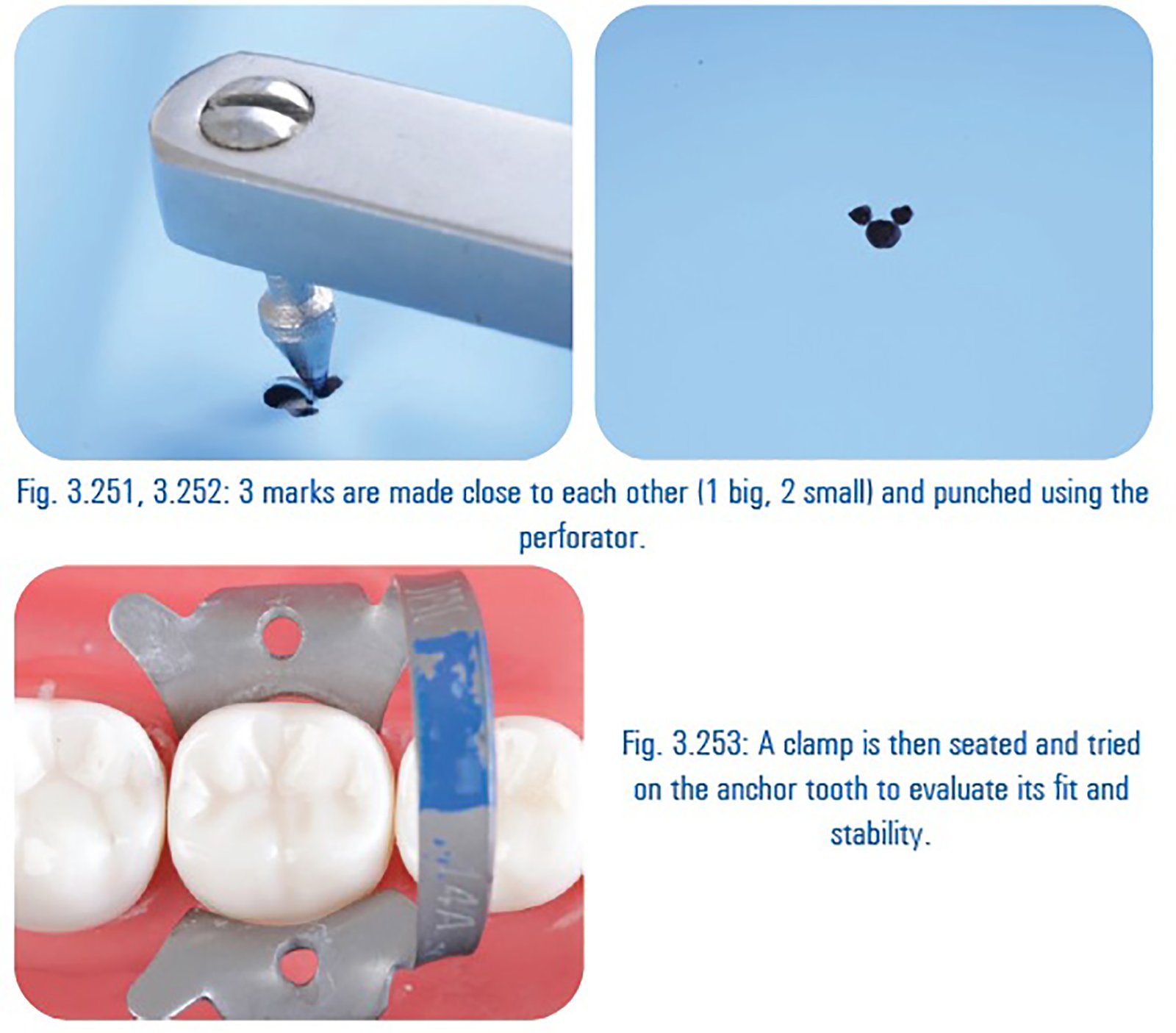
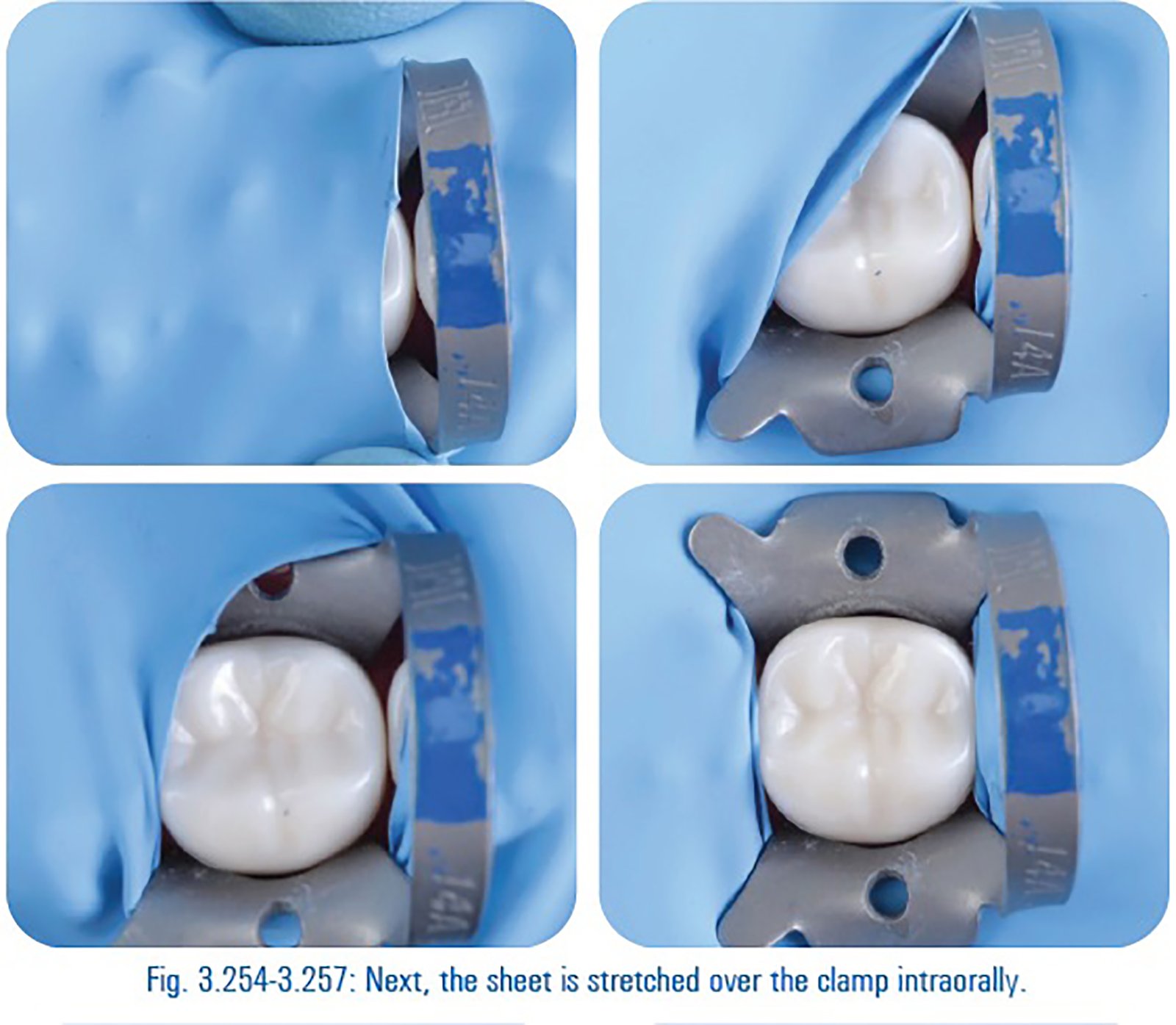
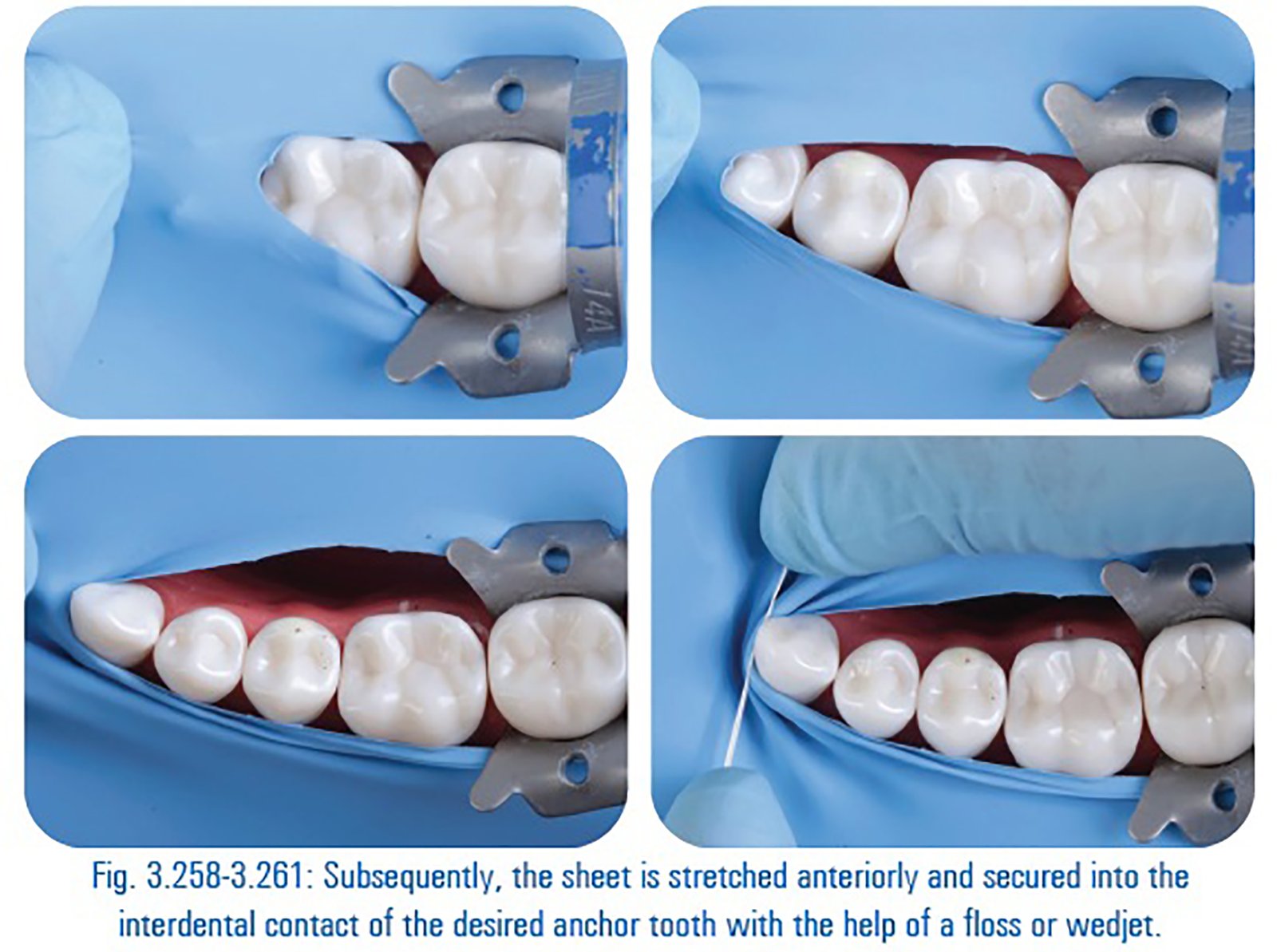

CONCLUSION
Isolation not only helps achieve a clean, dry field, but also retracts hard and soft-tissues providing a clear vision which improves the clinical outcome.
Use of air-rotors in dentistry produce aerosols which can result in crosscontamination and spread of various infectious diseases. In this regard, rubber dam isolation becomes an integral part of contemporary dentistry, as it not only reduces the amount of aerosol generated but also its microbial bioload. With the world fighting a novel virus that harbors in the oral cavity, this aspect gains far greater significance than ever before.
Patient safety and quality dentistry are both integral aspects of our clinical work. Various modalities are available to choose from and every responsible clinician should include these into their day-to-day practice.
ACKNOWLEDGEMENT
All the authors of this article would like to thank Dr. Tousif Iqbal Nathani and Dr. Juan Gonzalo Olivieri for their invaluable contribution in making of this article.
This article is a direct extract from the book by Dr. Moez Khakiani, titled Clinical Fixed Prosthodontics- Master Volume. It is a color atlas suited for clinicians who wish to expand their horizons in advanced prosthodontics. It has over 400, pages, and over 2500 color illustrations distributed over 25 chapters. It is a MUST-HAVE guide for clinical prosthodontics, including chapters like master level occlusion, full mouth rehabilitation, porcelain veneers, table top prostheses, implant dentistry, digital dentistry, etc.
Why don’t you give this book a try?
It is available for preview and purchase on www.mikdental.in, or you could connect on +91 9833400664 for the same.
Disclaimer from Guident
The views and opinions expressed in articles published in Guident are solely those of the authors and do not necessarily reflect the views of the editors, the editorial board or the publisher, Ivory India. Guident does not endorse any product, technique or treatment described. Clinical content is intended for qualified dental and medical professionals and is not a substitute for individual clinical judgement. Guident, its editors and the publisher accept no liability for any consequence arising from the use of information published in the journal.
How to cite this article
Dr. Moez I. Khakiani, Dr. Usha Dadlani, Dr. Aatif Iqbal Nathani. Isolation in Clinical Dentistry: Part-7. Guident. 2024 Jun;17(7). Available from: https://guident.in/articles/general/isolation-in-clinical-dentistry-part-7.html

