Hand Hygiene-Use the Soap Dont Be a Dope - a Review
Department of Prosthodontics & Implantology, K. D. Dental College & Hospital, Mathura.
ABSTRACT
Health care associated infections are drawing increasing attention from patients, insurers, governments and regulatory bodies. This is not only because of the magnitude of the problem in terms of the associated morbidity, mortality and cost of treatment, but also due to the growing recognition that most of these are preventable. The medical community is witnessing in tandem unprecedented advancements in the understanding of pathophysiology of infectious diseases and the global spread of multi-drug resistant infections in health care set-ups. These factors, compounded by the paucity of availability of new antimicrobials have necessitated a re-look into the role of basic practices of infection prevention in modern day health care. There is now undisputed evidence that strict adherence to hand hygiene reduces the risk of cross-transmission of infections. With “Clean Care is Safer Care” as a prime agenda of the global initiative of WHO on patient safety programmes, it is time for developing countries to formulate the much-needed policies for implementation of basic infection prevention practices in health care set-ups. This review focuses on one of the simplest, low cost but least accepted from infection prevention: hand hygiene.
KEYWORDS: infectious disease , cross contamination , WHO , hand hygiene measures
INTRODUCTION
Hands are the most common vehicle of transmission of organisms. Hand hygiene is regarded as one of the most important element of infection control activities. In the wake of the growing burden of health care associated infections (hcais), the increasing severity of illness and complexity of treatment, health care practitioners (hcps) are reversing back to the basics of infection preventions by simple measures like hand hygiene. This is because enough scientific evidence supports the observation that if properly implemented, hand hygiene alone can significantly reduce the risk of cross-transmission of infection in healthcare facilities (hcfs)Historical background
A hungarian physician, Ignaz Semmelweis, is known as the father off hand washing. In 1846 , he won this title when he demonstrated the proper and effective hand washing technique and how it could prevent the spread of disease and infections. In 1975 and 1985, the cdc published guidelines on hand washing practices in hospitals:-- Primarily hand washing with non antimicrobial soaps
- Washing with antimicrobial soap
- Alcohol-based solutions were recommended only in situations where hand washing sinks were not available.
In 1995, the hospital infection control practices advisory committee (hicpac) advocated the use of antimicrobial soap or a waterless antiseptic agent for cleaning hands upon leaving the rooms of patients infected with multidrug-resistant pathogens. In 2002, the cdc published revised guidelines for hand hygiene. A major change in these guidelines was the recommendation to use alcohol based hand rubs for decontamination of hands between each patient contact (of non-soiling type) and the use of liquid soap and water for cleaning visibly contaminated or soiled hands. With the growing burden of HAI`s, limited options of effective antimicrobials evidence supporting the role of hand hygiene in reduction of HAI`s, WHO has launched a global hand hygiene campaign.
In 2005, it introduced the first global patient safety challenge “Clean Care is Safer Care (ccisc)”, as part of its world alliance for patient safety. In 2006, advanced draft guidelines on “Hand Hygiene in Health Care” were published.
The first Global Handwashing Day was observed on October 15, 2008.
On May 5, 2009, the WHO highlighted the importance of hand hygiene and launched guidelines and tools on hand hygiene, based on the next phase of patient safety work programme “SAVE LIVES: Clean Your Hands”
HANDS AS A SOURCE OF INFECTION
Microbial colonization of the hands
The entire surface of the human body is colonized by micro-organisms. The skin of the hands harbours two main types of microorganisms, resident and transient. Resident flora include mainly gram-positive bacteria , low virulence micro-organisms that are rarely transmitted by hand contact and are not easily removed through hand hygiene. The transient flora consists mainly of gram-negative bacteria that are an important cause of nosocomial infections that can be removed by hand hygiene. They colonize the skin for short periods of time, usually only hours or days.The brief episodes of personal contact, such as shaking hands or touching a patient’s face, hundreds or thousands of bacteria are transferred onto the dental healthcare personnel’s hands even higher rates of bacterial transfer can occur during patient treatment, as hands become progressively colonized with organisms from the respiratory tract and mouth.
Bacterial replication will continue in a linear fashion over time until the hands are cleaned. Direct contact via hands is the major route of spread for a number of organisms including MRSA, Influenza viruses, Herpes Simplex and Herpes Zoster viruses. The main purpose of hand hygiene is to remove or destroy the transient flora acquired through contact with patients and their surroundings or contaminated equipment, as well as the physical removal of dirt, blood and body fluids.
HANDS AS A SOURCE OF HOSPITAL-ACQUIRED INFECTION
Hands of healthcare workers and patients are instrumental in the spread of multidrug-resistant bacteria such as MRSA and clostridium difficile. About 5–10% of patients during their hospital stay will pick up a healthcare-associated infection (hcai).Some may have fatal consequences. It is estimated that most of these HAI`s are due to HCW`s failing to wash their hands before and after every patient contact. Yet this unwelcome chain of events can be broken simply and expediently by effective use of hand hygiene.HAND HYGIENE TECHNIQUE
Remove rings and watches
Microbiological studies have shown that the skin under rings becomes heavily colonized with bacteria, such as staphylococcus aureus and gram-negative species. Rings and watches may also prevent effective cleaning of the skin because the wearer does not want to damage the item and so avoids cleaning their hands effectively. Therefore, it is recommended that watches and rings are removed before the start of the treatment session. Moreover, gloves are more prone to tear when rings are worn.Artificial nails and chipped nail polish also harbour bacteria and candida spp. And have been implicated as the source of outbreaks of bacterial and fungal infections amongst patients in hospital wards. Artificial fingernails became colonised with GNB more frequently than natural nails and alcohol-based hand rubs were less effective in eliminating GNB from artificial nails. Hence, it is best to keep fingernails short and clean.
Good practice guidance for hand hygiene
- A poster showing hand-washing protocol should be displayed in the surgery.
- Cuts and abrasions less than 24 hours old must be covered with a waterproof dressing.
- After 24 hours, the body’s natural defences ‘seal’ small cuts and wounds.
- Fingernails should be kept short, clean and free from nail polish, artificial Nails and nail art.
- Wristwatches and jewellery should be removed, and any long-sleeved clothing be rolled up/removed. Rings should not be worn during a clinical session.
- Hand cream should be applied regularly throughout the day to protect skin from drying. However, communal tubs should be avoided as these can become contaminated.
When to clean hands

How to clean hands:
Alcohol hand rub
Duration 20-30 secs
With soap and water
When visibly soiled
Duration 40-60 secs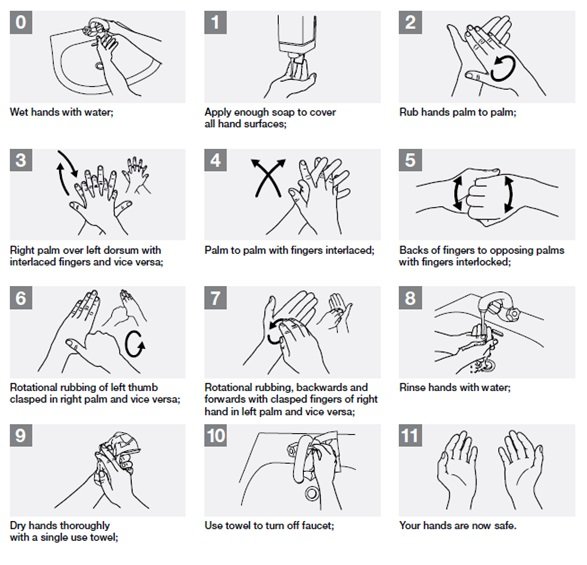
Surgical hand hygiene
All sterile team members should perform the hand and arm scrub before entering the surgical area. The basic principle of the scrub is to wash the hands thoroughly, and then to wash from a clean area (the hand) to a less clean area (the arm). A systematic approach to the scrub is an efficient way to ensure proper technique.There are two methods of scrub procedure. One is a numbered stroke method and the alternative method is the timed scrub, and each scrub should last from three to five minutes.
Procedure
- Remove all jewelry (rings, watches, bracelets).
- Wash hands and arms with anitmicrobial soap.
- Clean subungual areas with a nail file.
- Scrub each side of each finger, between the fingers, and the back and front of the hand for two minutes.
- Proceed to scrub the arms, keeping the hand higher than the arm at all times. This prevents bacteria-laden soap and water from contaminating the hand.
- Wash each side of the arm to three inches above the elbow for one minute.
- Repeat the process on the other hand and arm, keeping hands above elbows at all times.
- If the hand touches anything except the brush at any time, the scrub must be lengthened by one minute for the area that has been contaminated.
- Rinse hands and arms by passing them through the water in one direction only, from fingertips to elbow. Do not move the arm back and forth through the water.
- Proceed to the operating room holding hands above elbows.If the hands and arms are grossly soiled, the scrub time should be lengthened. However, vigorous scrubbing that causes the skin to become abraded should be avoided. At all times during the scrub procedure care should be taken not to splash water onto surgical attire.
- Once in the operating room, hands and arms should be dried using a sterile towel and aseptic technique.
FOR CONTACT/DROPLET PRECAUTIONS (Hand hygiene before putting ppe)

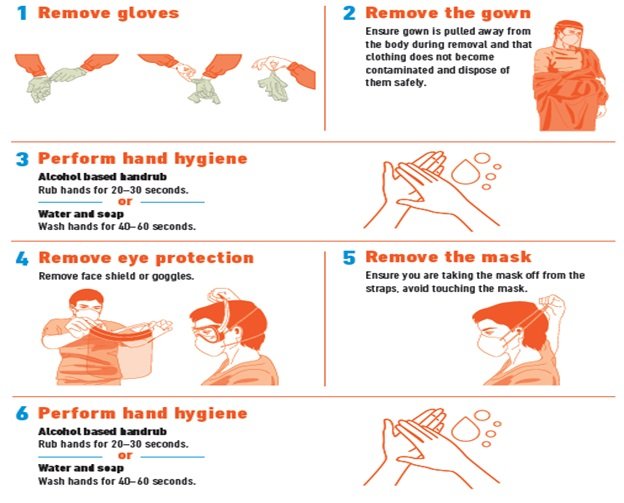
TAKING OFF PPE (Hand hygiene after removing ppe)
HAND HYGIENE AND MEDICAL GLOVE USE
- The use of gloves does not replace the need for cleaning your hands.
- Hand hygiene must be performed when appropriate regardless of the indications for glove use.
- Remove gloves to perform hand hygiene, when an indication occurs while wearing gloves.
- Discard gloves after each task and clean your hands – gloves may carry germs.
- Wear gloves only when indicated according to standard and contact precautions otherwise they become a major risk for germ transmission.
The Glove Pyramid – to aid decision making on when to wear (and not wear) gloves

Choosing the correct hand hygiene product
Not all skin-cleaning agents are equally effective at removing organic material or killing microbes. Consequently, choosing the most appropriate agent for hand hygiene will depend on when and why the hands are being cleaned. Hand hygiene is used in three circumstances: hand washing (social hand hygiene), hand disinfection using an ABHR (hygienic hand hygiene) and surgical scrub (surgical hand hygiene). It is impossible to completely sterilise the hands as resident bacteria survive in the deep skin hair follicles and sebaceous glands, but if hands are cleaned effectively only very low numbers of bacteria will remain.Type of hand cleaning agent
Chlorhexidine and Triclosan
Action Rapid binds to skin; remains active for up to 6 hours.It is not inhibited by organic material
Active against C. Difficile
Limitations Chlorhexidine can trigger anaphylaxis in allergic individuals.
Type of hand hygiene :- Hygienic , surgical
Iodophors
- It has a rapid action
- It is inhibited by organic material
- It is active against clostrdium defficile
Limitation in some people staining of skin
Type of hand hygiene:- surgical
Alcohol-based hand rubs
In surveys, conventional detergents and soaps were shunned by healthcare personnel as being damaging to the skin. Most hand rubs have the advantage of containing an emollient to protect the skin, are inexpensive and hand hygiene can be performed at the chair-side. Typically, the active ingredients comprise an alcoholic solution ranging from 65% to 75% with either a low or high concentration of detergents, disinfectants and surfactants such as biguanides, quaternary ammonium compounds or peroxides. Commercial products that contain predominantly ethanol are diluted from 10% to 40% by weight with water to enhance denaturation of microbial proteins. Alcohols in the form of ethanol or isopropyl alcohol demonstrate rapid action against a wide range of gram-positive and gram-negative species, including MRSA and vancomycin-resistant enterococci. Alcohol’s reactive hydroxyl (-OH) group readily forms hydrogen bonds with proteins, which leads to loss of structure and function, causing protein and other macromolecules to precipitate. Alcohol also lyses the bacterial cytoplasmic membrane, which releases the cellular contents and leads to bacterial inactivation. As little as 15 seconds of vigorous alcohol-based hand rubbing has been shown to be effective in preventing transmission of gram-negative bacteria (gnb) and kills 98% of the GNB. However, most manufacturers and the who recommend cleaning the hands for a period of 30 seconds. Allowing time for the alcohol to completely evaporate from hands is essential for microbial killing. Because of alcohol’s rapid speed of action and multiple, non-specific toxic effects, microbes are rarely able to develop resistance to alcohol.
Limitations of alcohol-based hand rubs
- Their deceptive ease of use can lead to tokenistic, cursory decontamination of the hands, especially when there is a heavy workload or at the end of working day.
- Abhr`s are unsuitable when hands are visibly soiled with organic material such as blood or dirt.
- They are ineffective against spore-forming bacteria such as c. Difficile and noroviruses that cause acute gastroenteritis.
Consumables and facilities for hand hygiene area
- Handwash sink and surrounding should be visibly clean and free of clutter.
- The hand wash sink should be easily accessible and must be dedicated for hand washing only. The sink should have no overflows or plugs in order to prevent contamination of the taps with Pseudomonas spp.
- Taps should preferably be sensor, elbow, or foot-operated lever taps to reduce the risk of hand contamination.
- A wall-mounted dispensers of liquid soap, aqueous detergent and ABHR should be provided. ABHR dispensers should be sited away from the other dispensers to avoid any confusion with wash-off products.
- Hand hygiene solutions should be dispensed in disposable rather than refillable cartridges/bottles. Refillable dispensers are likely to become contaminated with micro-organisms during the ‘topping up’ process and therefore should be avoided. Keep the dispenser nozzle clean.
- Soap bars are not suitable for use in the clinical setting as they easily become colonized with Gram-negative bacteria and Pseudomonas spp. and act as a source of cross-infection.
- Wall-mounted disposable paper towels should be used. Reusable towels are not suitable for clinical settings
- Foot-operated waste bins should be used as to avoid using the hands to raise the lid of the waste bin.
- Patients on entering and exiting the treatment area should be encouraged to clean their hands with alcohol-based hand rub/gel, as they are potentially part of the chain of infection.
HAND CARE AND PREVENTION OF DERMATITIS
- The keratin-rich layers of intact skin form a natural barrier to infection. Hence it is essential that you protect your hands from damage.
- Skin ph is mildly acidic, therefore regular use of alkaline soaps and disinfectants can alter the ph and cause drying and abrasion of the hands, which in some people can result in irritant dermatitis.
- Alcohols are inherently drying. Products containing 70% alcohol by weight cause the least dehydration of the skin and are the most popular with users.
- To compensate for the dehydrating effect, manufacturers add emollients, which is why these products cause fewer abrasions, drying and irritation to the hands than soaps or disinfectant washes.
- Allergenicity is routinely reported with antimicrobial detergent solutions; the latter may also cause drying and abrasion of the skin on repeated use, whereas alcohol has a low allergenic potential.
- However, as may occur with any skin preparation, a small proportion of people do develop hypersensitivity to alcohol-based hand rubs.
- Allergic reactions and cases of contact dermatitis are usually in response to the other added ingredients.
- Affected healthcare personnel should change to an alternative product and seek medical advice from their local occupational health physician or general medical practitioner.
Protective effect of emollient hand creams
- Emollient hand cream applied several times a day helps to prevent skin problems from developing.
- Shared communal pots of hand cream rapidly become contaminated, so either individual supplies or elbow-operated pump dispensers of hand cream are advised.
- Petroleum-based hand creams are not recommended as they can adversely affect latex, thereby increasing glove permeability, which in turn permits ingress of micro-organisms.
- Furthermore, hand cream has been demonstrated to reduce cross-transmission by preventing excess shedding of residential bacteria from dry, flaky skin.
Conclusion
Hand hygiene is the most effective way of preventing pathogen transmission. When available , washing hands thoroughly with soap and water would be the optimal method of protecting oneself and the patients. When soap and water isn`t readily available then the proper use of hand sanitizer is an acceptable form of hand hygiene. An improvement in the hand hygiene practices is the ultimate goal of promoting a strong patient safety culture.References
- Health Protection Scotland (2015) National Infection Prevention and Control Manual.Available at: www.hps.scot.nhs.uk/haiic/ic/guidelinedetail.aspx?id=49785# (accessed 30 October 2016).
- Loveday HP, Wilson JA, Pratta RJ et al. (2014) Epic3: national evidence-based guidelines for preventing healthcare-associated infections in NHS hospitals in England. Journal of Hospital Infection, 86(Suppl. 1), S1–S70.
- Pittet D, Hugonnet S, Mourouga P et al. (2000) Effectiveness of a hospital-wide programme to improve compliance with hand hygiene. Lancet, 356, 1307–12.
- World Health Organization (2009) WHO Guidelines on Hand Hygiene in Healthcare. Available at: www.who.int/gpsc/5may/tools/9789241597906/en/(accessed 30 October 2016)
Disclaimer from Guident
The views and opinions expressed in articles published in Guident are solely those of the authors and do not necessarily reflect the views of the editors, the editorial board or the publisher, Ivory India. Guident does not endorse any product, technique or treatment described. Clinical content is intended for qualified dental and medical professionals and is not a substitute for individual clinical judgement. Guident, its editors and the publisher accept no liability for any consequence arising from the use of information published in the journal.
How to cite this article
Dr. Bisma Reyaz, Dr. Shivam Gupta, Dr. Siddharth Sisodia. Hand Hygiene-Use the Soap Dont Be a Dope - a Review. Guident. 2020 Jul;13(8). Available from: https://guident.in/articles/general/hand-hygiene-use-the-soap-dont-be-a-dope-a-review.html