Stem Cell-Based Regenerative Prosthodontics-a Review
Department of Prosthodontics and Implantology, K.D. Dental College & Hospital, Mathura, U.P
ABSTRACT
Stem cells are generally defined as clonogenic cells capable of both self renewal and multi-lineage differentiation.
The ability of stem cells to produce multiple specialized cell types along with their extensive distribution in many adult tissues have made them an attractive target for applications in tissue engineering. Current active research areas of stem-cell-based therapy in dentistry are focused on tissue engineering and chair-side cellular grafting approaches that may result in more predictable regenerative outcomes in the future.
Among the available hydrogel biomaterials for cell encapsulation, alginate-based hydrogels have shown promising results in biomedical applications. Alginate scaffolds encapsulating MSCs can provide a suitable microenvironment for cell viability and differentiation for tissue regeneration applications. This poster aims to summarize current applications of dental-derived stem cell therapy and highlight the use of alginate-based hydrogels for applications in craniofacial tissue engineering.
KEYWORDS-STEM CELLS, CRANIOFACIAL REGENERATIONS, TISSUE ENGINEERING, MSCs.
INTRODUCTION
Human adult mesenchymal stem cells (MSCs) are non-hematopoietic, adherent fibroblast-like cells with intrinsic ability of self-renewal and potential for multilineage differentiation.1-3
MSCs are among the most promising adult stem cells for clinical applications; they were originally found in the bone marrow, but similar subsets of MSCs have also been isolated from many other adult tissues, including skin, adipose tissue and various dental tissues.4-6
STEM CELLS
Human adult mesenchymal stem cells (MSCs) are non-hematopoietic, adherent fibroblast-like cells with intrinsic ability of self-renewal and potential for multilineage differentiation.2
Stem cells have the remarkable potential to develop into many different cell types in the body during early life and growth. In addition, in many tissues they serve as a sort of internal repair system, dividing essentially without limit to replenish other cells as long as the person or animal is still alive. Stem cells are unspecialized cells that develop into the specialized cells that make up the different types of tissue in the human body.2,3,5
SOURCE OF STEM CELLS
There are two primary sources of stem cells: adult stem cells and embryonic stem (ES) cells. In addition to these stem cells, which are naturally present in the human body, induced pluripotent stem (iPS) cells have been recently generated artificially via genetic manipulation of somatic cells.6,7,8

Fig-1: Sources of adult stem cells in the oral and maxillofacial region- BMSCs: bone marrow-derived MSCs from orofacial bone ; DPSCs: dental pulp stem cells; SHED: stem cells from human exfoliated deciduous teeth; PDLSCs: periodontal ligament stem cells; DFSCs: dental follicle stem cells; TGPCs: tooth germ progenitor cells; SCAP: stem cells from the apical papilla ; OESCs: oral epithelial progenitor/stem cells; GMSCs: gingiva-derived MSCs, PSCs: periosteum-derived stem cells ; SGSCs: salivary gland-derived stem cells
ES cells and iPS cells are collectively referred to as pluripotent stem cells because they can develop into all types of cells from all three germinal layers. In contrast, most adult stem cells are multipotent, i.e., they can only differentiate into a limited number of cell types. We herein outline the different types of stem cells under consideration for applications in dentistry in terms of their clinical availability.9-13
In 2000, adult human dental stem cells were first identified in the dental pulp (dental pulp stem cells; DPSCs: Fig. 2 A) , and these cells had phenotypic characteristics similar to those of BMSCs.

A: DPSCs: dental pulp stem cells, B: DFSCs: dental follicle stem cells, C: Stem cells from the apical papilla (SCAP)
MSC-like cells have also been identified in the ‘‘developing’’ dental tissues, such as the dental follicle, dental mesenchyme and apical papilla. The dental follicle (Fig. 2B), which is a dental sac that contains the developing tooth and differentiates into the periodontal ligament, contains dental follicle stem cells (DFSCs) with the ability to regenerate periodontal tissues.
Stem cells from the apical papilla (SCAP)14-15 were found in the papilla tissue in the apical part of the roots of developing teeth (Fig. 2C). Compared with DPSCs, SCAP demonstrate better proliferation in vitro and better regeneration of the dentin matrix when transplanted in immunocompromised mice. These findings suggest that ‘‘developing’’ dental tissues may provide a better source for immature stem cells than ‘‘developed’’ dental tissues.
CLINICAL APPLICATIONS & CHALLENGES
Craniofacial tissue regeneration
Hydrogels are capable of forming 3-dimensional matrices for the encapsulation of cells or sensitive bioactive molecules. Many natural and synthetic hydrogel biomaterials have been used for craniofacial tissue regeneration and repair. The most frequently used natural biomaterials are alginate, gelatin, collagen, and fibrin, while synthetic biomaterials, including the synthetic polyesters PLA and PLGA, are the most frequently used in biomedical applications.12,16,17
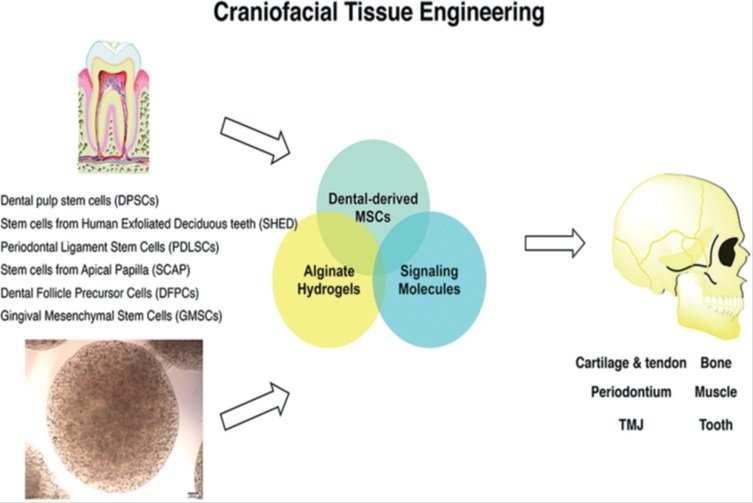
FIG 3: Craniofacial tissue regeneration based on dental-derived mesenchymal stem cells encapsulated in 3-dimensional alginate hydrogel microspheres.
Microencapsulation systems are one of the most popular strategies in tissue engineering. Hydrogels and specifically alginate are quite promising because of the ease of infusion of nutrients and oxygen between encapsulated stem cells within the alginate hydrogels and the microenvironment while the encapsulated stem cells stay within the 3-dimensional matrix. The alginate microspheres can be injected at the time of transplantation and can be used as drug delivery devices, making them the materials of choice for many biomedical applications.
FUNCTIONAL TOOTH REGENERATION BY TRANSPLANTATION OF BIOENGINEERED MATURED TOOTH
Current regenerative prosthodontic treatments are associated with difficulty in maintaining the grafted bone height and volume. Future solutions to these challenges may include application of a dense cellular layer of BMSCs and iPSC-derived bioengineered bone to achieve vertical alveolar bone augmentation without postoperative bone resorption.12,17,18
The bioengineered tooth germ gradually accumulated hard tissue, root extension, and an increased alveolar bone volume, depending on transplantation periods, and could successfully generate a tooth unit with the correct structure of a whole molar, and the proper formation of periodontal tissue and surrounding alveolar bone.
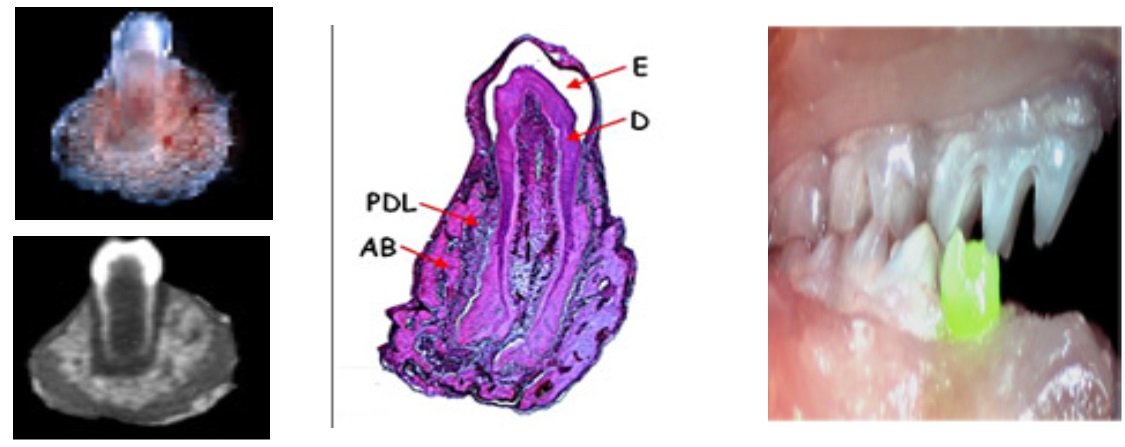
FIG 4A & B
Transplantation of bioengineered tooth unit
(a) Generation of a bioengineered tooth unit
(b) Occlusal view of a bioengineered tooth unit after oral transplantation (green; bioengineered tooth unit)
The engrafted bioengineered tooth was found to be aligned appropriately and occlude with the opposing upper first molar
To generate the shape-and length-controlled bioengineered tooth unit so that a suitable size was obtained for intraoral transplantation, the tooth germ was inserted into a ring-shaped size-control device and then transplanted into a subrenal capsule.
The device thus successfully generated a size-controlled bioengineered tooth so that it was similar to a natural tooth (figure 4). This device could avoid the pressure by the subrenal capsule membrane, and reserve the three-dimensional space for developing a bioengineered tooth germ normally.
Alveolar bone regeneration
Bone development involves the aggregation of MSCs into mesenchymal condensations, which is partly similar to tooth development but without the epithelial invagination. There are two types of bone formation: intramembranous and endochondral. In endochondral bone formation, the mesenchymal condensations first undergo chondrogenesis and then ossification to form cartilage and bone.19 During adulthood, bone possesses the intrinsic capacity for regeneration throughout life. In most bone injuries (fractures), the damaged bone tissue can be functionally regenerated by the local cells (including chondroblasts, osteoblasts, endotheliocytes, and fibroblasts). However, when the fractures are serious (such as large bone defects created by trauma, infection, tumor resection, and skeletal abnormalities) enough that self-healing cannot repair, an adequate supply of stem cells (such as bone marrow stem cells) is required for efficient bone regeneration.20 Oral MSCs seem to be ideal candidates for bone regeneration. Both dental and nondental MSCs are able to differentiate into chondroblasts and osteoblasts under inductive conditions in vitro.
Muscle regeneration
Some research groups have focused on the muscleand tendon-forming properties of oral stem cells. Armiñán et al21 first reported that DPSCs could differentiate into cardiomyocyte-like cells when cocultivated with neonatal rat cardiomyocytes for about 4 weeks in vitro. Yang et al22 demonstrated that DPSCs were able to differentiate into dystrophinproducing muscle cells in cardiotoxin-paralyzed muscles in a mouse model, which has implications for the study and treatment of muscular dystrophy.
CURRENT TREATMENTS & FUTURE CHALLENGES
Current and expected future prosthodontic treatments for alveolar bone loss and tooth loss. Current regenerative prosthodontic treatments are associated with difficulty in maintaining the grafted bone height and volume.

FIG 5
Future solutions to these challenges may include application of a dense cellular layer of BMSCs (A: Ref. [5]) and iPSC-derived bioengineered bone (B: Ref. [10]) to achieve vertical alveolar bone augmentation without postoperative bone resorption. Bio-hybrid implants (C: Ref. [6]) and bioengineered teeth (D: Ref. [7]) are also expected to be provide alternatives to current osseointegrated implants. Purified BMSCs and iPSCs are expected to be promising cell sources that help to bring next-generation regenerative prosthodontics to reality.
CONCLUSION
The ultimate goal of prosthodontic treatments should be to regenerate the missing teeth together with the periodontal structures.
Stem cell-mediated tissue regeneration presents an immense opportunity for the entire medical field. It can lead to the regeneration of damaged tissues, aid in tissue grafting, or assist with bone reconstruction if grafting is not feasible. The applications of hydrogeldelivered MSCs for craniofacial tissue regeneration are wide, ranging from regenerating bone lost to oral disease to tissue reconstruction if the patient does not want a graft.
Since oral stem cells, especially oral epithelial stem cells, are often involved in neoplasia, the cellular and molecular mechanisms that allow oral stem cells to choose self-renewal, canceration, and differentiation should be well studied.
There must also be a complete understanding of biological processes on both donor and recipient sides during bone regeneration which is extremely important to be able to structure more effective clinical strategies for stem cell based bone regeneration.
MSCs’ immunomodulatory function is important in suppressing the local immune response during transplantation and in achieving optimal tissue regeneration. Prosthodontists are being motivated to get involved in stem cell biology by the increased requirement for new technologies for implant dentistry. Authorized organizations should establish a link between stem cell-based dentistry, with standard protocols, so it can more often be applied in the dental field.
Although these technologies are still in the realm of basic research, it is meaningful for prosthodontists to perform such research, as they know better than anyone else what the real needs are for regenerative therapies in prosthetic treatments and how such treatments should be applied at chairside. Continued efforts in regenerative dental research by prostho-dontists will thus be required to bring cutting-edge technolo-gies from the lab bench to the clinic.
REFERENCES
- Ana Gomes Paz et al Stem Cells in Dentistry: Types of Intra- and Extraoral Tissue-Derived Stem Cells and Clinical Applications Hindawi Stem Cells International volume 2018, Article ID 4313610
- Behjati S, Huch M, van Boxtel R, et al. Genome sequencing of normal cells reveals developmental lineages and mutational processes. Nature. 2014;513:422–425.
- Doetschman TC, Eistetter H, Katz M, Schmidt W, Kemler R. The in vitro development of blastocyst-derived embryonic stem cell lines: formation of visceral yolk sac, blood islands and myocardium. J Embryol Exp Morphol. 1985;87:27–45.
- Odorico JS, Kaufman DS, Thomson JA. Multilineage differentiation from human embryonic stem cell lines. Stem Cells. 2001;19(3):193–204.
- Vainio S, Karavanova I, Jowett A, Thesleff I. Identification of BMP-4 as a signal mediating secondary induction between epithelial and mesenchymal tissues during early tooth development. Cell. 1993;75(1):45–58.
- Kørbling M, Estrov Z. Adult stem cells for tissue repair–a new therapeutic concept? N Engl J Med. 2003;349(6):570–582.
- Desai VD, Varma b, Maheshwari S, Bumb D. Tooth Regeneration By Stem Cells -An Innovative Approach. Asian J. Pharm. Hea. Sci. 2012; 2(3):433-7.
- Saraswathi K Gopal Lankupalli AR, Stem Cell Therapy. J Clin Diagn Res. 2012 6(1): 142-4.
- Kompalli PV, Stem Cells - A Review. Webmedcentral Biomedical Engineering 2013;4(2):Wmc004046.
- Buch A & Choksi D. Clinical Applications Of Stem Cells In Dentistry. Dharmsinh Desai University, Faculty od Dental Science, Journal od Dental Sciences. 2010; 1(1): 26-31
- Friedlander LT, Cullinan MP & Love RM. Dental Stem Cells And Their Potential Role In Apexogenesis And Apexification. Int Endod J. 2009;42:955–62.
- Cherian E, Kurien J, Kurien A, Jayasekharan VP. Stem Cells In Dental Tissue. Ijoonline. 2013; 1(1): 26-32
- Petrovic V, Stefanovic V. Dental Tissue--New Source For Stemcells. Scientificworldjournal. 2009; 14(9):1167-77.
- Gronthos S, Brahim J, Li W, Fisher Lw, Cherman N, Boyde A, Denbesten P, Robey Pg, Shi S. Stem Cell Properties Of Human Dental Pulp Stem Cells. J Dent Res. 2002; 81(8): 531-5.
- Stem Cell Information. The National Institutes Of Health Resource For Stem Cell Researchhttp://Stemcells.Nih.Gov/Info/Media/Pr omise.Htm.
- Chandra Mouli PE, Kumar S Manoj, Senthil B, Parthiban S, Priya R, Subha R. Stem Cells In Dentistry- A Review. J. Pharm. Sci. & Res. 2012; 4(7); 1872 – 6.
- Nakahara T, Ide Y. Tooth Regeneration: Implications For The Use Of Bioengineered Organs In Irst-Wave Organ Replacement. Hum Cell 2007; 20:63-70.
- Duailibi Mt, Duailibi Se, Young Cs, Bartlett Jd, Vacanti Jp, Yelick Pc. Bioengineered Teeth From Cultured Rat Tooth Bud Cells. J Dent Res 2004; 83:523-8.
- Honda Mj, Sumita Y, Kagami H, Ueda M. Histological And Immunohistochemical Studies
- Young C, Abukawa H, Asrican R, Ravens M, Troulis Mj, Kaban Lb, Et Al. Tissue-Engineered Hybrid Tooth And Bone. Tissue Eng 2005;11:1599-610.
Disclaimer from Guident
The views and opinions expressed in articles published in Guident are solely those of the authors and do not necessarily reflect the views of the editors, the editorial board or the publisher, Ivory India. Guident does not endorse any product, technique or treatment described. Clinical content is intended for qualified dental and medical professionals and is not a substitute for individual clinical judgement. Guident, its editors and the publisher accept no liability for any consequence arising from the use of information published in the journal.
How to cite this article
Dr. Prerna Kaushik, Dr. Siddharth Sisodia, Dr. C. Pradeep. Stem Cell-Based Regenerative Prosthodontics-a Review. Guident. 2021 May;14(6). Available from: https://guident.in/articles/prosthodontics/stem-cell-based-regenerative-prosthodontics-a-review.html