Prosthetic Rehabilitation of Glossectomy Patient Using Neutral Zone Technique: A Clinical Case Report
Ratandeep Singh Ahuja (Associate Professor), Department of Prosthodontics and Crown & Bridge, Army Dental Centre R&R, New Delhi, India
ABSTRACT
People experience tooth loss quite later in today’s advanced times as compared to some decades back, when new denture wearers were relatively young. Advanced age makes it difficult for them to develop the neuromuscular control required for successful wearing of complete dentures. The challenges associated with fabricating complete dentures to occupy the edentulous space optimally are quite substantial owing to the progressive changes accompanying edentulism in addition to the functional dynamics defining the oral cavity. This article presents a case report describing a clinical case of glossectomy rehabilitated by complete denture fabrication utilizing the neutral zone technique.
Key words : neutral zone, glossectomy, functional movements, compound rim, recording cameo surface
INTRODUCTION
The challenges associated with fabricating complete dentures to occupy the edentulous space optimally are quite substantial owing to the progressive changes accompanying edentulism in addition to the functional dynamics defining the oral cavity.1,2,3 Elderly patients, especially long-time complete denture wearers, have been observed to have muscular atrophy of the perioral musculature, adding to the advanced ridge atrophy.4
Functionally inappropriate arrangement of teeth in a complete denture or physiologically unacceptable denture base contour and volume can have the following implications: (1) poor retention and stability5,6 (2) inefficient posture and function of the tongue7 (3) inadequate tissue support8 (4) compromised phonetics9 (5) gagging.10,11 Fish, in 1933, emphasized upon the importance of the cameo or polished denture surfaces.7 He highlighted the importance of the orofacial musculature for attaining denture stability.10
After the loss of the whole natural dentition, there exists a void within the oral cavity which is the potential denture space. A neutral zone is the area within the potential denture space where the outward acting forces of the tongue are neutralized by the inward acting forces of cheeks and the lips.12 The chances of the failure of the prosthesis increase if it has not been placed in the space defined by the musculature.13 This case report describes a clinical case of glossectomy rehabilitated by complete denture fabrication utilizing the neutral zone technique.
CASE REPORT
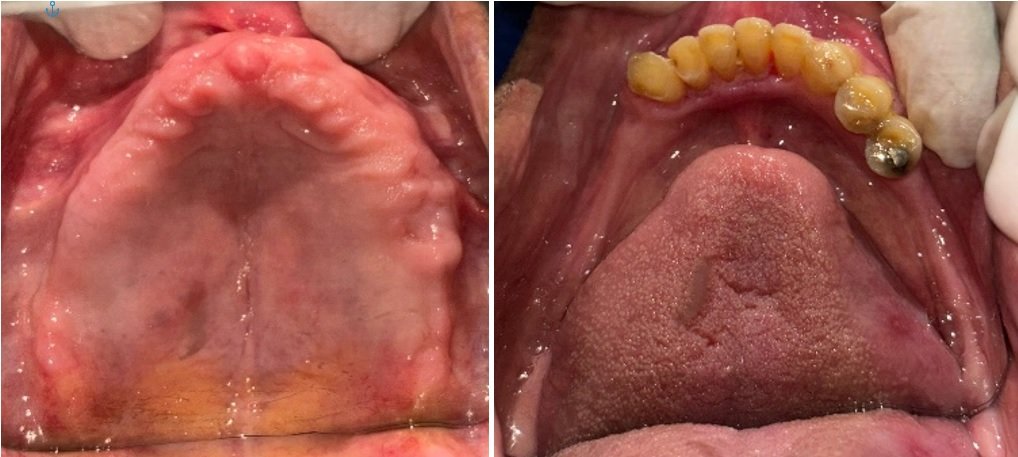
A 63-year-old female reported to the Dept of Prosthodontics and Crown & Bridge with the chief complaint of difficulty in chewing due to missing teeth. Patient’s history revealed that patient had been operated twice; first for resection of squamous cell carcinoma of the right lateral border of the tongue and subsequently for the management of carcinoma in situ in respect to the same location. Intra-oral examination revealed that patient had completely edentulous maxillary and mandibular arches with resected right lateral border of the tongue. Due to imbalance of the intraoral musculature due to the glossectomy (Fig 1), it was planned to fabricate conventional complete dentures utilizing the neutral zone technique.

Fig 1: Pre-op Intraoral
Primary impressions for both the arches were made using high fusing impression compound, which was followed by fabrication of custom trays. Border moulding was done with low-fusing impression compound and final impressions were made for both the arches with polyether impression material (Fig 2). Permanent denture bases were fabricated, and occlusal rims were fabricated using baseplate wax. Orientation jaw relation was recorded, to orient the maxillary cast to the opening and closing axis of TMJ, this was followed by recording of vertical and centric jaw relations. The records were then transferred to a semi-adjustable articulator (Fig 3) and the mandibular rim was replaced with impression compound. The compound was heated in water bath and placed in the patient’s mouth. The patient was asked to perform functional movements such as swallowing luke warm water, sucking, pronouncing exaggerated “eee” and “ooo” sounds followed by touching the palate (however due to scarring of left lateral region in tongue patients tongue was not able to touch the palate) and wetting the upper lips with the tongue (Fig 4). The compound rim was shaped by these movements and the neutral zone was thus identified. The mandibular denture base along with the modified compound rim was transferred to the articulator followed by fabrication of a putty index around the compound rim. The compound was then removed and the putty index was placed back in the original orientation. Molten baseplate wax was poured in the potential space and was allowed to cool down to room temperature. Teeth arrangement was done with special care being taken to place the mandibular teeth within the functionally recorded neutral zone, (Fig 5) followed by arrangement of maxillary teeth as per the mandibular teeth to develop a proper occlusion. This was followed by recording a cameo surface using zinc oxide eugenol paste (Fig 6). The dentures were then processed finished and polished following the conventional methods. The final dentures were delivered and post-insertions instructions were delivered to the patient. (Fig 7-8)

Fig 2: Definitive impressions
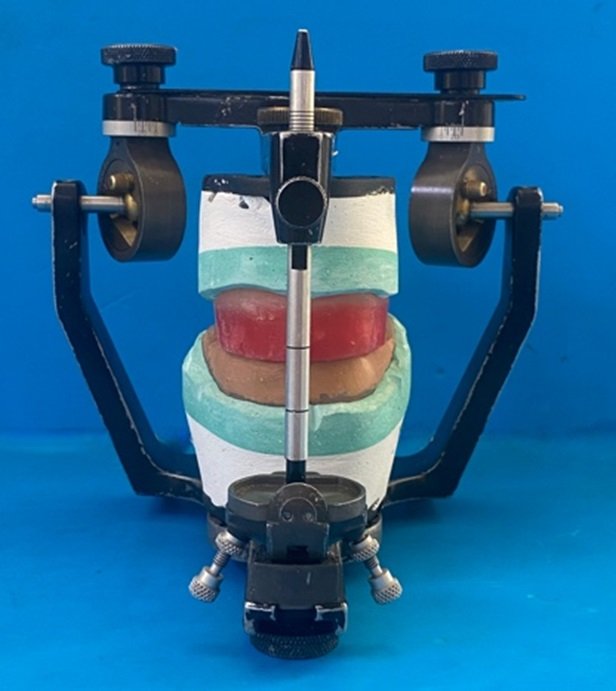
Fig 3: Articulated casts
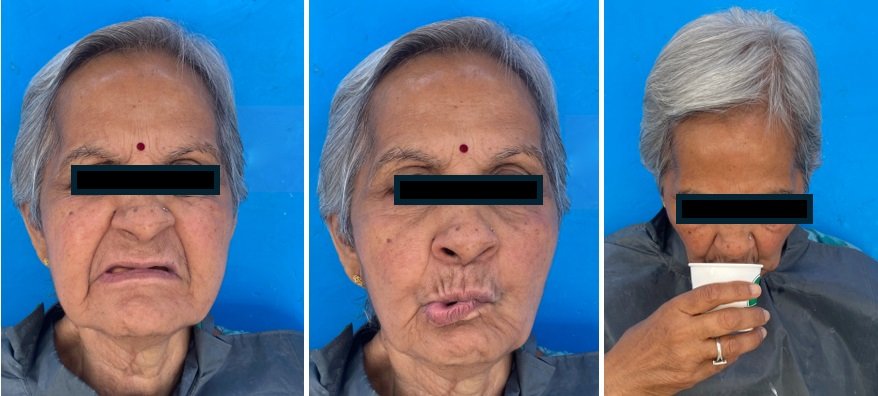
Fig 4: Functional movements for recording neutral zone
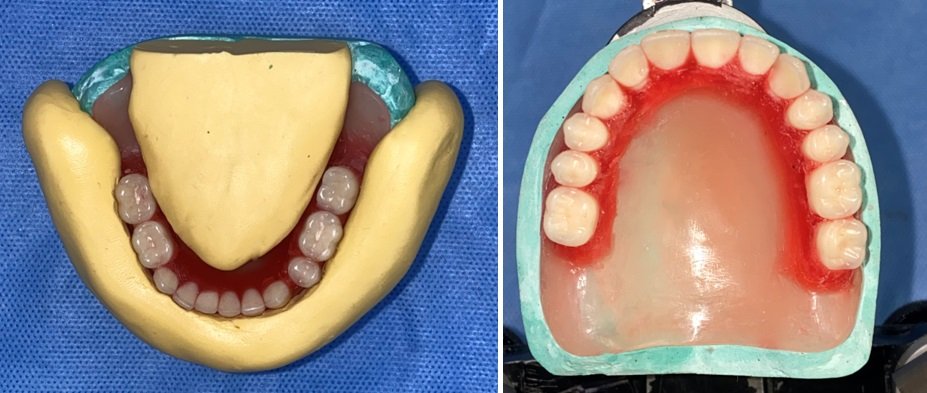
Fig 5: Teeth arrangement
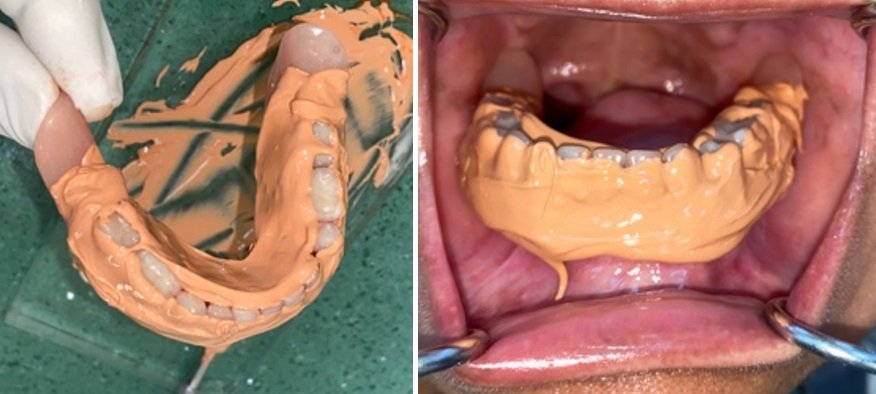
Fig 6: Recording polished surface functionally with neutral zone

Fig 7: Prosthesis IN SITU

Fig 8: Pre and Post op extra-oral photos of patient
DISCUSSION
According to the Glossary of Prosthodontic Terms, tenth edition14, neutral zone is “the potential space between the lips and cheeks on one side and the tongue on the other; that area or position where the forces between the tongue and cheeks or lips are equal.”
Positioning the artificial teeth in this zone fulfils the twofold objectives: (1) no interference of the teeth with normal muscular function combined with (2) enhanced stability and retention owing to the favourable forces exerted by the musculature against the denture. Proper position of the teeth is where the pressure of the cheek and tongue neutralize each other’s pressure.15
The boundaries defining the neutral zone are developed through contraction and relaxation of the muscles during various functions such as mastication, deglutition, phonation and facial expression. These neuromuscular forces differ both in magnitude as well as direction in various parts of the oral cavity, in different individuals, and during different periods of life.16 To ensure that the complete dentures reside within the neutral zone, clinicians must understand, identify, and record the neuromuscular dynamics of the functioning oral tissues with a single static registration.
The neutral zone technique usually positions the posterior denture teeth slightly facially when compared to teeth arranged over the residual ridge crest.17 This design concept has been observed to be especially effective for the mandibular removable prostheses. It is quite remarkable to observe recording of the neutral zones for patients with neuromuscular decline or dysfunction including patients with decreased facial muscle tonicity, anatomic insufficiency, such as in post cancer oral surgical resections and facial neuromuscular deficit.18 Conventional methods in such glossectomy patients may not facilitate prosthesis stability against the expected oral and perioral muscular function due to abnormal scarring and restricted movements of the musculature. Whenever glossectomy is attempted, the most common movement affected will be a lateral side-to-side movement which is crucial for sweeping and pushing food during mastication. It will also affect the swallowing due to limited tongue propulsion and causes saliva control issue.19 Denture fabricated using neutral zone technique will result in contours of denture which will fill the deficit bulk and aid in stabilizing the action of remaining musculature. As per various studies, use of the neutral zone method may result in better stability, thereby improving the prosthodontic experience for such patients.17-18
CONCLUSION
According to various studies, dentures fabricated using the neutral zone technique are functionally more stable resulting in increased patient comfort and function, and minimal post-insertion problems.17-18 The case discussed in this article was rehabilitated utilising the neutral zone technique for enhanced stability and patient comfort especially being a patient with post cancer glossectomy.
REFERENCES
- Atwood DA. Reduction of residual ridges: a major oral disease entity. J Prosthet Dent 1971;26:266-79.
- Tallgren A. The continuing reduction of the residual alveolar ridges in complete denture wearers: a mixed-longitudinal study covering 25 years. J Prosthet Dent 1972;27:120-32.
- Weinberg LA. Tooth position in relation to the denture base foundation. J Prosthet Dent 1958;8:398-405.
- Lammie GA. Aging changes and the complete lower denture. J Prosthet Dent 1956;6:450-64.
- Jacobson TE, Krol AJ. A contemporary review of the factors involved in complete denture retention, stability, and support. Part I: retention. J Prosthet Dent. 1983 Jan;49(1):5-15.
- Azzam MK, Yurkstas AA, Kronman J. The sublingual crescent extension and its relation to the stability and retention of mandibular complete dentures. J Prosthet Dent. 1992 Feb;67(2):205-10.
- Fish EW. Principles of full denture prosthesis. London: John Bale, Sons & Danielsson, Ltd; 1933. p. 1-8.
- Wright CR. Evaluation of the factors necessary to develop stability in mandibular dentures. J Prosthet Dent 1966;16:414-30.
- Wright CR, Swartz WH, Godwin WC. Mandibular denture stability - a new concept. Ann Arbor: The Overbeck Co; 1961. p. 29-41.
- Fahmy FM, Kharat DU. A study of the importance of the neutral zone in complete dentures. J Prosthet Dent 1990;64:459-62.
- Pound E. Lost fine arts in the fallacy of the ridges. J Prosthet Dent 1954;4:6-16
- Schole ML. Management of the gagging patient. J Prosthet Dent 1959;9:578-83.
- Morstad AT, Peterson AD. Postinsertion denture problems. J Prosthet Dent 1968;19:126- 32.
- The glossary of prosthodontic terms. J Prosthet Dent 2023;130(4):e1-3
- Beresin VE, Schiesser FJ. The neutral zone in complete dentures. J Prosthet Dent 1976;36:356-67.
- Porwal A, Sasaki K. Current status of the neutral zone: a literature review. J Prosthet Dent 2013;109(2):129-34.
- Beresin VE, Schiesser FJ, editors. Neutral zone in complete and partial dentures. 2nd ed. St. Louis: Mosby; 1979. p. 15,73-108, 158-83.
- Lloyd PM. Complete-denture therapy for the geriatric patient. Dent Clin North Am 1996;40:239-54.
- Ston M, Langguth JM, Woo J, Chen H, Prince JL. Tongue Motion Patterns in postglossectomy and Typical Speakers: A Principal Components Analysis. JSLHR 2014 Jun;57:707-17.
Disclaimer from Guident
The views and opinions expressed in articles published in Guident are solely those of the authors and do not necessarily reflect the views of the editors, the editorial board or the publisher, Ivory India. Guident does not endorse any product, technique or treatment described. Clinical content is intended for qualified dental and medical professionals and is not a substitute for individual clinical judgement. Guident, its editors and the publisher accept no liability for any consequence arising from the use of information published in the journal.
How to cite this article
Dr. Dangar Shyam M, Dr. Prachi Garhia. Prosthetic Rehabilitation of Glossectomy Patient Using Neutral Zone Technique: A Clinical Case Report. Guident. 2025 Jul;18(8). Available from: https://guident.in/articles/prosthodontics/prosthetic-rehabilitation-of-glossectomy-patient-using-neutral-zone-technique-a-clinical-case-report.html