
Understanding the Alveolar Boundaries: A Challenge in Adult Orthodontics: A Review
Department of Orthodontics, Rural Dental College, PIMS (DU), Loni. Maharashtra
ABSTRACT
The alveolar boundaries are the limits of the alveolar bone that surround the tooth roots and determine the extent and direction of orthodontic tooth movement. The alveolar boundaries are not static, but can remodel in response to mechanical forces cand biological factors. The remodeling capacity of the alveolar bone may vary depending on the age, health, and phenotype of the patient, as well as the magnitude, duration, and direction of the applied forces.
In adult orthodontics, understanding and respecting the alveolar boundaries is crucial to avoid iatrogenic damage to the periodontal tissues, such as gingival recession, dehiscence, fenestration, and root resorption. This review article aims to provide an overview of the concept of alveolar boundary conditions, their assessment methods, their impact on orthodontic diagnosis and treatment planning, and their management strategies in adult orthodontic patients.
INTRODUCTION
The specialty of dentistry that focuses on the diagnosis, prevention, and treatment of misaligned teeth and jaws is called orthodontics. Orthodontic treatment can enhance the appearance and function of the teeth, as well as the health and stability of the gums and bones. However, orthodontic treatment also has some drawbacks and difficulties, especially for adult patients who have less optimal biological factors than children and teenagers. One of the main difficulties in adult orthodontics is to move the teeth in the best way possible within the boundaries of the alveolar bone without damaging the periodontal tissues. The complex and interdependent relationship between the periodontal tissues and the mechanisms of tooth movement implies that additional orthodontic therapy may be useful in solving these problems. On the other hand, moving the teeth too much beyond the anatomical limits of the alveolar process is thought to cause more harm to the periodontal tissues.
The alveolar bone, which is part of the jawbone, holds and supports the teeth. The alveolar bone has two cortical plates (buccal and lingual) and a cancellous core (trabecular bone). The alveolar bone forms a socket (alveolus) for each tooth root, which is covered by a thin layer of connective tissue called the periodontal ligament (PDL). The PDL connects the root surface to the alveolar bone and acts as a shock absorber, a sensory receptor, and a mediator of tooth movement. The PDL also has blood vessels, nerves, and cells that take part in bone remodeling. The alveolar boundaries refer to the depth, height, and shape of the alveolar bone in relation to the size, angle, and position of the tooth root.2 The alveolar boundaries decide how much and in which direction a tooth can move without going beyond the edges of the alveolar bone. The alveolar boundaries are not constant, but can change due to mechanical forces and biological factors. For example, when a tooth moves during orthodontic treatment, the alveolar bone changes through a process of resorption (bone removal) on the side with pressure and apposition (bone formation) on the side with tension. This allows the tooth to move within its socket while maintaining its attachment to the alveolar bone.

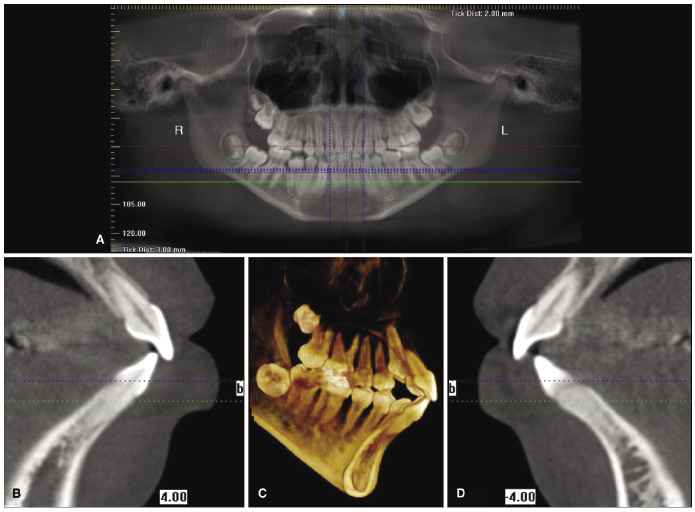
The boundary conditions may also restrict the clinician’s ability to move the teeth backward, especially in the lower jaw where the width of the roots of the anterior teeth is similar to the width of the cortical bone. Even though orthodontic indications suggested removing four first premolars and using high anchorage to pull back the front teeth as much as possible, the limits caused by the short roots and bone boundary conditions led to a different treatment approach that involved keeping all the teeth and a possible chin surgery at a later date.
However, if the force applied is too high or too prolonged, or if the direction of tooth movement is not suitable, the alveolar bone remodeling may not be enough or balanced to adjust to the tooth movement. This may cause harm to the periodontal tissues, such as gum recession (exposure of root surface due to loss of gum tissue), dehiscence (loss of alveolar bone on one side of a root), fenestration (loss of alveolar bone on both sides of a root), and root resorption (loss of root structure due to osteoclastic activity).1
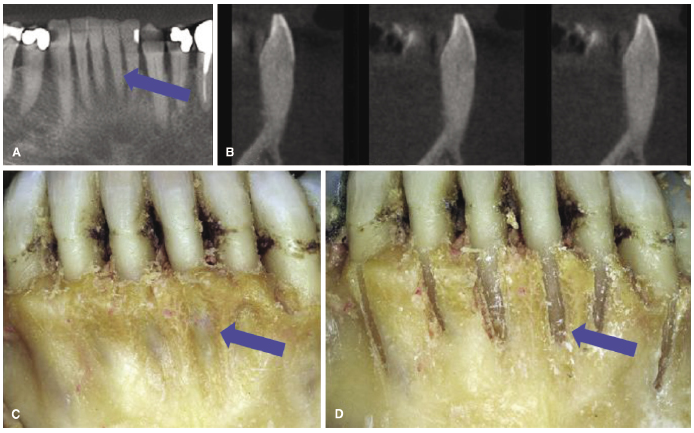
Therefore, it is important for orthodontists to assess the alveolar boundary conditions before initiating treatment, to plan realistic and safe treatment goals based on these conditions, and to monitor and manage any changes in these conditions during treatment.
In adult orthodontics, understanding and respecting the alveolar boundaries is essential to prevent or minimize iatrogenic periodontal damage. This is because adult patients have several factors that may impair their ability to remodel their alveolar bone adequately during orthodontic treatment. These factors include:
- Age-related changes in bone quality and quantity3
- Reduced blood supply and cellular activity in the PDL4
- Presence of systemic diseases or medications that affect bone metabolism2
- History of periodontal disease or trauma that cause loss or damage to alveolar bone
- Thin or fragile gingival biotype that predisposes to gingival recession
- Dental arch discrepancies or skeletal malocclusions that require large or complex tooth movements
ASSESSMENT METHODS
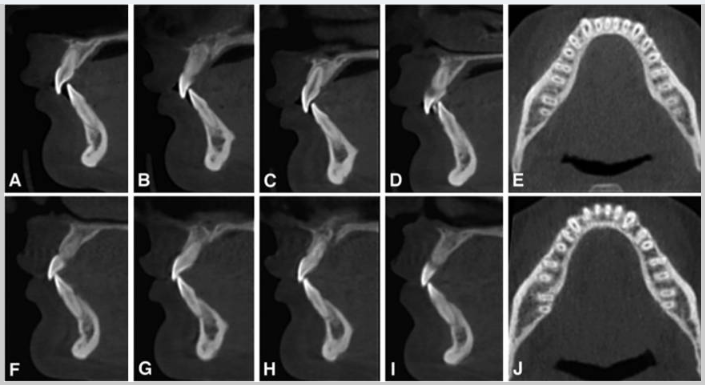
The evaluation methods of alveolar boundary conditions involve examining both the initial condition of the alveolar bone and its possible change during and after orthodontic tooth movement. This includes measuring the depth, height, and shape of the alveolar bone in relation to the tooth root size, angle, and location. CBCT imaging can offer new information on alveolar boundary conditions that are not visible from regular radiographs or clinical examination, which may affect treatment choices.
Impact on Orthodontic Diagnosis and Treatment Planning
The evaluation of alveolar boundary conditions is a vital part of orthodontic diagnosis and treatment planning. The alveolar boundary conditions can affect the following aspects of orthodontic treatment:
- Treatment goals: The alveolar boundary conditions can decide the possibility and desirability of certain treatment goals, such as achieving perfect occlusion, enhancing facial aesthetics, or fixing skeletal differences. For example, if the alveolar boundaries are thin or low, it may not be feasible or advisable to move the teeth to their ideal locations without causing periodontal harm. In such cases, the treatment goals may need to be changed or compromised to avoid going beyond the alveolar boundaries.
- Treatment choices: The alveolar boundary conditions can influence the selection and suitability of different treatment choices, such as fixed or removable devices, conventional or self-ligating braces, metal or ceramic braces, clear aligners, or jaw surgery. For example, if the alveolar boundaries are narrow or uneven, it may be better to use low-friction or low-force devices, such as self-ligating braces or clear aligners, to reduce the chance of root resorption. Alternatively, if the alveolar boundaries are not enough to allow the desired tooth movement, it may be necessary to consider surgical choices, such as corticotomy or distraction osteogenesis, to enlarge the alveolar boundaries.
- Treatment duration: The alveolar boundary conditions can affect the length and frequency of orthodontic treatment. The alveolar boundary conditions can impact the speed and direction of tooth movement, as well as the stability and relapse of tooth position. For example, if the alveolar boundaries are wide or deep, it may enable faster and more effective tooth movement. However, if the alveolar boundaries are thin or low, it may require slower and more cautious tooth movement to prevent periodontal damage. Moreover, if the alveolar boundaries are changed during treatment, it may increase the risk of relapse and require longer retention.
Therefore, it is important for orthodontists to evaluate the alveolar boundary conditions before initiating treatment, to select the most appropriate and safe treatment option based on these conditions, and to monitor and adjust the treatment plan according to any changes in these conditions during treatment.
REFERENCES
- Antoun, J. S., Mei, L., Gibbs, K., & Farella, M. (2017). Effect of orthodontic treatment on the periodontal tissues. Periodontology 2000, 74(1), 140–157. doi:10.1111/prd.12194
- Kapila, S. D., & Nervina, J. M. (2014). Alveolar Boundary Conditions in Orthodontic Diagnosis and Treatment Planning. Cone Beam Computed Tomography in Orthodontics: Indications, Insights, and Innovations, 293–316. doi:10.1002/9781118674888.ch14
- Tanna, N.K., Matsumoto, K. Periodontal Grafting in Preparation for Orthodontic Treatment. Curr Oral Health Rep 7, 397–404 (2020). https://doi.org/10.1007/s40496-020-00284-0
- Hong, S.Y., Shin, J.W., Hong, C. et al. Alveolar bone remodeling during maxillary incisor intrusion and retraction. Prog Orthod. 20, 47 (2019). https://doi.org/10.1186/s40510-019-0300-2
- Handelman CS. The anterior alveolus: its importance in limiting orthodontic treatment and its influence on the occurrence of iatrogenic sequelae. Angle Orthod. 1996;66(2):95–109.
Disclaimer from Guident
The views and opinions expressed in articles published in Guident are solely those of the authors and do not necessarily reflect the views of the editors, the editorial board or the publisher, Ivory India. Guident does not endorse any product, technique or treatment described. Clinical content is intended for qualified dental and medical professionals and is not a substitute for individual clinical judgement. Guident, its editors and the publisher accept no liability for any consequence arising from the use of information published in the journal.
How to cite this article
Dr. Shubhangi Mani, Dr. N. G. Toshniwal, Dr. Nikita Navgire. Understanding the Alveolar Boundaries: A Challenge in Adult Orthodontics: A Review. Guident. 2024 May;17(6). Available from: https://guident.in/articles/orthodontics/understanding-the-alveolar-boundaries-a-challenge-in-adult-orthodontics-a-review.html


