Endodontic Management of Fractured Tooth with Edelweiss Post and Core Followed by PFM Crown: A Case Report
Department of Conservative Dentistry & Endodontics, K.D. Dental College & Hospital, Mathura
ABSTRACT
Rehabilitation of anterior endodontically treated tooth is a challenging task. Moreover esthetic and functional correction is mandatory. However wide variety of post systems are available for restoring the lost tooth structure but clinical decision of which one has to be used constitutes a challenge to practitioner. When dental aesthetics is of primary concern, the selection of the underlying restorative material becomes an important factor to consider. Newer post systems are available with post and core as monobloc concept to enhance strength and also reduce chair side time. Porcelain fused to metal crowns (PFM) offers high strength in posterior region restorations. The purpose of this paper is to present esthetic and functional rehabilitation of mutilated tooth using edelweiss post and core system with PFM crown.
Keywords: Endodontically treated tooth, Edelweiss post and core system, Monobloc.
INTRODUCTION
Functional rehabilitation is mandatory for posterior endodontically treated tooth. Translucency and fluorescence, in a tooth, is not possible with metal post. Post and core are essential for longevity of restoration. Cast metal post and cores are widely used for restoring endodontically treated teeth with extensive loss of coronal tooth structure and to retain metal-ceramic crowns. However, rigid post system like cast metal alloy post may lead to catastrophic failure due to high modulus of elasticity.1-2 Newer aesthetic post and core system offers biocompatibility, reinforcement of remaining root, prosthesis retention along with improved optical properties.3 Although material science has evolved, but failure rate can be observed, because of lack of strong bonding between composite resins for core material and prefabricated post.4 To overcome all issues regarding improved biocompatibility, tensile strength, fatigue resistance, shear stress, modulus of elasticity and distribution of forces which affect the tooth root, edelweiss post system (edelweiss dentistry products gmbh, Austria) can be used. It is a unique, single-piece, high strength customizable composite post and core system. This makes treatment easier, simpler and more predictable. Sintered crystal leads to monobloc effect which leads to perfect mechanics within the material without wedging effect. It is translucent and has improved adhesion with root dentine.5
CASE REPORT
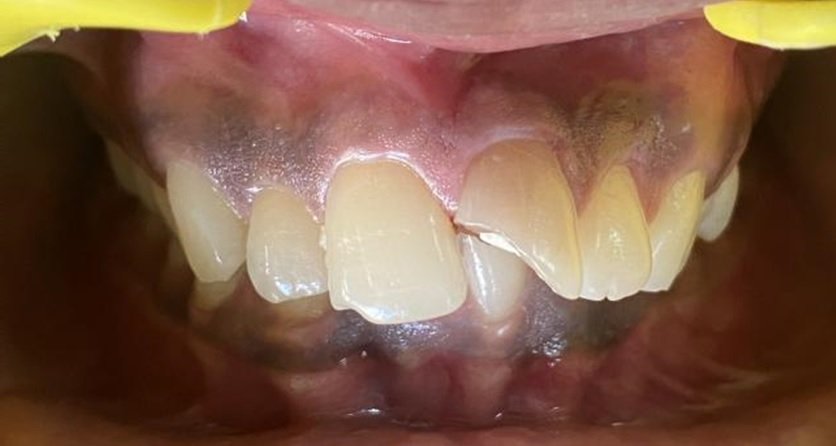
A 22-year-old female patient reported to the Conservative Dentistry Department, KD Dental college and hospital, Mathura with the chief complain of broken tooth in her right upper back region of mouth since 2 months. She had a history of root canal treatment in relation to 17 (figure 1a), one year back. On clinical examination, only labial wall was present. On radiographic examination, the root canal treatment was not satisfactory and periapical changes were not evident. Restoration using edelweiss post and core system followed by PFM prosthesis was advised. First, gutta percha was removed (figure 1b) using peeso reamer no.2 (1.40 mm, Largo Peeso reamer, Dentsply Maillefer) followed by working length determination (figure 1c), obturation (figure 1d) and post space preparation by the drill which was provided with Edelweiss post and core system (Edelweiss dentistry products gmbh, Austria). The fit of the post was checked first (figure 2a). Etching of post space was done for 15 seconds(figure 2b). It was rinsed, dried and bonding agent was applied for 20 seconds (figure 2c). Bonding agent was applied on Post and core(figure 2d) for 30 seconds (Veener bond, dental adhesive, Edelweiss dentistry products gmbh, Austria) (Fig 2e). Post & core cementation was done (figure 3a) using dual core adhesive cement (Calibra universal dual core, Dentsply Sirona) and polymerized for 60 seconds. Tooth preparation was done and crown was cemented (figure 3b).

Figure 1a & Figure 1b

Figure 1c & Figure 1d

Figure 2a & Figure 2b
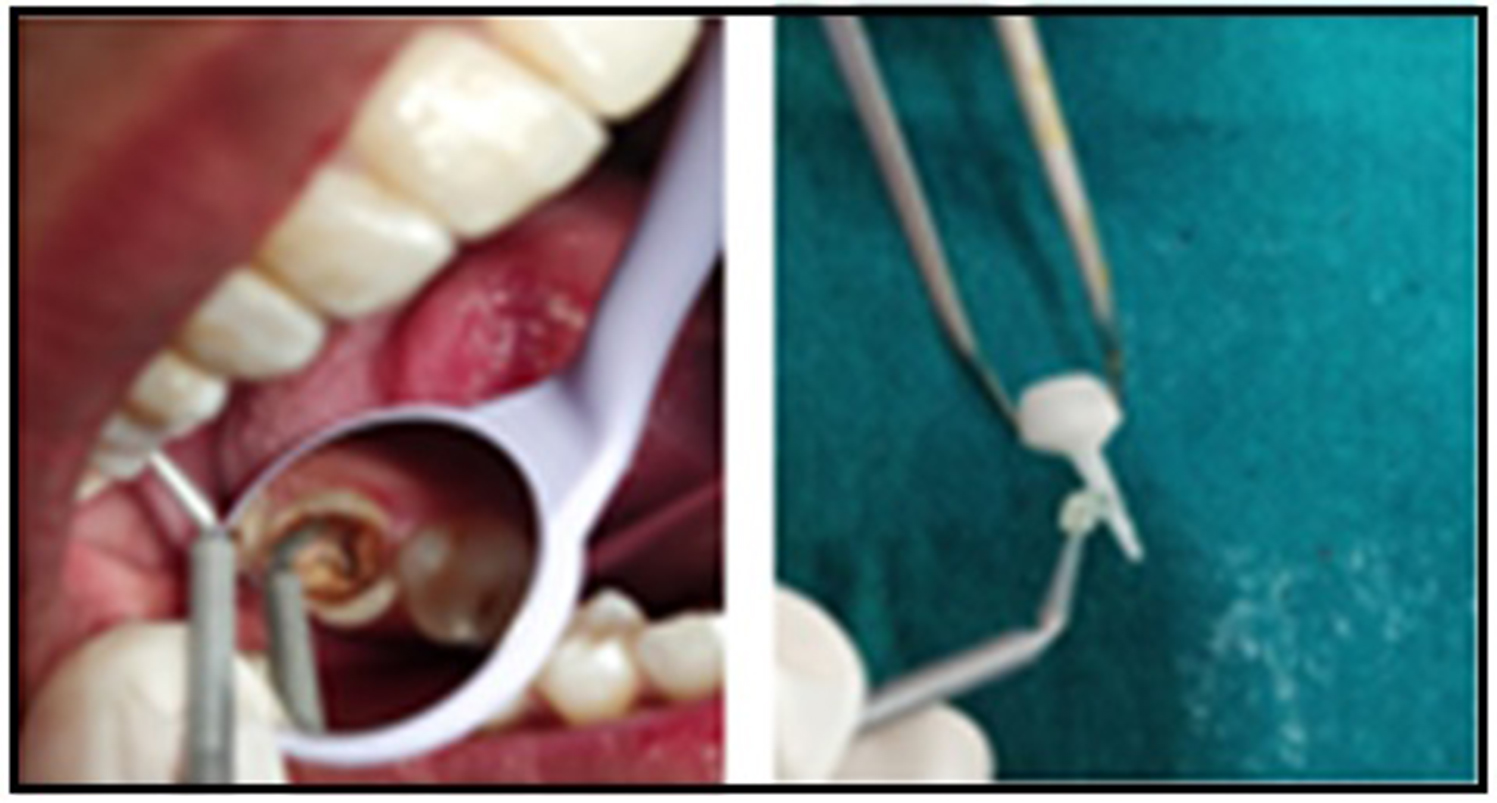
Figure 2c & Figure 2d

Figure 2e
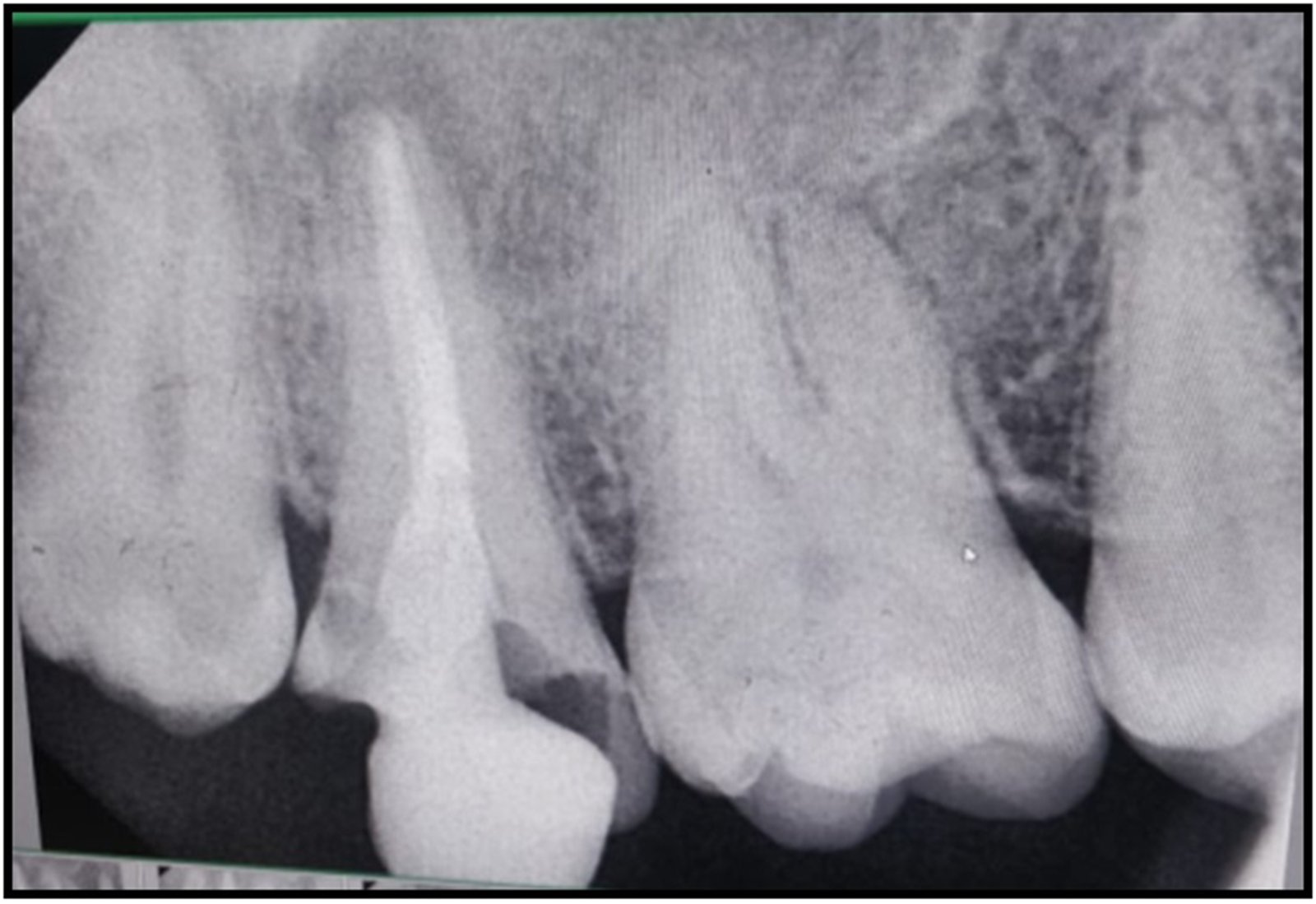
Figure 3a

Figure 3b
DISCUSSION
The choice of appropriate post and core restorations is often complicated and should be guided by knowledge of their physical properties, indications, advantages and disadvantages, as well as the amount of coronal structure missing and aesthetic requirements.6-8 Higher modulus of elasticity of crown wall and rigidity of metal post and core provides retention and stability to crown restoration. But catastrophic vertical failure may occur if load exceeded the limit of resistance of the root.9 According to some authors the fiber posts root fractures are rare compared with metallic posts because of uninterrupted bonding at all interfaces and adhesive integration between five components of the fiber reinforced composite resin system (dentine surface, luting cement, fiber post, core build-up, and crown).10-11 The availability of new laser sintered, prefabricated, aesthetic edelweiss post and core has created the need for a systematic evaluation of their physical properties and clinical performance. As per manufacturer, these posts have a conical shape for perfect post space adaptation. The translucency of the post allows uninterrupted light transmission for complete polymerization even at the most apical portion of the post. It’s specifically designed to mimic the natural tooth form for better retention of the final clinical crowns. The adhesive bonding further contributes in avoiding the wedging effect by providing a single monobloc between the adhesive layer and the composite post and core. Flexural modulus is 20 GPa like Dentin (15 – 20 GPa). Edelweiss post drill allows inward progression of drill flutes designed to allow debris out of the canal with improved metallurgy. Solid center core maintains centrality within the canal and allows for ideal post fit. Additional stepped cutting tip enhances cutting and shaping of the post space.5 Although cast metallic posts has its own advantages but edelweiss post and core should be preferred when hard tissue loss is a prime concern along with esthetics.
CONCLUSION
Selection of suitable post and core system is challenging. Moreover, it’s a viable choice when there is little or no coronal tooth structure but indications, advantages, disadvantage, esthetics as well as the amount and quality of remaining tooth structure should be considered before selection of particular post and core system. Edelweiss post and core system can be chosen as an alternative with all-ceramic restorations for promising result.
REFERENCES
- Paliwal T, Arora V, Nagpal A, Paul R. Management Of Fractured Tooth With Edelweiss Post And Core Followed By Lithium Disilicate Crown – Case Series’ HECS Int J Comm Health Med Res 2019; 5: 72-75.
- Morgano SM, Brackett SE. Foundation restorations in fixed prosthodontics: current knowledge and future needs. J Prosthet Dent 1999; 82:643-57.
- Quontas A, Dinato JC, Bottino MA. Aesthetic Posts and Cores for metal-free restoration of endodontically treated teeth. Pract Periodont Aesthet Dent 2000;12(9):875-884.
- Machado J, Almeida P, Fernandes S, MárioVaz. Currently used systems of dental posts for endodontic treatment. Procedia Structural Integrity 2017;5: 27-33.
- Edelweiss dentistry products,gmbh.Austria:office@edelweiss-dentistry.com, www.edelweiss-dentistry.com.
- Sorensen JA, Engelman MJ. Ferrule design and fracture resistance of endodontically treated teeth. J Prosthet Dent, 1990; 63:529-53
- Caputo AA, Standlee. Pins and posts - why, when and how. Dent Clin North Am, 1976; 20:299-311.
- Trope M, Maltz DO, Tronstad L. Resistance to fracture of restored endodontically treated teeth. Endod Dent Traumatol, 1985; 1:108-111.
- Bilgin MS, Erdem A, Dilber E, Ersoy B. Comparison of fracture resistance between cast, CAD/CAM milling, and direct metal laser sintering metal post systems. J Prostho Research, 2016;60:23–28.
- Newman MP, Yaman P, Dennison J, Rafter M, Billy E. Fracture resistance of endodontically treated anterior teeth restored with four post-and-core systems J Prosthet Dent, 2003; 89:360-367.
- Stockton LW. Factors affecting retention of post systems: A literature review. J Prosthet Dent, 1999; 81:380-385.
Disclaimer from Guident
The views and opinions expressed in articles published in Guident are solely those of the authors and do not necessarily reflect the views of the editors, the editorial board or the publisher, Ivory India. Guident does not endorse any product, technique or treatment described. Clinical content is intended for qualified dental and medical professionals and is not a substitute for individual clinical judgement. Guident, its editors and the publisher accept no liability for any consequence arising from the use of information published in the journal.
How to cite this article
Dr. Dipshi Ranjan, Dr. Ajay Kumar Nagpal, Dr. Ishika Rastogi. Endodontic Management of Fractured Tooth with Edelweiss Post and Core Followed by PFM Crown: A Case Report. Guident. 2022 Dec;16(1). Available from: https://guident.in/articles/endodontics/endodontic-management-of-fractured-tooth-with-edelweiss-post-and-core-followed-by-pfm-crown-a-case-report.html